IT
IT  EN
EN  DE
DE  RU
RU  PT
PT  JA
JA  ES
ES Perimeter guarding for multi-site automation projects
Protezione perimetrale per la conformità AGV e robot multi-sito: come Alfence riduce l'attrito documentale
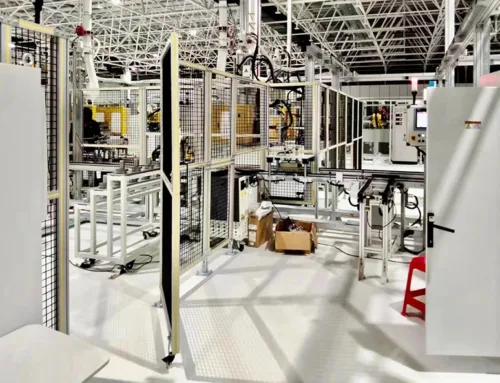
When a warehouse and logistics integrator deploys robot cells and AGV routes across Europe and North America, Alfence provides Perimeter guarding built around EN ISO 14120 and EN ISO 13857, with a documented path toward CE, OSHA and ANSI/RIA R15.06 integration.
From One Site to Several Standards: The Compliance Problem
A multinational deployment is not simply a larger machine guarding job. A robot cell may be reviewed against the EU Machinery Directive 2006/42/EC, EN ISO 14120 and EN ISO 13857, while a North American site may require OSHA and ANSI/RIA R15.06 alignment. An AGV path introduces another review layer around ISO 3691-4 or ANSI B56.5. If the perimeter, interlock circuit and evidence package are designed separately for each jurisdiction, acceptance slows and document cost rises.
| Requisito di progetto | Alfence design response |
|---|---|
| Robot cell and machine guarding | Modular post-and-panel perimeter guarding designed around EN ISO 14120:2015 and aligned with EN ISO 13857 safety-distance planning. |
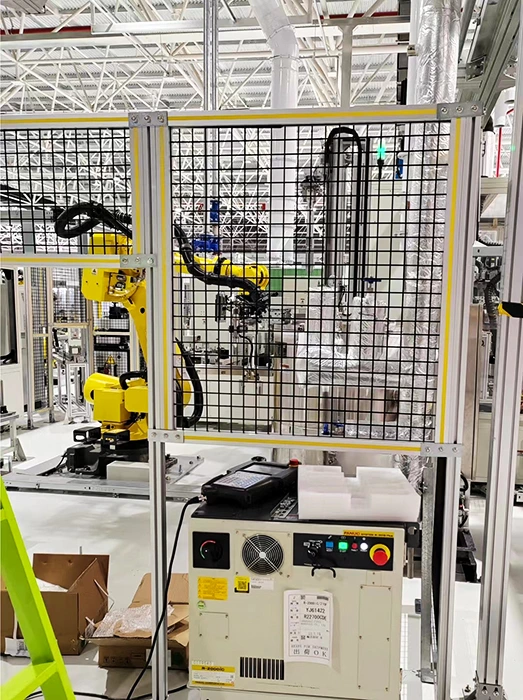
| Close-to-hazard layout | 20×100 mm welded wire mesh supports a minimum layout distance of 120 mm where the risk assessment and installation geometry permit it. |
| Guard access and control | 40×40 mm profile posts can carry a safety light curtain and a Schmersal AJM150 safety switch; guarded doors can be fitted with safety locks for interlock circuits. |
| EU and North American project files | CE / Machinery Directive 2006/42/EC compliance documentation can be incorporated into the integrator’s risk assessment and SAT document chain; local validation remains part of the complete system review. |
| Layout changes during rollout | Bolt-free assembly and removable, reconfigurable panels allow the same modular safety fence logic to be adapted for robot cells, conveyor guarding and AGV path guarding. |
Why Alfence Fits Robot Cells and Automated Warehouse Zones
1. A modular frame that can be reused across sites
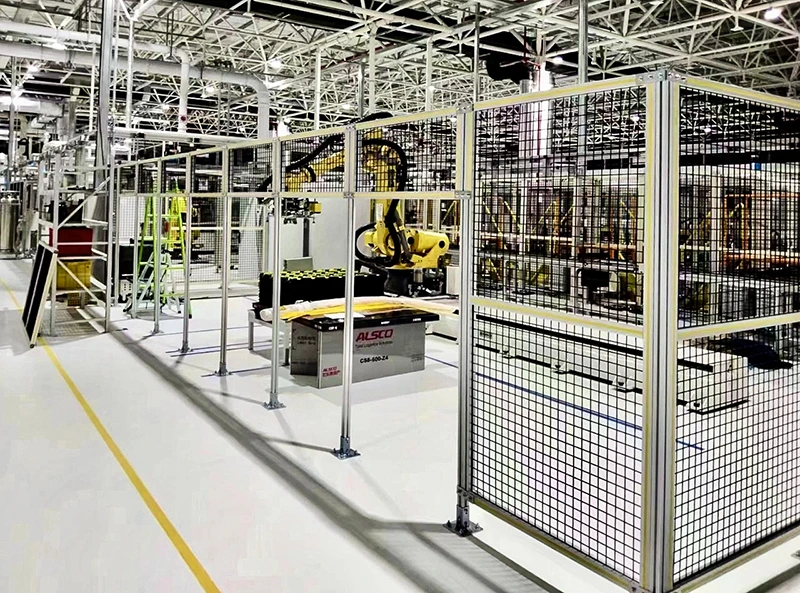
Replacing a welded steel fence or chain-link fence usually means cutting, rewelding or rebuilding when the line changes. Alfence uses aluminum extrusion, T-slot aluminum posts and a post-and-panel system. The bolt-free assembly approach removes on-site welding labor, while removable panels make retrofit guarding and relocatable guarding easier to document and rebuild. The aluminum profile is lightweight and corrosion resistant for indoor plant installation; outdoor use requires the appropriate corrosion treatment.
2. Mesh, doors and access hardware support the safety circuit
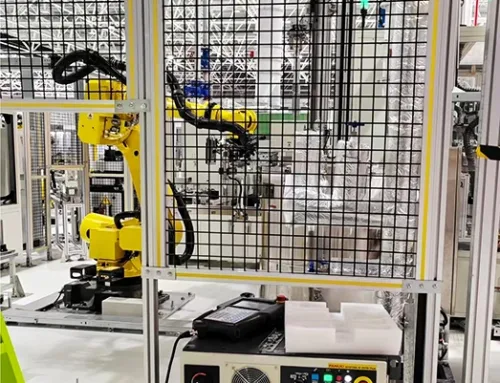
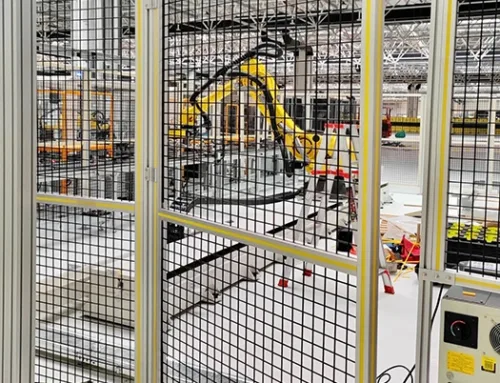
The 20×100 mm steel wire mesh panel is suited to machine guarding where a close-to-hazard arrangement is required, subject to the risk assessment and the final installation. Alfence can be configured with hinged, sliding or folding safety doors. A safety interlock switch, safety light curtain, magnetic handle or Schmersal AJM150 switch can be selected with the access design. The AJM150 option has a 1500 N locking force and is compatible with 40×40 mm profiles; the machine control designer must still verify the complete interlock and emergency-stop circuit.
3. Visual separation without losing maintenance access
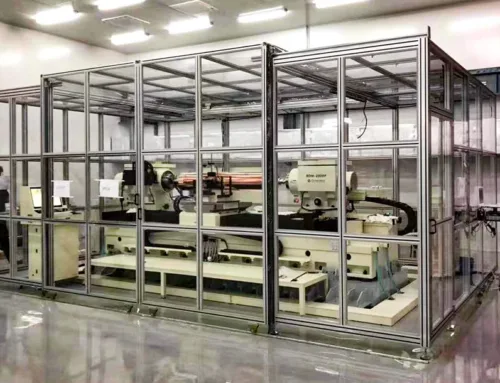
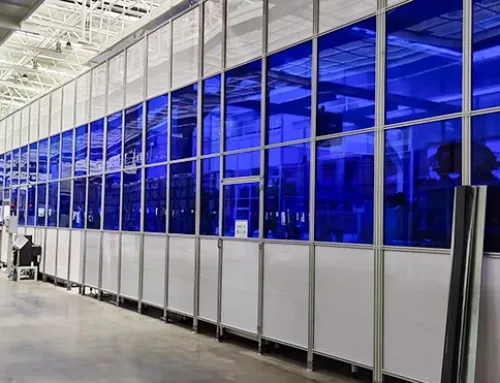
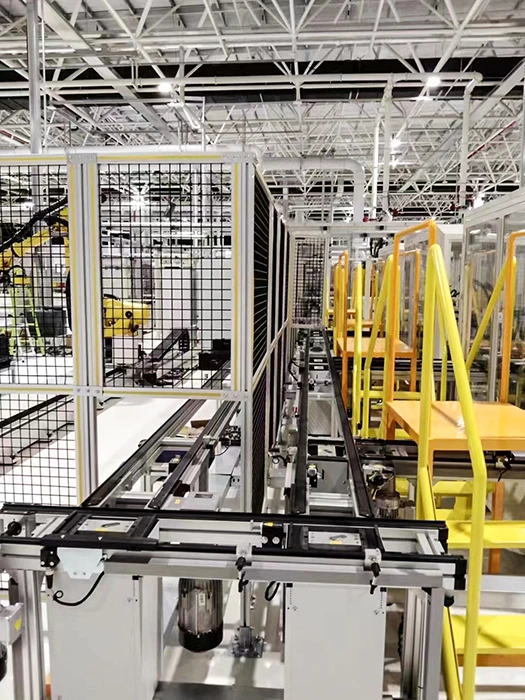
Where operators need line-of-sight into a machine enclosure, transparent polycarbonate or acrylic panels can be combined with the modular aluminum frame. Tinted or red panels are available for arc-flash applications when specified. This gives an integrator a consistent perimeter guarding language for welding cells, conveyor lines and automated production equipment while preserving planned maintenance doors and access routes.
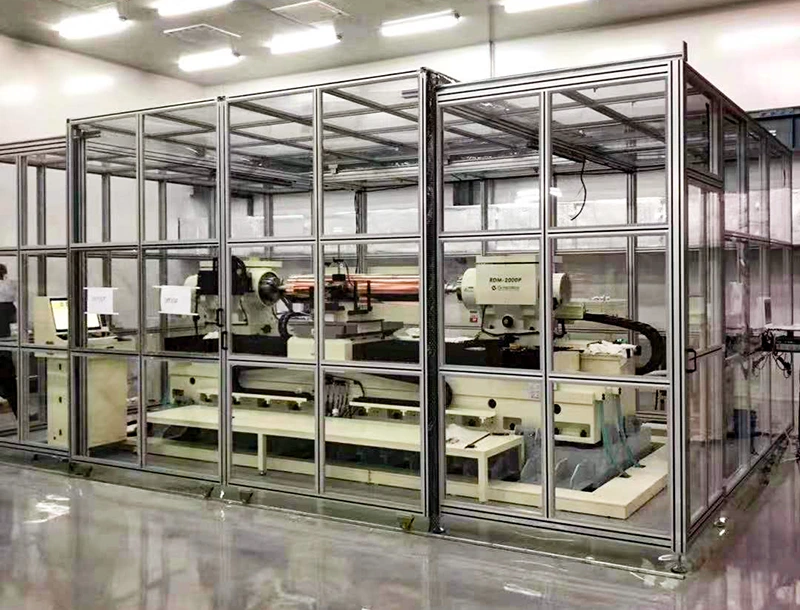
Where the Same Guarding Logic Can Be Reused
- Automated warehouse guarding: ASRS and high-bay storage zones can be separated from operator and service traffic with a documented modular perimeter.
- AGV path guarding: conveyor guarding, shuttle-car protection and material-handling robot guarding can be planned around the route, crossings and access points instead of using a generic industrial guardrail.
- Robot cell guarding: welding cells, palletizer guarding, CNC machine guarding and assembly line separation can share the same post, panel and safety-door specification logic.
- Retrofit guarding: existing welded steel fence or wire partition installations can be replaced in sections, reducing downtime and preserving reusable components.
For each location, the integrator should map the machine or vehicle risk assessment, safety distances, access points, interlock behavior and local acceptance requirements. Alfence supplies the physical perimeter and configurable hardware; the complete CE, OSHA, ANSI/RIA R15.06, ISO 3691-4 or ANSI B56.5 conformity assessment remains specific to the integrated equipment and jurisdiction.
Build the Evidence Package Into the Design
A single Alfence design basis can reduce duplicate engineering across countries: record the 20×100 mm mesh and 120 mm planning route, post and door dimensions, safety-switch selection, anchoring method and interface points in the project file. Add the applicable EN ISO 14120 / EN ISO 13857 assessment, CE / Machinery Directive documentation, site risk assessment and SAT records, then complete the local review for the robot or AGV system. This turns the fence from a late-stage enclosure purchase into a traceable part of the machine guarding package.
One Perimeter Guarding Basis, Fewer Rebuilds at Acceptance
For multinational warehouse, logistics and automation projects, Alfence combines corrosion-resistant aluminum profiles, welded wire mesh, configurable safety doors and documented interface options. The result is faster modular installation, easier reconfiguration when the line changes, and a clearer evidence trail for engineering review and SAT—without treating every site as an unrelated fence project.