IT
IT  EN
EN  DE
DE  RU
RU  PT
PT  JA
JA  ES
ES Food & Beverage Safety Barrier | Washdown / Cold-Chain
Self-Rebounding Barrier for Washdown and Cold-Chain Aisles
In wet, washdown, and chilled production areas, steel barriers rust, coatings fail, and cleaning cycles never stop. FCBarrier gives beverage teams a corrosion-free polymer barrier that helps reduce repainting, survives repeated forklift contact, and fits retrofit layouts in food and beverage plants.
Why steel fails in washdown rooms, and what FCBarrier changes
The issue is not just impact. In wet rooms, steel barrier systems need paint, touch-up, and repeated corrosion checks. In chilled zones, coatings and fasteners can age badly when moisture, cleaning, and temperature shifts keep returning. FCBarrier uses a polymer safety barrier construction, so the protection layer is not dependent on paint. For deep-freeze or food-contact areas, the project still needs a validation step before any dedicated claim is made.
| Wet-room problem | Risposta di FCBarrier |
|---|---|
| Rust starts after washdown and repeated moisture exposure | The polymer body is corrosion free, so protection does not depend on a coated steel surface. |
| Paint and coating repair keep coming back as a maintenance task | No repainting cycle is built into the product, which lowers upkeep in food and beverage safety zones. |
| Impact damage can stop traffic and create rework | The self-rebounding design is intended to absorb impact energy and return to service instead of turning every strike into a replacement job. |
| Retrofit work must fit existing aisles, columns, and loading points | SR, DR, TR, and CTR family options support modular layouts for forklift safety barrier, loading dock protection, and column guarding. |
| Chilled storage requires caution before broad claims are made | Cold-storage use should be specified only after temperature and hygiene requirements are validated for the project. |
Evidenze strutturali dalle immagini del prodotto
1) Floor-mounted layout for long aisle protection
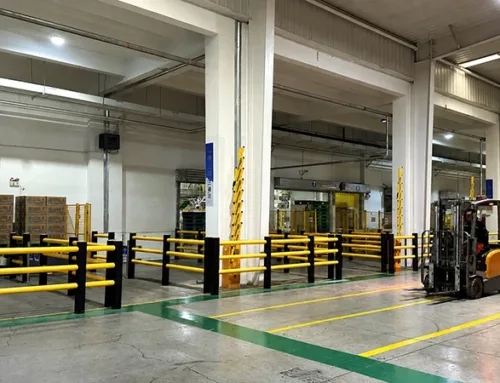
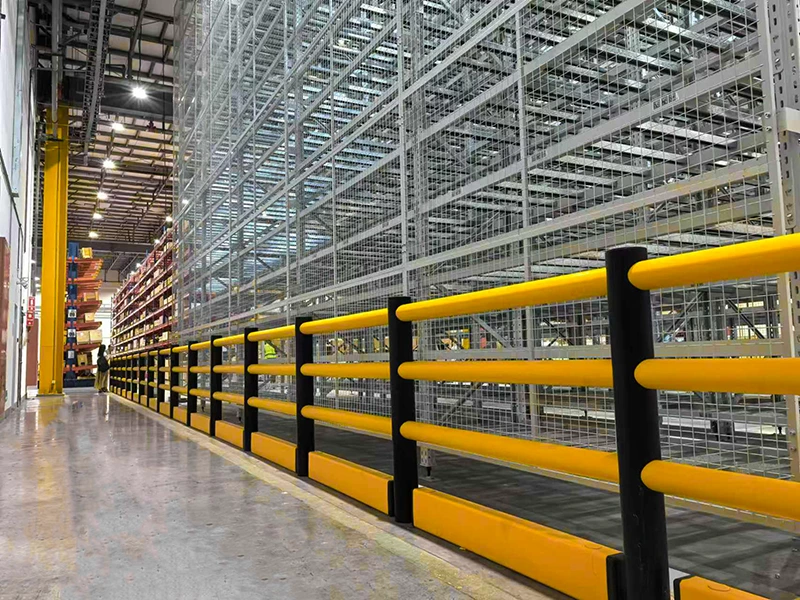
The first image shows a floor-mounted warehouse safety barrier with continuous rail lines. That matters in washdown corridors because the system can sit at the edge of process lanes, keep people out of impact zones, and stay readable after cleaning. The practical point is simple: fewer exposed steel surfaces mean fewer places for rust and coating failure to begin.
2) Bolt-mounted base plates for retrofit and replacement work
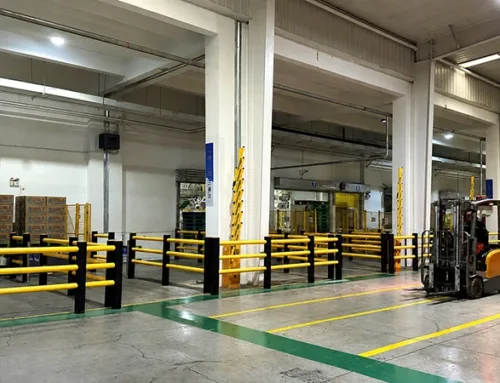
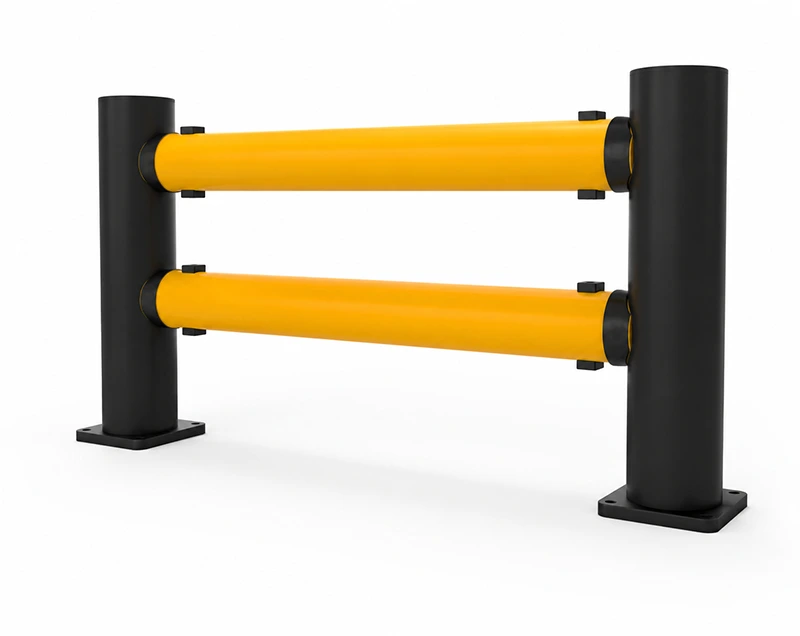
The second image makes the structure clear: dual rails, upright posts, and bolt-mounted base plates. That is the kind of hardware detail plant teams need when they are replacing steel barrier runs that have been patched too many times. It supports a modular barrier approach for loading dock protection, aisle separation, and line-side safety without forcing a full rebuild.
3) Column and loading-bay protection where wet traffic keeps moving
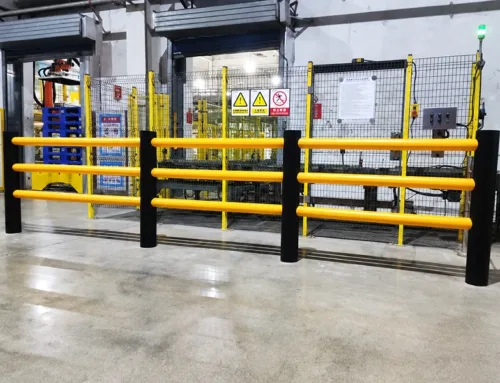
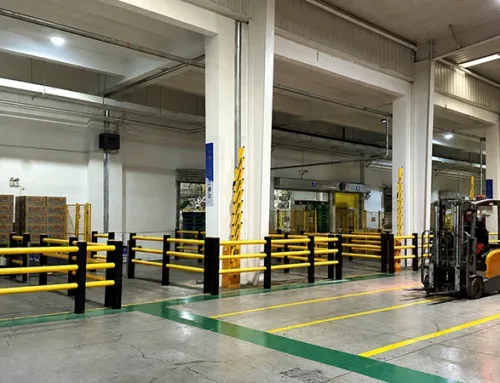
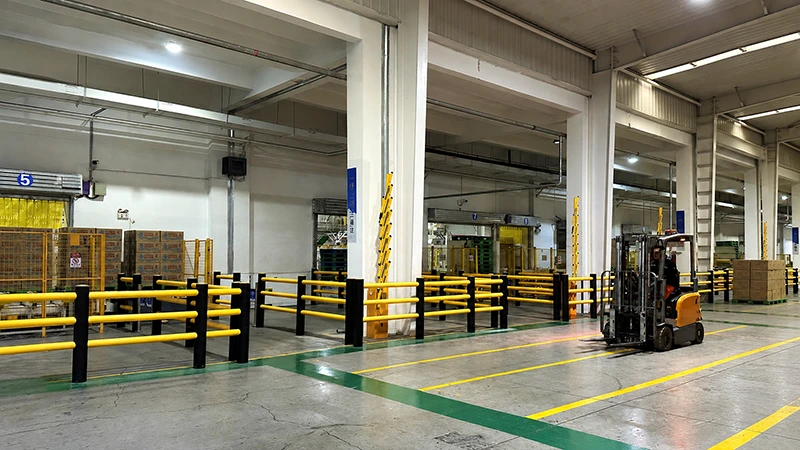
The third and fourth views show how the barrier fits around columns, loading bays, gates, and pedestrian segregation points. That is exactly where a food and beverage plant tends to lose money first: repeated hits near traffic pinch points, along with cleanup work that never ends. A flexible guardrail only earns its place if it keeps the route open and reduces repair cost at the same time.
Best-fit applications in food and beverage plants
- Washdown corridors beside bottle filling, packing, and pallet transfer lines.
- Loading docks where wet floors, traffic, and impact risk appear in the same lane.
- Chilled storage entrances and retrofit zones that need a corrosion-free barrier system.
- Column and gate protection in manufacturing plant safety layouts.
- Pedestrian safety separation where operators and forklifts cross the same building envelope.
FCBarrier is strongest where the old steel barrier was failing for non-structural reasons: rust, patch paint, cleaning damage, and repeated maintenance. As a polymer safety barrier, it gives teams a cleaner maintenance profile and a faster path to retrofit. For low-temperature or food-contact zones, keep the project spec disciplined and confirm the validation standard before you lock the layout.
Validation note before specifying cold-chain use
FCBarrier has not publicly released a tested low-temperature dedicated version or a published food-contact compliance grade. That does not stop it from being a practical replacement for rust-prone steel in wet rooms, but it does mean chilled-room and hygiene-critical projects should validate temperature range, sanitation method, and local compliance requirements before approval.
Move from coating maintenance to polymer protection
If your plant is spending time on rust repair, repainting, and barrier swaps, FCBarrier is the kind of flexible safety barrier worth comparing against your current steel layout. Use it where the real goal is to protect assets, keep cleaning simple, and reduce unplanned downtime.