IT
IT  EN
EN  DE
DE  RU
RU  PT
PT  JA
JA  ES
ES 
construction barrier
Construction barriers play a vital role in maintaining safety and organization at construction sites. They help protect workers, control access, and ensure the smooth progress of your project. With various options available, it’s essential to choose the right type of construction barrier to suit your project’s specific needs. In this guide, we will explore different types of construction barriers and provide insights on how to make the best choice for your project.
1. Temporary Fencing
Temporary fencing is a versatile and widely used construction barrier. It comes in various materials, including chain-link, mesh, or plastic. Temporary fencing is an excellent choice for controlling access, creating boundaries, and enhancing security. When selecting temporary fencing, consider the material’s durability, ease of installation, and whether it meets local safety standards.
How to Choose:
Consider the project’s location, expected duration, and specific security needs. If you need a robust barrier for an extended period, chain-link fencing may be ideal. For short-term projects, plastic mesh fencing can offer a cost-effective solution.

2. Concrete Barriers
Concrete barriers, often known as jersey barriers or K-rails, are heavy, durable, and excellent for redirecting traffic, providing protection, or delineating work zones. They are commonly used on road construction sites to enhance safety and control traffic flow.
How to Choose:
Consider the level of traffic around your construction site. Concrete barriers are ideal for high-traffic areas, while plastic alternatives may suffice for lower-traffic projects.
3. Water-Filled Barriers
Water-filled barriers are highly portable and versatile. They are lightweight when empty, making transportation and deployment easy. Once filled with water, they offer stability and are an effective means of traffic control and safety management.
How to Choose:
If you require barriers that are easy to transport and set up, water-filled barriers are a suitable choice. Determine the size and weight capacity needed for your project.
4. Safety Cones and Barricades
Safety cones and barricades are essential for directing traffic and pedestrians. They are highly visible and serve as warning markers in and around construction zones. Safety cones are lightweight and easy to reposition, while barricades provide a more substantial barrier.
How to Choose:
Consider the level of visibility required and the type of traffic you need to control. Safety cones are perfect for short-term or frequently changing needs, while barricades are suitable for creating durable perimeters.
5. Crowd Control Barriers
Crowd control barriers, often seen at events and construction sites, are designed to manage pedestrian traffic. They are easy to set up, link together, and offer a convenient solution for crowd control and safety at your construction site.
How to Choose:
Determine the anticipated pedestrian traffic and the length of the barrier run. Choose crowd control barriers made from durable materials to ensure longevity.
6. Steel and Plastic Barriers
Steel and plastic barriers are available in various designs, including interlocking barricades and expandable barriers. They are versatile and can be used for traffic control, security, and access restriction.
How to Choose:
Consider the specific needs of your project, such as crowd control, security, or temporary roadblocks. Select steel or plastic barriers that align with your requirements.
When choosing construction barriers, it’s crucial to assess your project’s unique demands, budget constraints, and duration. Ensure that your selected barriers comply with local regulations and safety standards. By making an informed choice, you can enhance safety, control access, and streamline operations on your construction site.
Interlock Switch Mounting Without Drilling: Why Alfence T-Slot Posts End Phantom Stops
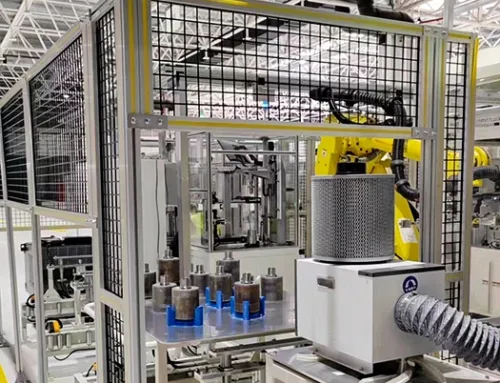
Bolting an interlock switch bracket through a powder-coated steel post drills the coating, drops swarf into the cell and leaves a rust line — and when the hinged leaf sags, the tongue misaligns and the PLC reports a phantom guard fault. Alfence mounts sensors, e-stops and conduit in the T-slot groove of a 40×40 mm or 45×45 mm aluminum post, with door hardware sized to keep the safety switch aligned.
Phantom Safe Torque Off Stops: T-Slot Guarding Fence Posts Mount Interlocks Without Drilling
Painted steel guarding posts force maintenance to drill for interlock switches, dropping swarf in the cell and breaking the coating where rust starts. Sagging hinge doors then misalign the interlock tongue and the PLC trips Safe Torque Off while the gate is closed. Alfence industrial safety fence mounts sensors, e-stops and cable routing into the T-slot aluminum profile post without drilling, and uses hinged, folding or sliding door frames that keep interlock geometry stable - protecting OEE through phantom stops and line changes.
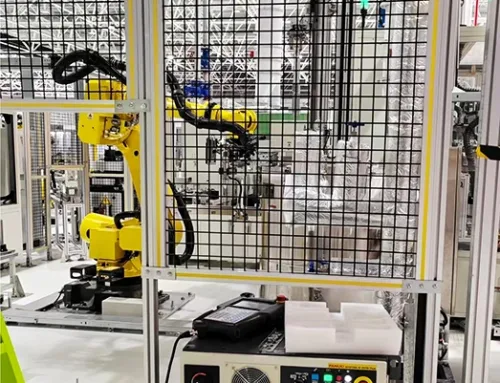
Automotive Plant Industrial Safety Fence: Keep the Robot Cell Close to the Hazard
Automotive plants cannot afford to lose production floor to an oversized machine guarding perimeter. Alfence combines 20×100 mm mesh with slim 40×40 mm or 45×45 mm aluminum posts for a compact, reconfigurable industrial safety fence layout, with final clearance confirmed by the project risk assessment.