IT
IT  EN
EN  DE
DE  RU
RU  PT
PT  JA
JA  ES
ES 
Do you know what to do if you find damaged or faulty roof temporary guardrails?

Working at heights can be inherently dangerous, making it crucial to have proper safety measures in place. Roof temporary guardrails play a vital role in preventing falls and protecting workers from serious injuries or worse. However, when these guardrails become damaged or faulty, immediate action is essential to maintain a safe working environment. In this article, we will explore the significance of addressing damaged roof temporary guardrails and outline the steps to take when encountering such issues.
I. The Significance of Prompt Action
When it comes to safety at heights, there is no room for compromise. Damaged or faulty roof temporary guardrails can significantly increase the risk of accidents and injuries. Taking immediate action is paramount to prevent further incidents and ensure the well-being of workers and anyone operating in elevated work areas.
II. Steps to Address Damaged Roof Temporary Guardrails
Step 1: Stop Usage Immediately
The moment damaged or faulty guardrails are detected, work in the affected area must cease promptly. Never take chances with compromised safety equipment. Stopping usage ensures that workers are not exposed to potential hazards while repairs or replacements are being carried out.
Step 2: Assess the Extent of Damage
After halting operations, conduct a thorough assessment of the guardrails to determine the extent of the damage. Understanding the severity of the issue will guide your decision-making process and determine whether repairs or replacements are necessary.
Step 3: Notify Relevant Authorities
If the temporary guardrails were provided by a third-party supplier or rental company, inform them immediately about the damage or fault. They will likely have established protocols to handle such situations and can provide guidance on the next steps to take.
Step 4: Repair or Replace
Depending on the assessment, proceed with the appropriate course of action – either repair the damaged components or replace the entire guardrail system. Engaging qualified professionals for this task ensures that the repairs or replacements are done correctly and in compliance with safety standards.
Step 5: Conduct a Safety Check
After repairs or replacements are completed, conduct a comprehensive safety check. This involves testing the guardrails to ensure they can withstand required forces and confirming that all components are properly installed. The safety check confirms the guardrails’ effectiveness and compliance with safety regulations.
Step 6: Record the Incident
Maintaining accurate safety records is essential for future reference and compliance. Record the details of the incident, including the damage assessment, actions taken, and the results of the safety check. These records can be valuable in case of future inquiries or to demonstrate adherence to safety protocols.
Conclusione
Roof temporary guardrails are a fundamental safety measure when working at heights. When encountering damaged or faulty guardrails, swift and appropriate action is necessary to protect workers from potential hazards. By following the steps outlined in this article, businesses can ensure a safe working environment for everyone involved in operations at elevated locations. Safety should always be a top priority, and addressing issues promptly helps to maintain a culture of safety and well-being at the workplace.
Interlock Switch Mounting Without Drilling: Why Alfence T-Slot Posts End Phantom Stops
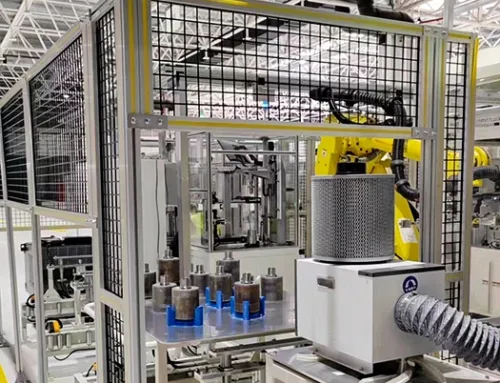
Bolting an interlock switch bracket through a powder-coated steel post drills the coating, drops swarf into the cell and leaves a rust line — and when the hinged leaf sags, the tongue misaligns and the PLC reports a phantom guard fault. Alfence mounts sensors, e-stops and conduit in the T-slot groove of a 40×40 mm or 45×45 mm aluminum post, with door hardware sized to keep the safety switch aligned.
Phantom Safe Torque Off Stops: T-Slot Guarding Fence Posts Mount Interlocks Without Drilling
Painted steel guarding posts force maintenance to drill for interlock switches, dropping swarf in the cell and breaking the coating where rust starts. Sagging hinge doors then misalign the interlock tongue and the PLC trips Safe Torque Off while the gate is closed. Alfence industrial safety fence mounts sensors, e-stops and cable routing into the T-slot aluminum profile post without drilling, and uses hinged, folding or sliding door frames that keep interlock geometry stable - protecting OEE through phantom stops and line changes.
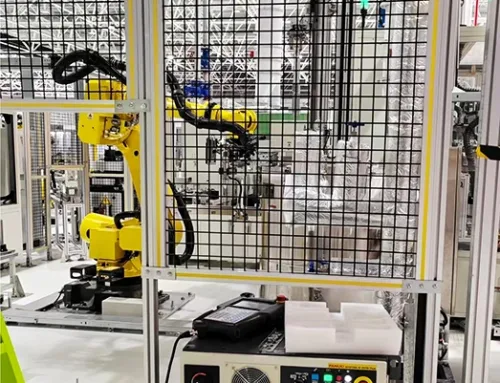
Automotive Plant Industrial Safety Fence: Keep the Robot Cell Close to the Hazard
Automotive plants cannot afford to lose production floor to an oversized machine guarding perimeter. Alfence combines 20×100 mm mesh with slim 40×40 mm or 45×45 mm aluminum posts for a compact, reconfigurable industrial safety fence layout, with final clearance confirmed by the project risk assessment.