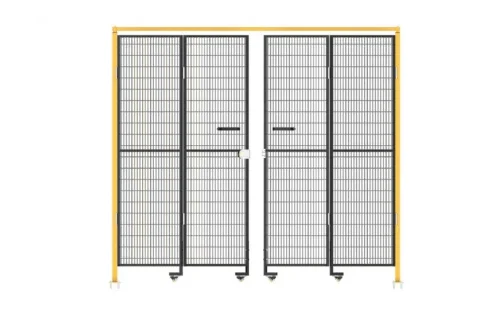
Is Your Safety Gate the Weakest Link in Your Production Chain?
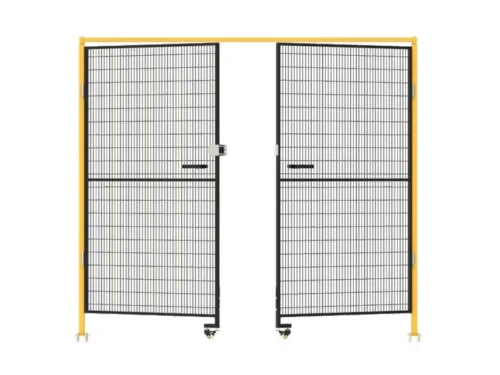
Cacciatore2025-12-08T11:49:35+08:00A safety fence is static, but the gate is dynamic. It is slammed, dragged, and cycled hundreds of times a day. If your gate sags, jams, or drags along
A safety fence is static, but the gate is dynamic. It is slammed, dragged, and cycled hundreds of times a day. If your gate sags, jams, or drags along
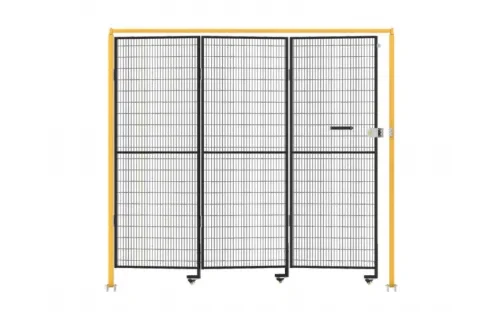
A safety fence is only as good as its gate. While the panels provide the barrier, the doors dictate the workflow. Choosing the wrong access configuration can create bottlenecks
The fence is solid, but the machine keeps stopping. Why? Often, the culprit is a misaligned safety switch mounted on a flimsy, hand-fabricated bracket. For System Integrators, the interface
Safety isn't just about building a wall; it's about maintaining situational awareness. A common complaint on factory floors is that high-glare safety fencing obstructs the view of critical processes,
Real-world factories are rarely perfect rectangles. They are cluttered with structural columns, overhead cranes, and oddly shaped machinery. When you force a standard "off-the-shelf" fence into a complex layout,
You've engineered a world-class automation line, but will it pass the final safety inspection in Germany? Or the OSHA audit in the US? Non-compliant guarding is the #1 cause
It’s a common scenario: a facility invests millions in state-of-the-art KUKA or FANUC robots, only to surround them with the cheapest wire mesh available to pass inspection. But what
In the race to launch a new automated line, every hour counts. While you obsess over robot calibration and PLC logic, a surprisingly common bottleneck is lurking: the physical
In the world of high-speed manufacturing and automated logistics, floor space is your most expensive asset. Yet, many facilities sacrifice prime operational real estate to bulky, poorly designed safety
As a System Integrator, you know the bottleneck isn't always the robot logic—it's the physical integration. Integrating safety perimeters with complex automation lines often leads to unforeseen delays during