IT
IT  EN
EN  DE
DE  RU
RU  PT
PT  JA
JA  ES
ES Industrial safety fence / 工业安全围栏
Recinzione di sicurezza per la zonizzazione di impianti alimentari in stile costruzione: Mefence per l'isolamento degli allergeni
Safety fence for construction-style food plant zoning gives food factories a physical barrier that auditors can verify: allergen raw materials, hold areas, reject zones, and chemical storage stay separated because people and pallets cannot simply drift through an open SOP.
Why SOP-only separation fails in food plants
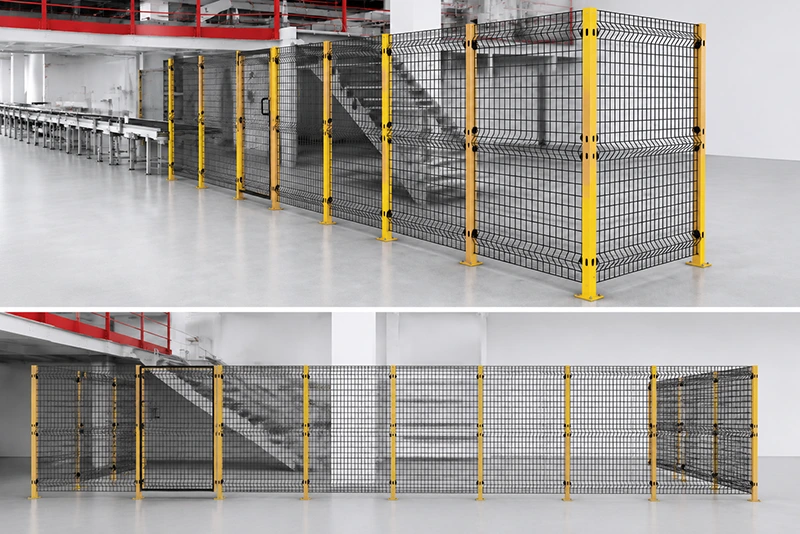
Most audit findings are not about whether the rule was written. They are about whether the rule was physically enforced. Tape breaks, ropes get moved, temporary signs are ignored, and even a tidy SOP cannot stop shortcuts when pallet traffic gets busy. A full masonry wall solves the boundary problem, but it is expensive, hard to change, and it blocks supervision. Mefence sits in the middle: a visible, lockable, modular industrial safety fencing system that turns warehouse zoning and hazard zone separation into a real barrier without sealing the area out of view.
| Domanda di audit | What Mefence changes on the floor |
|---|---|
| Can an untrained worker or visitor walk straight in? | Mesh panels and a lockable access point create a hard entry control instead of a warning-only line. |
| Can supervisors still see inside the zone? | The open mesh keeps the interior visible, so hold, reject, and allergen areas can be checked at a glance. |
| Will the partition become a cleaning problem? | The steel mesh fence avoids the closed-wall dust trap and is easier to clean around during routine housekeeping. |
| Is the layout fixed forever? | No. The modular posts and panels can be relocated, expanded, or reconfigured as SOPs change. |
Perché Mefence è adatta a questo compito
1) A visible boundary that still feels industrial
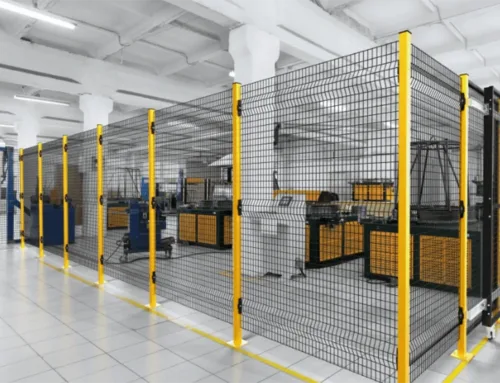
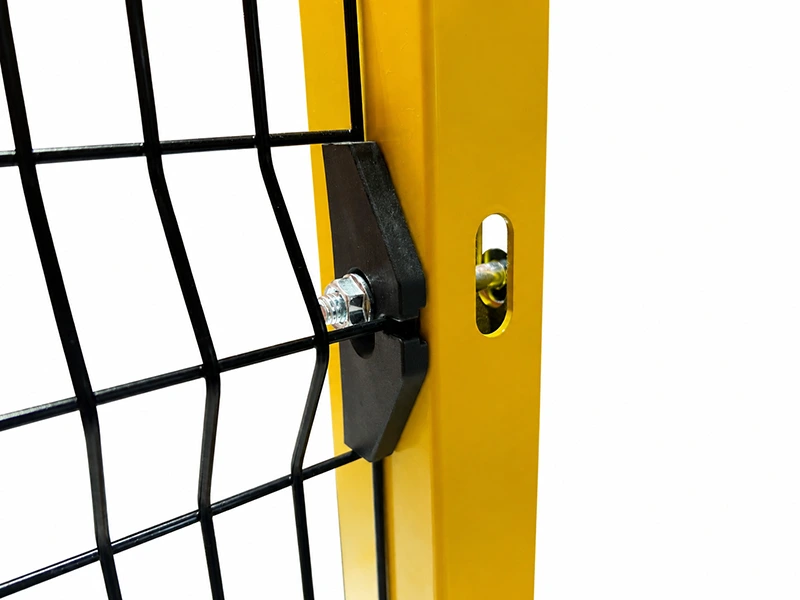
Image 1 shows the core structure in close-up: welded mesh fixed to a powder-coated steel post with a bolt-mounted connector and slotted mounting holes. That is the point. In a food plant, a zoning line must do more than look tidy; it must physically stop the shortcut. Mefence uses Q235 carbon steel, powder coated steel surfaces, and panel-fixed hardware to create a safety fence for construction-style zoning that stays rigid without hiding the area behind an opaque wall.
2) Access control, not just visual warning
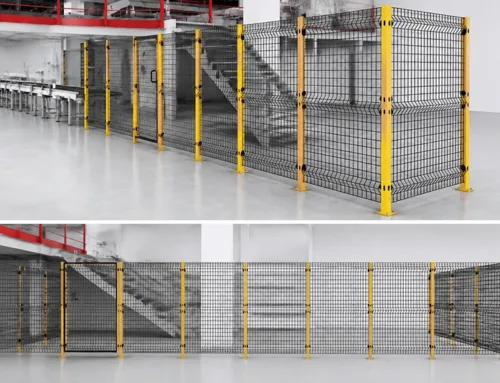
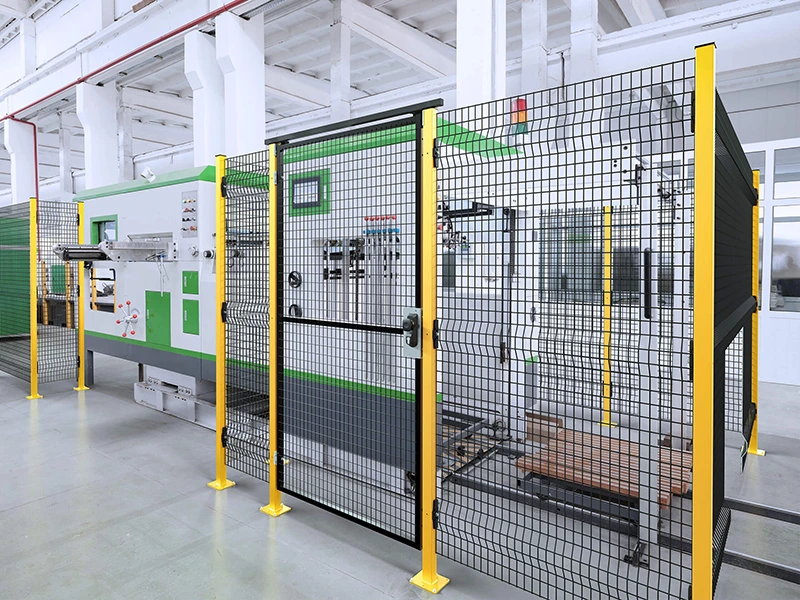
Image 2 shows the access side of the system. A gate and latch matter because allergen segregation, nonconforming goods, and chemical storage are audit issues only when the boundary can be entered freely. With Mefence, non-authorized personnel are blocked by hardware, not by a sign. That makes it a practical machine guarding and area demarcation tool for warehouse zoning, quarantine space, and restricted logistics lanes.
3) Modular fixing that supports real layouts
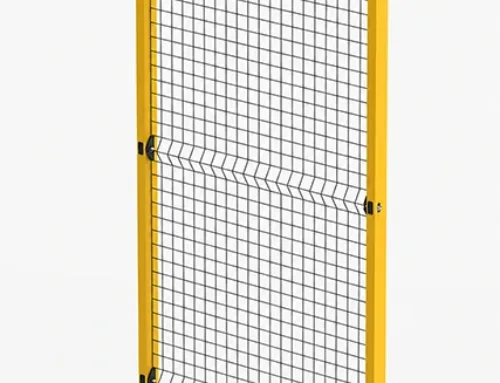
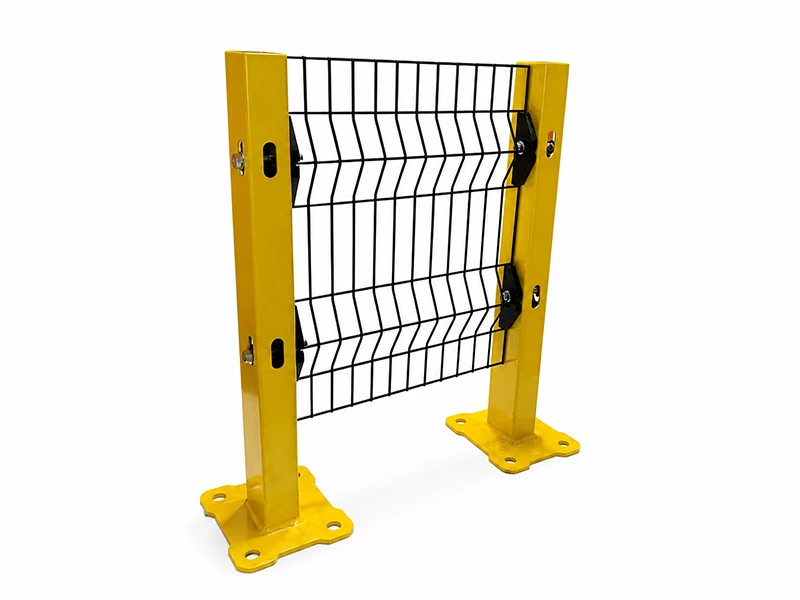
Image 3 proves the floor-side detail: bolt-down base plates, panel-to-post connections, and a repeatable modular structure. Depending on the layout, the fence can be specified with wire diameter 3 mm or 4 mm, mesh opening 50×50 or 20×100, and posts in common 40×60 or 60×60 formats. That flexibility helps when you need a temporary partition today and a reconfigured industrial safety fencing line next quarter. If the SOP changes, the fence can change with it.
Where this works in a food factory
- Allergen raw material zones that must be physically separated from normal storage.
- Hold and release areas where QA needs a visible, lockable boundary.
- Rejected goods and nonconforming product isolation.
- Chemical and cleaner storage that should be restricted but still observable.
- Warehouse zoning, pedestrian separation, and forklift path control around food production support areas.
Mefence is not a food-contact surface and does not claim food-grade certification. It is a galvanized and powder-coated steel industrial safety fence for warehousing, logistics, and perimeter zoning where the goal is to make physical separation obvious, enforceable, and easy to audit.
What to specify before you quote the layout
Do not start with a vague request for “a fence.” Start with the boundary you need to prove.
- Zone names and boundary length: allergen room, reject zone, hold area, or chemical store.
- Access control: single gate, lock requirement, and whether the entrance must stay visible to supervisors.
- Panel detail: wire diameter, mesh opening, and post size based on the traffic load and visibility you want.
- Floor condition: bolt-down base plate, slab thickness, and any need for future relocation.
Those answers map directly to Mefence’s modular mesh panels, rigid steel posts, and bolt-fixed bases, so the final layout is built around the audit requirement instead of being guessed after installation.
Turn the rule into a boundary the audit can see
If your SOP already says the zones must not mix, Mefence makes that rule real on the floor. Use a safety fence for construction-style food plant zoning when you need the separation to be visible, lockable, and easy to verify without losing supervision or spending on a full wall.