JA
JA  EN
EN  DE
DE  RU
RU  PT
PT  ES
ES  IT
IT 
The phone call every safety director dreads comes on a Tuesday afternoon. There’s been an incident at the loading dock. A visiting driver has been struck by a forklift. Beyond the immediate human tragedy, a new clock starts ticking. It’s the countdown to the inevitable investigation by regulators, insurers, and lawyers. In that moment, your entire safety program will be put on trial. And the most important question will be: Did you do everything reasonably possible to prevent this?
In the aftermath of a workplace accident, good intentions are irrelevant. Your company’s safety culture, your training records, your warning signs—all will be scrutinized against a single, harsh standard: due diligence.
Proving due diligence is not about showing that you had rules. It’s about proving that you implemented the most effective controls feasible to eliminate or mitigate the hazard. For years, many organizations have operated under the dangerous misconception that a combination of policies, training, and personal protective equipment (PPE) constitutes a robust safety program.
From a legal and regulatory standpoint, this is a house of cards. To understand why, we must look at the foundational principle of modern occupational safety: the Hierarchy of Controls.
コントロールのヒエラルキーの容赦ない論理
Imagine a five-level pyramid. The most effective, most legally defensible safety measures are at the top; the least effective are at the bottom. Regulators like OSHA expect companies to implement solutions from the highest possible level.
- 排除(最も効果的): 物理的に危険を完全に取り除く。.
- 交代: 危険なプロセスや材料を、より安全なものに置き換える。.
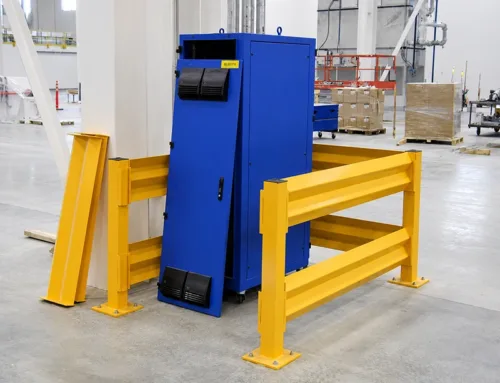
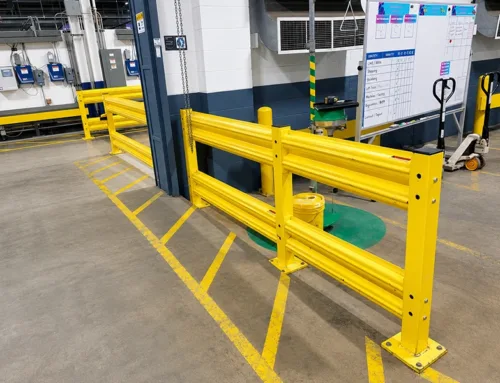
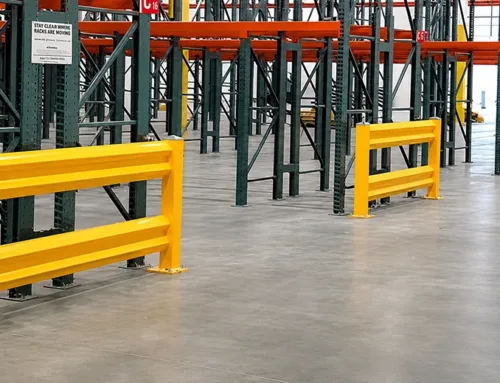
- エンジニアリング・コントロール: Physically isolate people from the hazard. This is where physical barriers like a メッシュパーティション, machine guards, and dedicated ventilation systems sit.
- 管理統制: Change how people work. This includes all work procedures, safety training, warning signs, and painted floor lines.
- PPE(最も効果的でないもの): ハードハットや安全ベストなどの個人用保護具で作業者を保護する。.
The critical, and often overlooked, legal insight is this: Relying on lower-level controls when higher-level controls are feasible can be interpreted as negligence.
現在の守備を裁判にかける
Let’s imagine your company is in a deposition following an incident. How would your common defenses hold up against the logic of this hierarchy?
あなたのディフェンス “We have bright yellow lines painted on the floor, and numerous signs instructing visitors to remain in the designated area.”
反対尋問: “So you relied on an Administrative Control—a suggestion. Was it physically possible for the driver to cross that line and enter the active forklift zone? Yes. Was a more effective Engineering Control, such as a physical barrier, feasible to install? Yes. Why did you choose the less effective method?”
あなたのディフェンス “The driver was given a high-visibility vest and a safety briefing upon arrival. He was trained.”
反対尋問: “You are admitting you relied on PPE and Administrative Controls, the two lowest levels of the hierarchy. You equipped the individual to survive in a hazardous environment you failed to control. Why was the hazard—the interaction between a pedestrian and a multi-ton vehicle—not first addressed through an Engineering Control to prevent the interaction from ever happening?”
あなたのディフェンス “We have a security guard at the gate instructed to enforce these rules.”
反対尋問: “This is, again, an Administrative Control dependent on a single person’s constant vigilance. Was it not foreseeable that a guard could be distracted or that a driver could slip by? You chose a fallible human process over a reliable engineered system.”
In every one of these scenarios, the argument is devastatingly simple: your company had the opportunity to physically prevent the accident and chose not to. You opted for suggestions instead of systems.
リーガル・ファイアウォールの構築エンジニアリング・コントロールの力
そこで、専用のドライバー・ケージや メッシュパーティション, それは単なるフェンスではなく、法的なファイアウォールである。単なるフェンスではなく、法的なファイアウォールなのだ。.
物理的、封じ込められ、アクセス制御された入館システムを導入することで、法的な立場を根本的に変えることになる。もはやポリシーを守るのではなく、アーキテクチャーを提示するのだ。.
- 守備を強化する あなたは主要な管理方法を、階層の一番下(管理者/PPE)から一番上(エンジニアリング・コントロール)に移した。あなたはもはや安全な行動を提案するだけではなく、組織的に強制しているのである。議論は、“私たちは彼にそこに行くなと言った ”から、“私たちのシステムは、彼がそこに行くことを物理的に不可能にするように設計されている ”へとシフトする。”
- Removing Human Error as the Deciding Factor: A physical barrier works 24/7. It doesn’t get distracted. It doesn’t have a bad day. It removes the unpredictable element of human behavior—from both your visitor and your employee—from the safety equation. It demonstrates that you engineered the possibility of a specific human error out of your process.
- 反論の余地のない記録を作る When equipped with an electronic lock or badge reader, the system does more than just control access; it creates a time-stamped, digital record of every entry and transaction. This data trail is irrefutable evidence for investigators, proving a well-managed and documented process.
単なるコンプライアンスではなく、ガバナンスの行為
Ultimately, investing in an engineering control is not about checking a box for compliance. It is an act of responsible corporate governance. It is a board-level decision to proactively and systematically de-risk the organization from its most predictable and catastrophic threats.
When you evaluate your facility’s safety, ask yourself this question: If the worst were to happen tomorrow, what evidence would I bring to the table? Would it be a folder of training sign-in sheets and photos of painted lines?
Or would it be the blueprint of a physical system designed with one, unambiguous purpose: to make the accident impossible in the first place? The evidence you can present tomorrow is determined entirely by the strategic choices you make today.