JA
JA  EN
EN  DE
DE  RU
RU  PT
PT  ES
ES  IT
IT 

|
In industrial construction, every hour of installation labor is a direct project cost. Traditional safety barriers that require on-site cutting, measuring, and welding often inflate budgets and push back critical deadlines. For project managers, the highest value is found in systems engineered for **Rapid, Predictable Assembly**. The core knowledge is that moving from complex fabrication to simple bolt-together assembly can cut installation time by up to 80%, guaranteeing project timelines and slashing labor expenditure. |
The End of Hot Work: The Bolt-Together Revolution
On-site welding and fabrication introduce significant risk and complexity, requiring hot work permits, specialized labor, and fire watch. This process is time-consuming and often compromises the corrosion-resistant finish of the barrier. The operational change delivered by a modular system is the **Elimination of Hot Work and Skilled Labor Dependence**.
A superior 工業用安全フェンス system is shipped complete, using factory-matched components and a non-welding assembly method. The integrity of the perimeter relies entirely on:
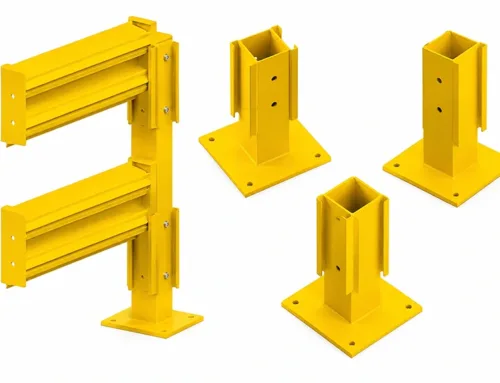
- **Heavy-Duty Expansion Bolts:** Securely anchoring the 60x60mm Q235 steel posts to the floor.
- **Standardized Fixing Rings:** These simple, robust components clamp the fully welded framed panels to the posts. They require only basic hand tools to secure, drastically simplifying the process for the installation crew.
This standardized, predictable process ensures that the vast majority of the installation can be completed by general labor, freeing up skilled technicians for more critical commissioning tasks.
From Components to Compliance: The Standardized Assembly Process
The speed of a modular installation is achieved through a repeatable, logical sequence. The process ensures that every section of the fence maintains TUV-certified rigidity and correct safety distances, regardless of who is performing the assembly.
The core assembly sequence is streamlined to four key steps:
- **Anchor the Posts:** Based on the CAD plan, anchor the heavy-duty posts to the floor using M10 expansion bolts.
- **Set the Lower Connection:** Install the bottom fixing rings onto the posts, preparing the foundation for the panel.
- **Set the Panel:** Lift and set the fully welded framed panel onto the lower rings.
- **Secure the Top Connection:** Install the top fixing rings to clamp the panel securely against the posts, completing the rigid connection.
Audit Readiness: The Value of Visible, Verified Connections
During the final safety audit, complex, customized, or hidden connections can cause delays as inspectors struggle to verify structural integrity and compliance with ISO 14120. The final value delivered by a bolt-together system is **Simplified and Accelerated Audit Compliance**.

Since the entire structure—including door hardware and simple mechanical locks—is connected using external, visible bolts and standardized parts, auditors can quickly verify that the components are correct and the connections are tight. There is no guesswork involved in the structural integrity, unlike custom-welded structures where internal stresses and weld quality are impossible to verify visually without destructive testing. This transparency guarantees a smoother sign-off, moving the project from installation to operation faster.
よくある質問(FAQ)
What is the biggest cost saving achieved with a bolt-together system?
The biggest cost saving is realized in labor time and expertise. By eliminating on-site fabrication and welding, the installation process is simplified, reducing the required labor hours and allowing maintenance teams or general contractors to complete the assembly quickly, rather than relying on expensive, specialized welding crews.
Does the bolt-together system compromise the fence’s impact resistance?
No. Structural integrity is guaranteed by the material quality (Q235 steel) and the TUV certification. The fixing rings and M10 expansion bolts are engineered to maintain the system’s certified rigidity. The only way to compromise the fence is by on-site modification (cutting/welding), which the modular design eliminates.
What tools are required for installation?
Installation typically requires only basic tools such as a drill for anchoring the posts, a level, and standard metric hex keys and wrenches for tightening the fixing rings and securing the bolts. No specialized welding or cutting equipment is necessary.
How do the standardized components help during a safety audit?
Auditors prefer to see standardized, certified components over custom fabrication. The visible, bolt-on connections and pre-drilled parts allow the auditor to quickly confirm that the assembly matches the manufacturer’s TUV-verified design, significantly accelerating the final compliance review process.
What happens if the factory floor is uneven?
While the posts must be anchored securely and plumb, the modular system allows for minor adjustments during installation. The simple bolt-together connections offer a small degree of flexibility to compensate for slight floor variations while maintaining structural rigidity, ensuring the final perimeter is straight and compliant.