JA
JA  EN
EN  DE
DE  RU
RU  PT
PT  ES
ES  IT
IT 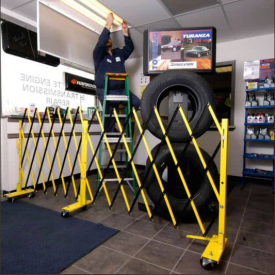
As more facilities adopt modern, dynamic safety solutions, teams are looking beyond the high-level benefits and asking practical questions about the equipment itself. A quality piece of industrial hardware should be effective, durable, and easy to maintain. Understanding its construction and proper use is key to maximizing its lifespan and value.
In this ultimate FAQ guide, we’ve compiled the most common technical questions we receive from facility managers, maintenance crews, and new users about portable expandable gates.
Section 1: Construction and Materials
Q: What are the main components and what materials are used?
A: The gate is engineered with a strategic combination of materials to balance strength, weight, and durability.
- Vertical Posts and Base: These form the backbone of the unit and are constructed from durable steel to provide stability and a solid foundation.
- Expandable Slats: The crisscrossing, accordion-style slats are made from lightweight aluminum. They are finished in a high-visibility yellow and black powder coat.
- Casters: The unit moves on four 2-inch diameter swivel casters, designed for high mobility on typical indoor floor surfaces.
- Hardware: Pivot points and connectors use industrial-grade hardware to ensure smooth, reliable operation over time. All open tube ends are sealed with plastic caps to keep out debris and prevent snagging.
Q: Why the mix of steel and aluminum? What’s the advantage?
A: This is a deliberate engineering choice to optimize performance. Using steel for the posts and base provides the necessary weight and rigidity to keep the unit stable when both collapsed and expanded. Using aluminum for the slats keeps the moving parts of the gate lightweight, which is crucial for making it easy for a single person to expand and collapse without strain. It’s the ideal combination of strength where you need it and low weight where it matters for usability.
Q: Is the gate suitable for long-term outdoor use?
A: The gate is designed to be highly durable and weather-resistant for temporary or intermittent outdoor use, such as a sidewalk repair or outdoor event. However, it is primarily intended for indoor industrial and commercial environments. For maximum lifespan, it should be stored indoors. Prolonged, continuous exposure to harsh elements like heavy rain, snow, or road salt may eventually impact the powder-coat finish and the smooth operation of the casters.
Section 2: Proper Use and Best Practices
Q: What is the correct way to expand and collapse the gate?
A: The process is designed to be simple and intuitive. To expand, simply pull the handle on the free-moving end post away from the main body. The gate will smoothly expand on its casters. To collapse, push the end post back towards the main body until it is fully retracted.
Q: What is the purpose of the top locking bar?
A: The locking bar is a key safety and convenience feature. Its purpose is to secure the gate in its fully collapsed, 16-inch wide state. This prevents the gate from accidentally drifting open during transport or while in storage, ensuring it remains a compact and stable unit when not in use.
Q: How does the interlocking feature work to connect multiple gates?
A: This feature allows you to create a continuous barrier of almost any length. One side of the gate is equipped with a set of receiving loops or “ears.” The other end has a corresponding T-shaped “handle” or interlocking pin. To connect two units, you simply align them, lift the handle of one gate, and drop it securely into the receiving loops of the other. This creates a strong yet articulated connection.
Q: What is the full expansion length, and are there any best practices?
A: The gate expands to a maximum length of 141 inches (nearly 12 feet). As a best practice, for maximum stability and rigidity, especially in very high-traffic areas, you may want to expand it to just shy of its absolute limit (e.g., 135-140 inches). This ensures there is still some tension in the slat system, making the barrier feel as firm as possible.
Section 3: Maintenance and Care
Q: What regular maintenance is required to keep the gate in good condition?
A: This is designed as a low-maintenance tool. We recommend a quick visual inspection on a monthly basis or as needed:
- Cleanliness: Wipe down the slats and posts with a damp cloth. Keeping the surfaces clean ensures the yellow and black colors remain highly visible.
- Casters: Check the four swivel casters for any wrapped debris like plastic shrink wrap, zip ties, or string, which can impede smooth movement.
- Fasteners: Visually check that all pivot bolts and fasteners appear secure.
Q: How do you clean the casters if they get clogged?
A: Debris can typically be pulled out by hand. For more tangled material, use a pair of snips or a utility knife to carefully cut it away. A stiff brush can help dislodge dirt. If the swivel mechanism becomes stiff over time, a light spray of a dry silicone lubricant can restore smooth operation.
Q: Are replacement parts available?
A: Yes. As with any piece of frequently used industrial equipment, wearable components like casters can be replaced. If a part becomes damaged or lost, contact your supplier to inquire about ordering certified replacement parts. Using manufacturer-approved parts is essential to maintaining the gate’s safety integrity and proper function.
結論
Your portable expandable 安全バリケードゲート is a robust tool designed for years of reliable service. By understanding its construction and performing minimal, common-sense maintenance, you ensure that it will always be ready to perform its critical safety function effectively and efficiently. A well-cared-for tool is a dependable tool, providing peace of mind and lasting value for your operation.