JA
JA  EN
EN  DE
DE  RU
RU  PT
PT  ES
ES  IT
IT 
A CFO’s Guide to Uncovering the Hidden Costs in Your Factory’s Infrastructure
In the world of corporate finance, we are trained to scrutinize every line item. We build complex models for market expansion and new product lines, but we often overlook the long-term financial implications of seemingly simple operational assets. Safety fencing is a classic example. Viewed through a traditional lens, it’s a one-time capital expenditure (CapEx) where the lowest bid wins.
This is a profound, yet common, mistake.
This article is not about the engineering merits of one material over another. It is a strategic financial analysis for CFOs, purchasing directors, and business owners. It is about understanding the Total Cost of Ownership (TCO) of your factory’s infrastructure and how the right choice can transform a recurring operational expense (OpEx) into a flexible, value-retaining asset.
The Core Financial Question: Are You Buying an Asset or an Expense?
The fundamental difference between traditional welded-steel fencing and a modular aluminum system lies in how they behave on your balance sheet and income statement over time.
Welded-Steel Fencing as a “Sunk Cost Asset”: You approve the purchase order, and it gets installed as a fixed asset. The moment the welder’s torch is extinguished, however, it becomes a sunk cost. Its value is tied entirely to its current location and configuration. It begins to depreciate, and worse, it carries with it an unbounded, unpredictable liability for future rework costs. Any change requires new OpEx—for labor, materials, and costly downtime—that hits your P&L statement directly.
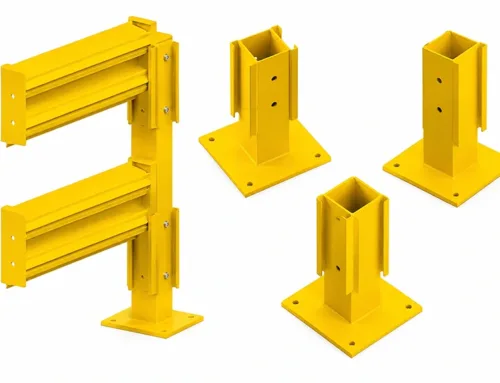
Modular Aluminum Fencing as a “Redeployable Asset”: While also a capital expenditure, a modular system from a reliable aluminum fencing supplier behaves very differently. Think of it less like a permanent wall and more like a fleet of production tools. Its value is not tied to a single location. It is a flexible, fungible asset that can be disassembled, reconfigured, and redeployed anywhere in your facility with minimal additional cost. It retains its value through its utility, providing a predictable and stable cost structure for years to come.
The Tale of Two Factories: A 5-Year TCO Analysis
To make this tangible, let’s run the numbers on a common scenario: a new production line for two identical factories over a 5-year period.
Initial Investment (Year 1)
Factory A (Welded Steel): $50,000 CapEx
Factory B (Modular Aluminum): $75,000 CapEx
From a pure CapEx perspective, Factory A appears to have made the more prudent decision.
Event 1: Minor Reconfiguration (Year 2)
A market shift requires a small adjustment to the line, moving one robotic cell by ten feet.
Factory A (Welded Steel):
Downtime (24 hours): $20,000
Rework Costs (labor, materials): $10,000
Total OpEx Incurred: $30,000
Factory B (Modular Aluminum):
Downtime (4 hours, internal team): $3,500
Rework Costs: $0 (100% material reuse)
Total OpEx Incurred: $3,500
Running TCO After Year 2:
Factory A: $50,000 (CapEx) + $30,000 (OpEx) = $80,000
Factory B: $75,000 (CapEx) + $3,500 (OpEx) = $78,500
In just one minor change, the TCO advantage has already flipped.
Event 2: Major Line Overhaul (Year 4)
A new product generation requires a significant line redesign. 70% of the fencing layout needs to be changed.
Factory A (Welded Steel): The majority of the old fence is scrapped.
Downtime (72 hours): $60,000
Rework Costs (new fence for 70% of line): $35,000
Total OpEx Incurred: $95,000
Factory B (Modular Aluminum): The existing components are simply disassembled and reassembled in the new configuration.
Downtime (16 hours, internal team): $14,000
Rework Costs: $5,000 (for a few new components/connectors)
Total OpEx Incurred: $19,000
Final 5-Year TCO:
Factory A (Welded Steel): $50,000 + $30,000 + $95,000 = $175,000
Factory B (Modular Aluminum): $75,000 + $3,500 + $19,000 = $97,500
The result is stark. The choice that seemed 50% more expensive at the outset ultimately cost 44% less over a realistic operational lifespan.
Budgeting for Predictability, Not for Crisis
Beyond the raw numbers, there is a crucial strategic advantage: budgetary certainty. With a traditional approach, your maintenance and operational budgets are constantly at risk from unpredictable rework events. It becomes impossible to forecast accurately. A single urgent layout change can derail an entire quarter’s budget.
With a modular approach from a professional aluminum fencing supplier, the cost of change is effectively neutralized. It becomes a predictable, low-level internal activity. This allows you to build more resilient, accurate financial plans and allocate capital to value-generating activities like R&D and market expansion, rather than tying it up in remedial infrastructure work.
A Final Thought for Financial Leaders
The next time a purchase requisition for safety fencing crosses your desk, resist the impulse to simply compare the initial quotes. Ask your team to model the 5-year TCO. Ask them to quantify the cost of downtime for a single rework. Ask whether they are buying a depreciating liability or a flexible, long-term asset.
The smarter financial decision isn’t about saving a few dollars on the invoice today. It’s about investing in the operational agility that will drive profitability for the next decade.
If this TCO-based approach to infrastructure investment resonates with you, we encourage you to use this framework in your next procurement cycle. A conversation about building a more financially resilient and adaptable factory is one every CFO should be leading.