EN
EN  DE
DE  RU
RU  PT
PT  JA
JA  ES
ES  IT
IT Machine Guarding for Export Projects
Machine Fencing
Machine Fencing is built for OEMs and equipment builders that ship into Europe and North America, where a fence is not just a perimeter accessory. It is part of the compliance chain. When an enclosure fails ISO 14120 physical guarding expectations or ISO 13857 safety-distance rules, the whole line can be held back at acceptance, and the cost lands on the exporter.

Why export auditors care about the fence itself
For many machine builders, the real risk is not the machine frame or the control cabinet. It is the perimeter system that gets treated as an afterthought during a late project change. Standard fencing kits may look acceptable on paper, but if they cannot support the required guarding logic, the project still fails the final compliance check.
| Guarding standard | Designed to support ISO 14120 physical protection requirements |
|---|---|
| Safety distance logic | Built around ISO 13857 clearance expectations for hazardous access control |
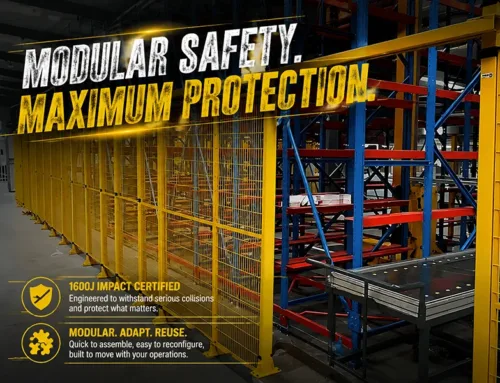
| Impact resistance | 1600 J impact energy capability |
| Impact equivalent | Comparable to stopping a 100 kg object traveling at 20 km/h |
| Project use case | Export-ready machine guarding for OEMs, integrators, and plant retrofits |
01. A fence that answers the audit question before it is asked
Old guardrail packages often fail in the same way: they are sold as a physical barrier, but they do not clearly solve the compliance question. Machine Fencing is a risk-control system engineered from the start for regulated export projects. That matters because auditors do not inspect marketing language. They inspect whether the guarding solution matches the hazard, the access point, and the required separation distance.
The result is simple: instead of defending a generic fence, your team can present a guarding structure with documented impact performance and a design logic that supports international acceptance.

02. Structural proof matters more than appearance
The most expensive mistake in export guarding is choosing a system that looks sturdy but has no meaningful structural proof. Machine Fencing is built to give project teams a hard number they can use in design reviews, acceptance files, and EHS conversations: 1600 J impact resistance. That is not a cosmetic claim. It is a load case that helps demonstrate the fence is not a weak decorative boundary.
For plants shipping complex automation cells, this removes one of the most common hidden risks: a fence that passes visual review but creates exposure during the final safety audit.

03. Compliance-ready guarding without redesigning the whole line
Export projects are rarely delayed by one large issue. They are delayed by small mismatches that add up: unsafe access gaps, unclear fence boundaries, and last-minute changes that break the safety-distance layout. Machine Fencing helps teams close those gaps with a system that is designed to support the whole guarding concept, not just the panel itself.
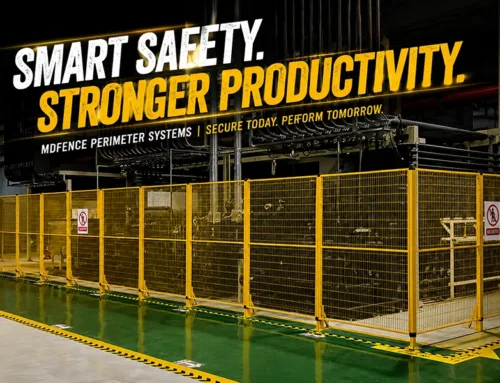
That is why it fits OEMs and integrators who need a defensible solution for machine cells, material-handling zones, and perimeter protection on equipment destined for Europe and North America.

Where Machine Fencing fits best
- OEM machinery exported to EU or North American plants where guarding must align with ISO 14120 and ISO 13857.
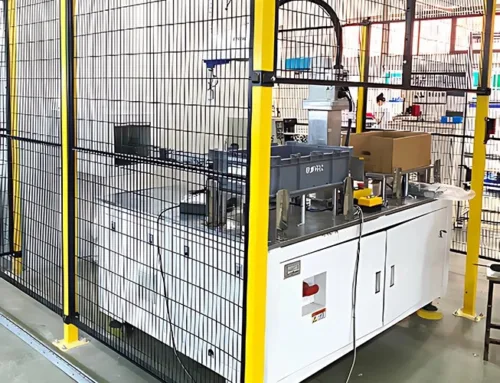
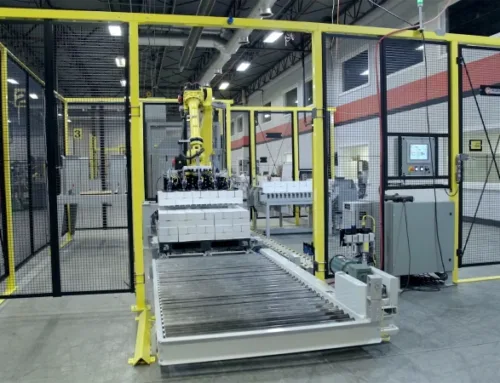
- Robot cells, automation islands, and assembly lines that need a clear physical barrier for EHS sign-off.
- Projects where the fence must support acceptance documents with real structural evidence instead of vague supplier claims.
Compliance snapshot for project teams
If your line is going overseas, the fence should be specified as part of the machine’s safety architecture, not treated as a commodity add-on. Machine Fencing gives your team a simple planning baseline: verify guarding standard alignment, verify the safety distance, and verify impact resistance before the line ships. That sequence prevents late-stage rejection and avoids the cost of rework after installation.
This is the practical value of a purpose-built machine fencing system: fewer unanswered questions, fewer acceptance surprises, and a cleaner path through the EHS review process.
Need a guarding system that can survive export scrutiny?
Machine Fencing is for teams that need more than a perimeter. It is for teams that need a compliance-ready safety boundary with real structural performance behind it.