EN
EN  DE
DE  RU
RU  PT
PT  JA
JA  ES
ES  IT
IT Machine guard fencing for plasma-cutting cells
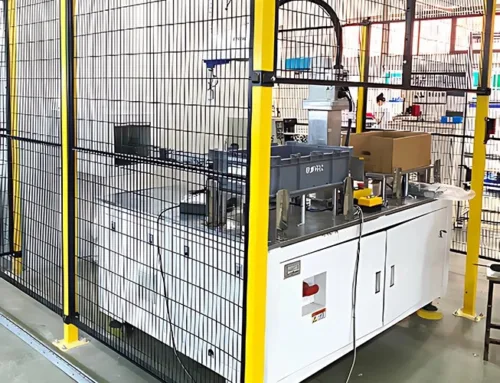
Machine Guard Fencing That Stops Flying Metal Debris and Gives Floor Space Back
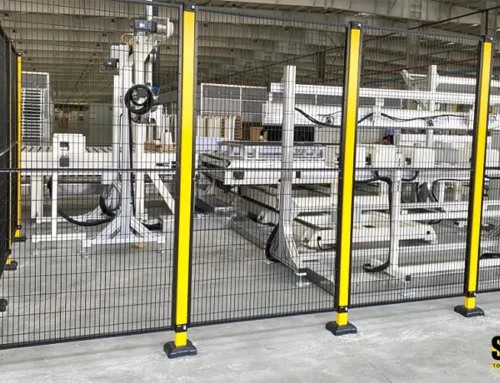
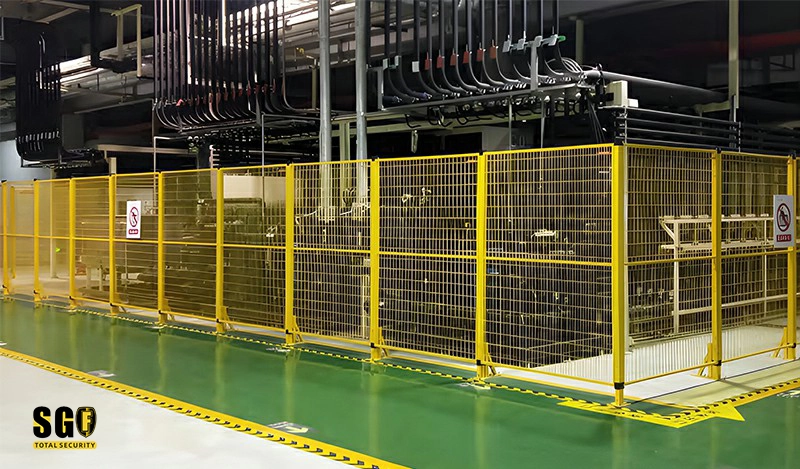
This machine guard fencing is built for large plasma cutting and milling lines that throw fast metal chips, where safety clearance and wasted aisle space usually fight each other. By combining a 20x100mm anti-entrapment mesh with a 20x30mm fully welded rectangular tube frame, the fence can be installed as close as 120mm to the hazard while staying aligned with ISO-based guarding practice.
Why the old guarding layout wastes space
In plasma cutting and milling areas, the real problem is not only containment. It is the trade-off between a mesh opening that is safe enough and a fence line that must be pushed far away from the machine. When the mesh is too open, the fence has to move back, the machine cell expands, and the plant loses expensive usable floor area. Machine guard fencing should solve both problems at once: block high-speed debris and let the guarding line sit much closer to the hazard.
| Requirement | Mdfence response |
|---|---|
| Flying metal chips and slag | 20x100mm narrow aperture mesh limits finger access and helps catch high-speed debris before it escapes the cell. |
| Fence pushed too far away | Compact guarding geometry supports installation as close as 120mm to the machine boundary where the layout allows. |
| Weak panel rigidity | 20x30mm fully welded rectangular tube frame gives strong bending resistance for a stable machine perimeter. |
| Unsafe space loss | Closer placement keeps aisles open for material handling instead of reserving dead space for oversized clearance gaps. |
| Compliance pressure | Guarding is designed to support ISO-aligned machine enclosure planning, not a loose site-built barrier. |
What makes this machine guard fencing fit the job
1) Narrow mesh that protects without opening the cell
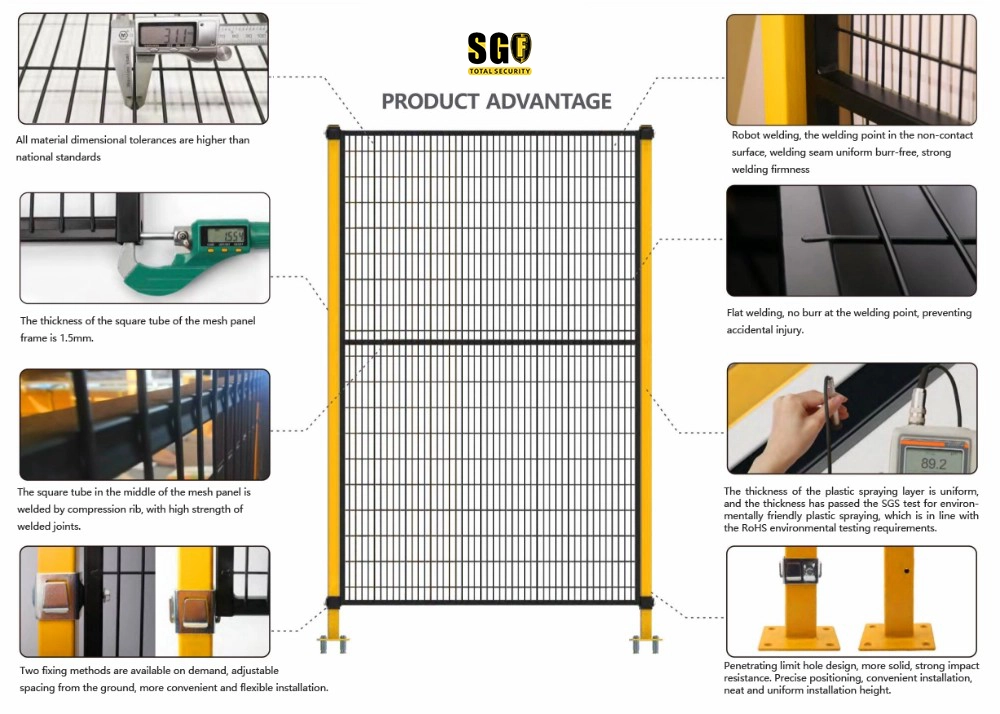
The 20x100mm mesh is the core reason this machine guard fencing works in metal-cutting environments. It is narrow enough to reduce access risk and to help intercept flying chips, but still practical for guarding around large equipment where visibility and ventilation matter. That balance matters on plasma cutting lines, because a loose barrier simply does not hold back the material ejected by the process.
2) Welded frame stiffness that keeps the line straight
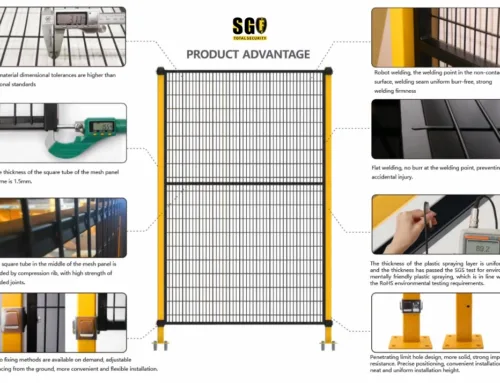
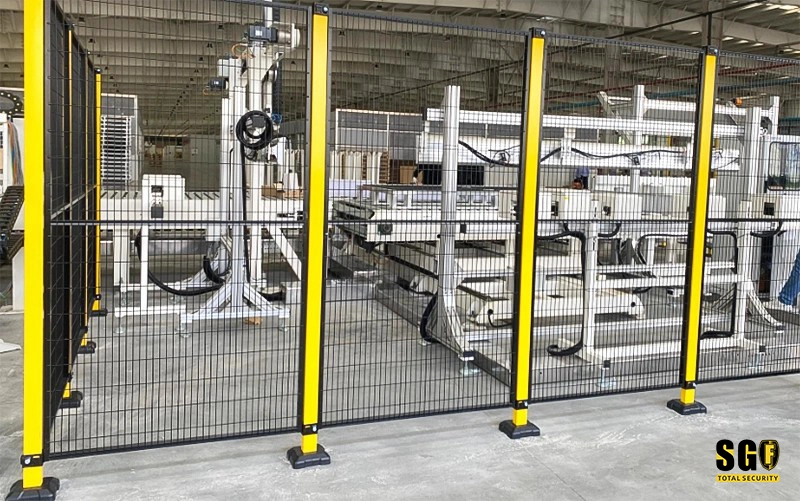
The 20x30mm fully welded rectangular tube frame is not decorative; it is what keeps the panel from flexing when the fence is built close to the machine. In a tight cell, weak frames create movement, alignment drift, and maintenance headaches. Here, the welded frame gives the fence the rigidity needed to stay stable while preserving the compact footprint demanded by expensive factory layouts.
3) Installation detail that proves the guard is built for real floors
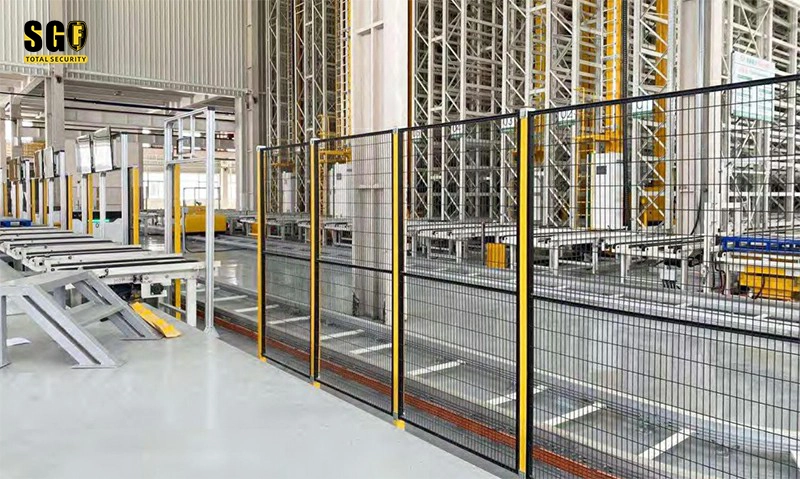
Factory guarding only works when the base connection is serious. The installation detail shows a base plate, drilling points, and expansion fixing that anchor the system to the floor instead of letting it behave like a lightweight divider. That is important when machine guard fencing must stand up to repeated vibration, cleaning, and daily movement around a busy cutting or milling area.
Where this guarding style delivers the most value
- Plasma cutting bays that throw hot chips, sparks, and fast metal fragments.
- Milling cells where operators need strong visual control and a narrow safety perimeter.
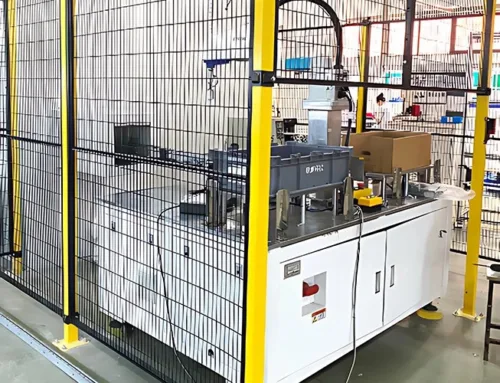
- Retrofits where the old fence line stole too much floor area from production and logistics.
- Plants that want one machine guard fencing system to improve both safety and space utilization.
The result is simple: the hazardous zone stays contained, the fence line moves closer to the machine, and the plant recovers usable area for access, staging, and material handling. Instead of paying for dead space, the factory gets a compact, rigid, and safer layout.
Structure evidence at a glance
For machine guard fencing projects, the key evidence is visible in the structure itself: narrow 20x100mm mesh, high-stiffness 20x30mm welded frame, and floor-anchored installation details. Those three points explain why the system can stop debris while supporting a much tighter machine boundary than a generic wide-opening fence.
Build a tighter machine cell without losing safety
If your plant is losing expensive floor space to oversized guarding clearance, Mdfence can help you plan a machine guard fencing layout that contains debris, follows ISO-based guarding logic, and fits much closer to the equipment.