EN
EN  DE
DE  RU
RU  PT
PT  JA
JA  ES
ES  IT
IT SGF Blog
Machine guarding safety fence for plants that keep changing layouts
When a materials-processing plant keeps moving machines, storage zones, and aisles, a machine guarding safety fence must do more than block access. It has to move with the line, install without hot work, and come apart without becoming scrap.
1) The real problem: layout changes destroy fixed assets
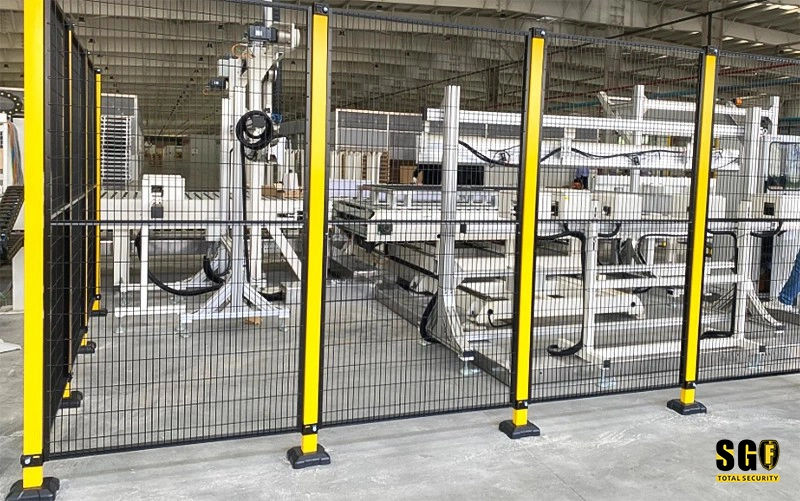
In a material handling or machining center, every new machine line, storage bay, or forklift route can force a layout reset. Traditional welded fencing looks permanent, but that is exactly the weakness. Once the line moves, the old fence often has to be cut apart, reworked, or thrown away. In a heavy-material warehouse, that is not just wasteful. It also means hot work, fire-watch coordination, and extra downtime in areas where flame control is strict.
A machine guarding safety fence should protect the workflow, not lock the factory into one geometry forever.
2) Why the modular cold-work system fits this scenario
Mdfence is built for environments where change is normal. The system uses cold-work modular assembly with clamp-style ring connections, so installation does not require welding. That matters in restricted sites because the fence can be assembled quickly, without hot-work permits or flame risk, and without turning a routine layout adjustment into a construction project.
Compared with traditional welded guarding, the assembly speed is typically 40% to 70% faster. More importantly, the fence can be dismantled without damage and reassembled in a new location. That turns the guard line from a fixed cost into a reusable asset.
3) Structure and parameters that solve the moving-line problem
4) Evidence from the product images
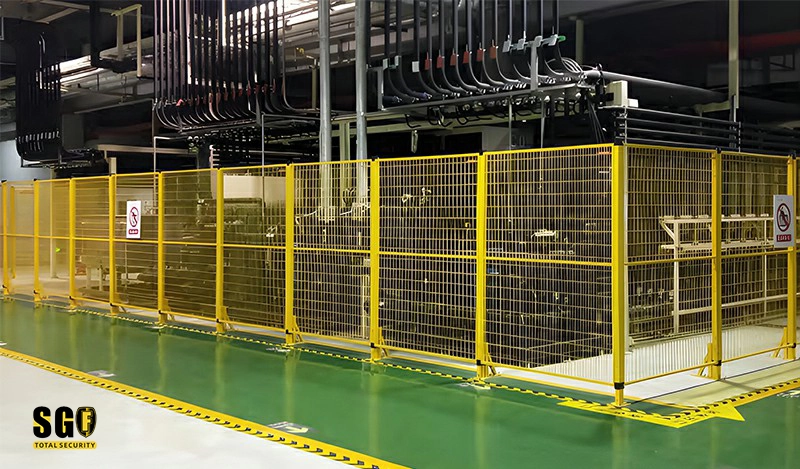
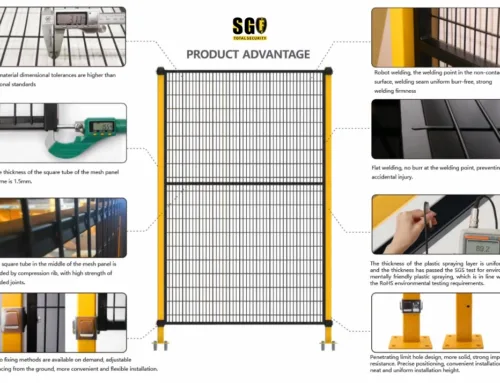
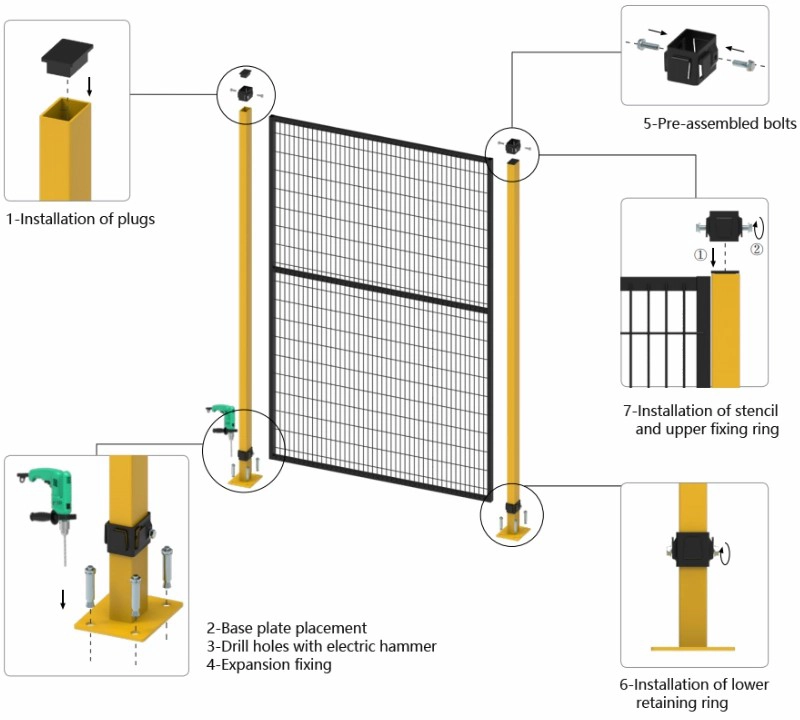
This image supports the cold-work installation claim. The base plate drilling, expansion bolts, and retaining-ring assembly explain how the fence is anchored cleanly and repeatably on site.
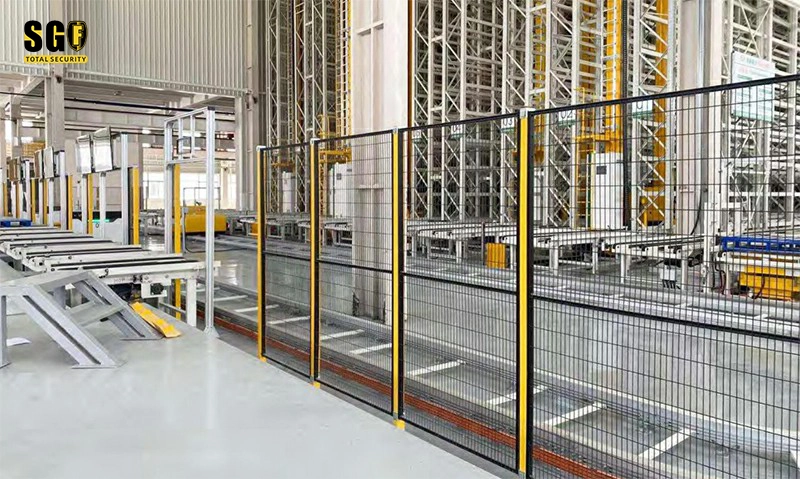
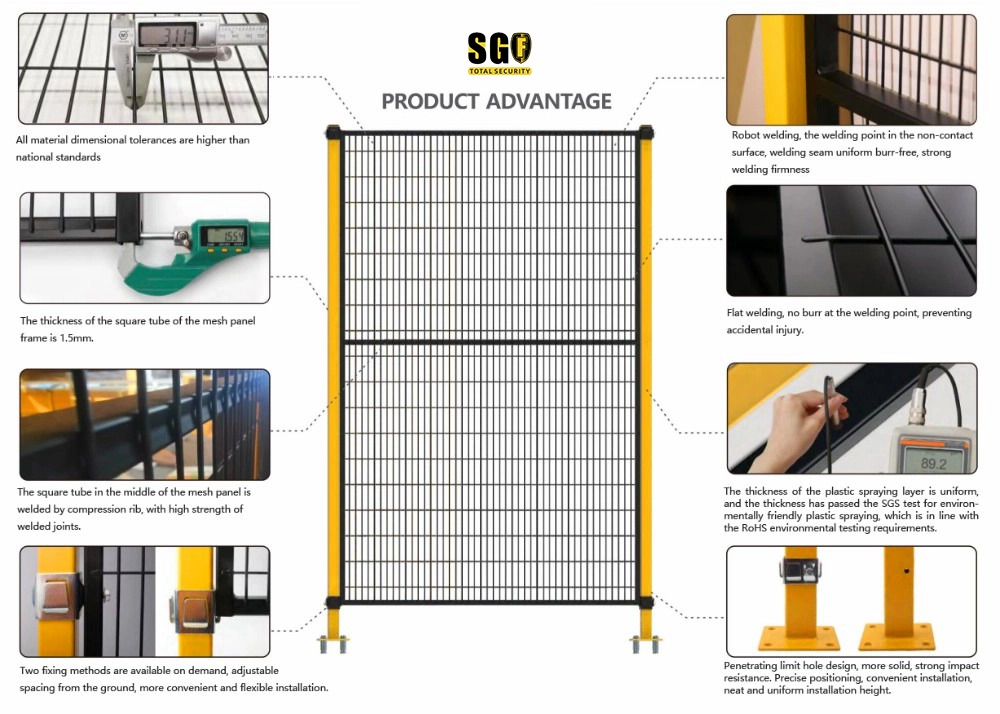
This structural view is the proof point for modularity. If the line shifts, the posts and panels do not need to be sacrificed; they can be detached and rebuilt in the next zone.
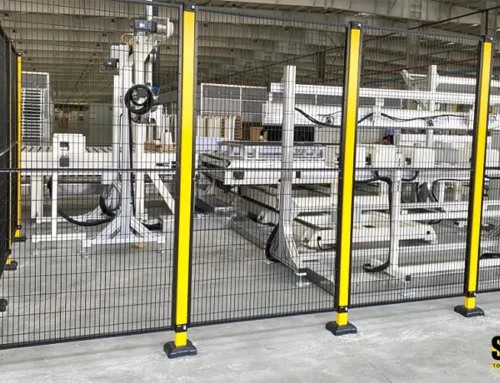
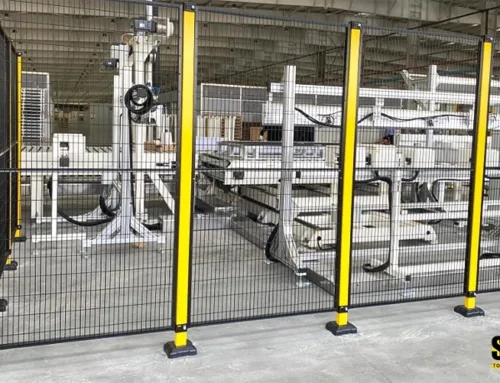
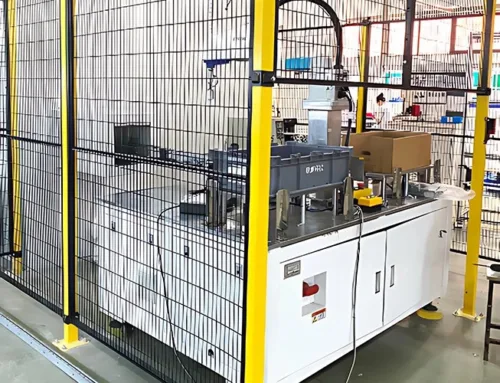
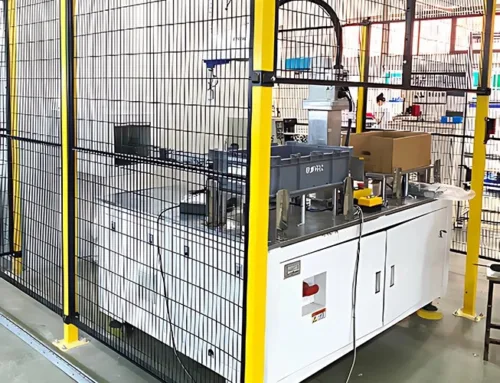
For automation cells, the fence has to define a clean working boundary. This image shows the system doing exactly that: enclosing the machine, preserving access control, and keeping the perimeter tidy.
That continuous layout is the key benefit for plants with recurring reconfiguration. The fence follows the line instead of forcing the line to follow the fence.
5) Final result: lower sunk cost, higher reuse, less disruption
Once the plant treats the machine guarding safety fence as a modular asset, the economics change. A fence that can be moved, reused, and rebuilt reduces scrap, cuts reinstallation waste, and removes the recurring pain of welding work every time the layout changes. For operations that rearrange often, the value is not just safety. It is flexibility, speed, and asset recovery.
In short: the old model converts every layout change into a loss. Mdfence converts that same change into a controlled move with high reuse and lower downtime.
Need a machine guarding safety fence that can move with your plant?
Talk to SGF about a modular guarding layout that matches your current line and still survives the next one.