EN
EN  DE
DE  RU
RU  PT
PT  JA
JA  ES
ES  IT
IT Machine safety fencing
Machine safety fencing for forklift impact zones in steel coil transfer aisles
In steel coil and sheet warehouses, machine safety fencing must survive the same forklift route that keeps production moving. Mdfence is built for that reality: Q235 carbon steel, 60x60mm posts, TÜV-verified impact resistance, and a design that absorbs energy instead of failing on the first hit.
Why forklift-heavy warehouses need a different fence
A steel coil transfer aisle is not a light-duty access lane. Forklifts turn fast, carry serious mass, and clip barriers more often than most teams want to admit. Ordinary frameless wire mesh can look acceptable on day one and fail hard after one contact event. Once the fence gives way, the problem is not just repair cost; it is exposure, downtime, and a broken safety line in a high-risk zone.
| Warehouse problem | Mdfence response |
|---|---|
| Repeated forklift scrapes and bumper hits | 60x60mm Q235 carbon steel posts built to take impact, not collapse on contact |
| Fence failure after a single accident | Plastic deformation absorbs energy and helps avoid brittle breakage |
| Safety line must stay readable under abuse | Yellow post and black mesh layout keeps the boundary visible in busy aisles |
| Projects need evidence, not claims | TÜV-backed structure and 1600 joule extreme impact resistance support specification-driven buying |
What makes Mdfence fit this job
1) Structural strength that matches forklift reality
Mdfence uses 60x60mm Q235 carbon structural steel at the post level, with TÜV certification and an extreme impact rating up to 1600 joules. That matters because the question in a heavy logistics hall is not whether a barrier can look rigid in photos. The question is whether it can manage real kinetic energy. Q235 steel gives the system the plastic deformation behavior that helps absorb force instead of snapping into a catastrophic failure.
2) A rigid frame and clean perimeter closure
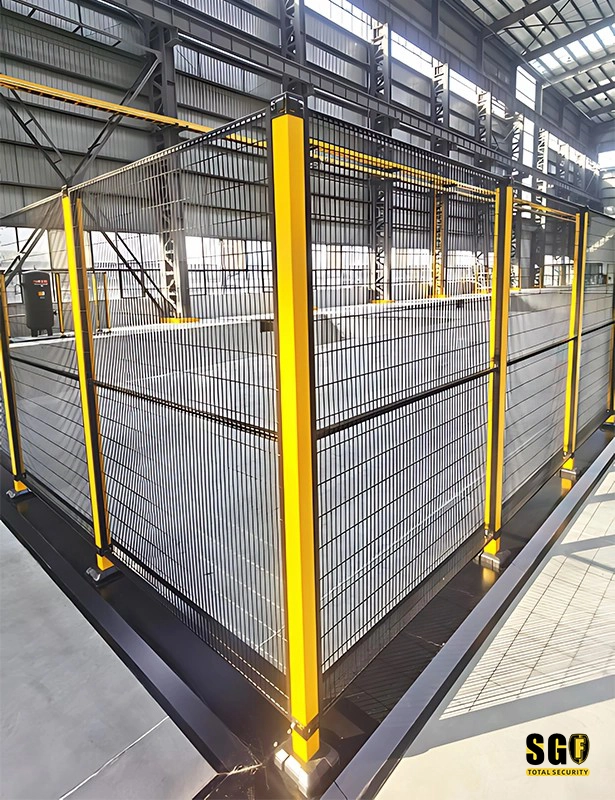
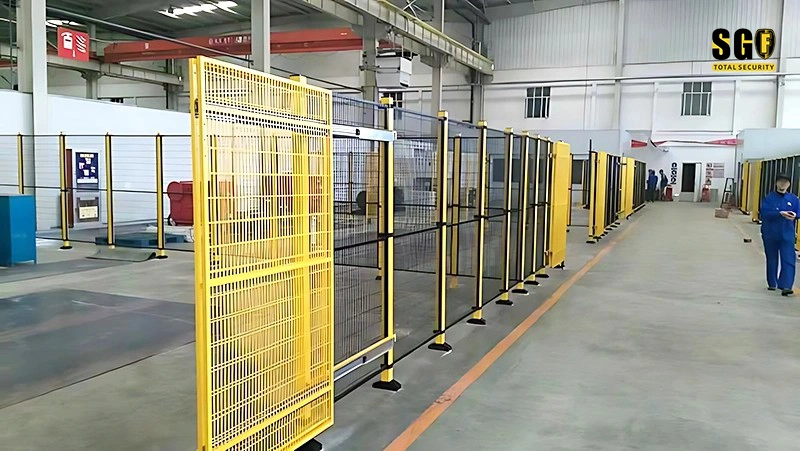
Heavy-duty impact protection is not only about the post material. The fence needs a complete load path, stable corner closure, and a perimeter that does not loosen under vibration. The corner detail here shows how the yellow post and top beam keep the layout tight at the turning point, which is exactly where a warehouse fence is most likely to get stressed by a pallet load, a misjudged turn, or a reversing forklift.
3) Controlled access without weakening the line
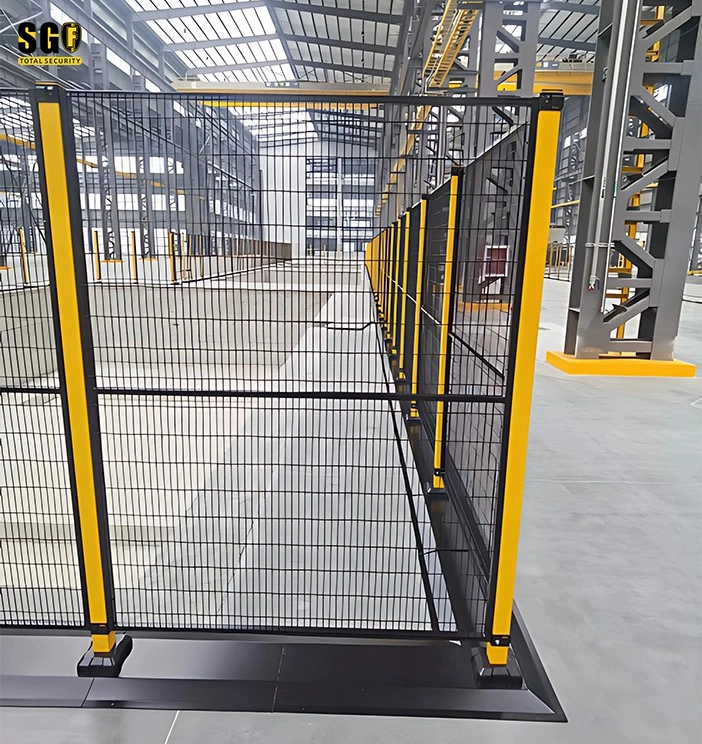
Every industrial barrier needs access points. The problem is that a weak gate usually becomes the first failure point. Mdfence uses a controlled-entry gate structure with black posts and base plates, so access remains organized and the boundary still reads as a real machine safety fencing system. In projects like steel coil transfer aisles, that balance between entry control and impact resistance is what keeps the layout operational after long use.
Where this solution fits best
- Steel coil and sheet transfer aisles with frequent forklift traffic
- Warehouse boundaries where barriers are regularly brushed by moving equipment
- Heavy logistics corridors that need visible separation and real impact tolerance
- Plant layouts that cannot afford repeated fence replacement or unstable repairs
For these sites, machine safety fencing is not a decoration. It is a structural control point. When the aisle is busy, the barrier must stay intact, keep the route legible, and reduce the chance that a minor bump becomes a major safety event.
What the pictures prove
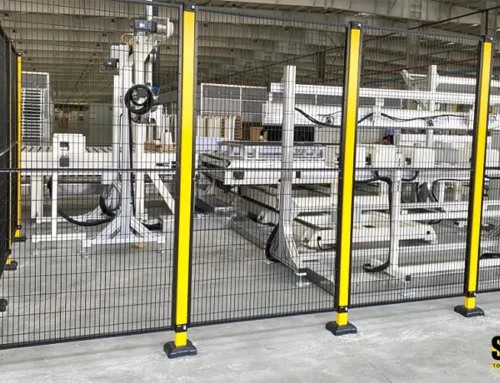
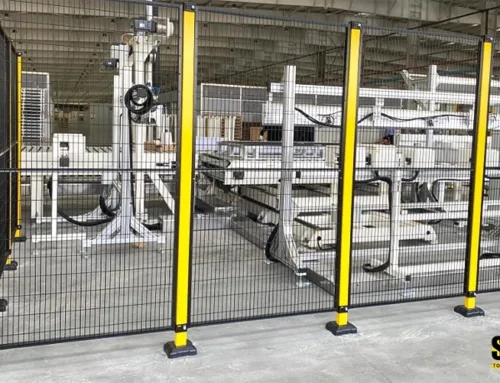
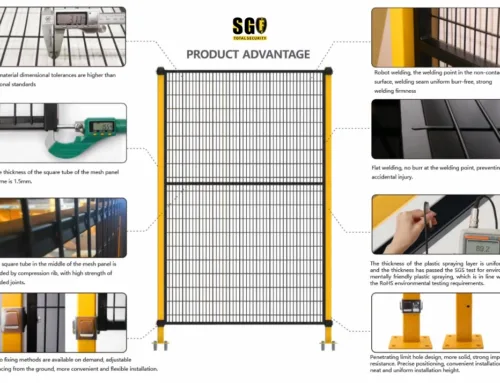
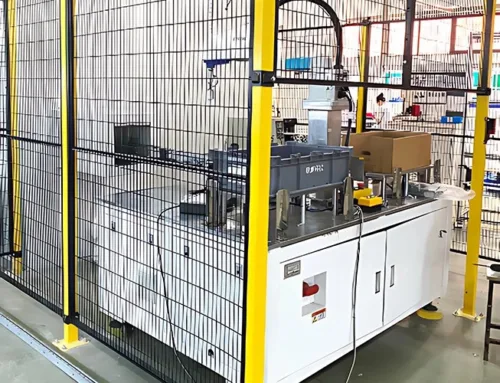
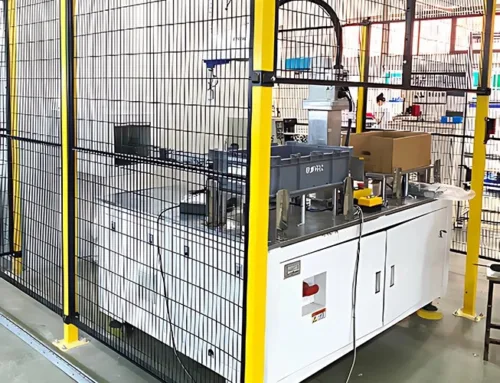
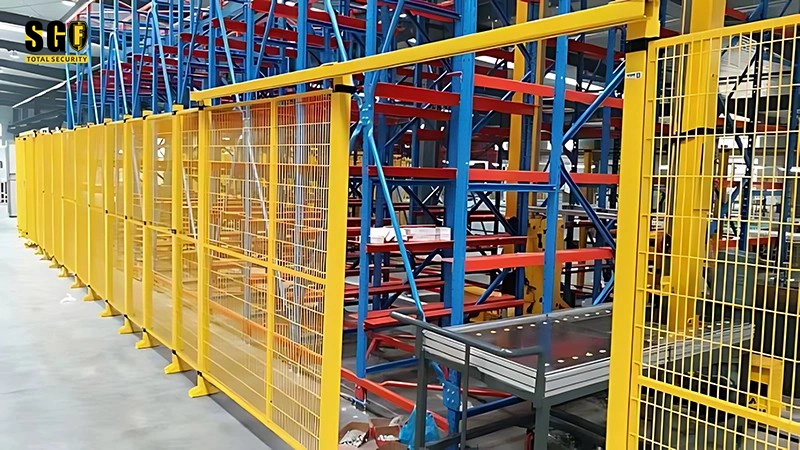
The hero image shows the fence in a warehouse-style aisle, where the danger is not theoretical. The supporting images show the perimeter, the corner closure, and the access gate, so the article is not asking the buyer to trust a slogan. It is proving that the system is engineered as a full industrial safety line, with visible structure and a clear duty match to forklift-heavy environments.
Result: a fence that stays standing after contact
When a warehouse uses ordinary mesh, one collision can end the barrier. When it uses Mdfence, the system is designed to take the hit, absorb the energy, and keep the safety boundary functional. That means fewer emergency repairs, less downtime, and a much stronger safety posture around steel coil handling.