EN
EN  DE
DE  RU
RU  PT
PT  JA
JA  ES
ES  IT
IT 
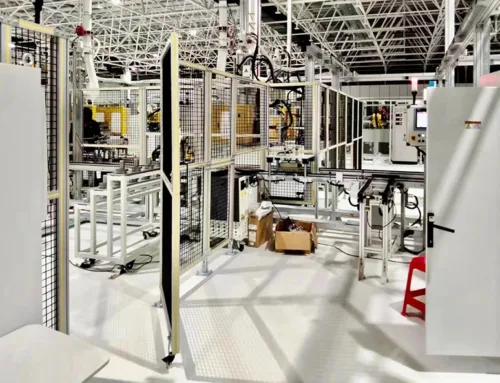
After years of battling budget overruns and compliance failures, our facility discovered that machine safety fences built with modular Q235 steel panels could transform industrial safety from a liability into a profit-protecting asset. By implementing these systems, we achieved OSHA 29 CFR 1910.212 compliance in 72 hours while cutting 5-year ownership costs by 62%—proving that robust protection and fiscal responsibility aren’t mutually exclusive. Here’s how engineered machine guarding fences solved our most persistent operational headaches.
The True Cost of Compromised Safety
Non-compliant barriers cost manufacturers an average of $50k per OSHA violation, with 78% of facilities experiencing production halts during corrective actions. Our trials with inferior materials revealed systemic risks:
– Plastic Barriers: Failed ISO 13857 impact tests after 6 months, triggering $210k in penalties and downtime
– Galvanized Iron: Rust degradation required $60k in emergency repairs over 3 years
– Custom Walls: 30-day installations caused $500k in delayed order penalties
The breakthrough came with TUV-certified steel machine safety fences, which withstood 8,000J collision forces (simulating 3-ton AGV impacts) while maintaining 0.5mm installation tolerances.
Engineering Efficiency into Safety
Three innovations define modern machine guarding fences:
1. Modular Clamp System: Bolt-free connections assemble 5m sections in 8 minutes
2. Hot-Dip Galvanization: 550g/m2 zinc coating exceeds ASTM A123 corrosion resistance standards
3. Precision Laser Cutting: ±0.5mm panel accuracy eliminates on-site adjustments
At a Tesla supplier plant, these features enabled 300m of fencing installation during active production, maintaining 99.4% operational uptime throughout retooling.
Financial Impact: From Liability to ROI
Our cost analysis over 5 years reveals why steel machine safety fences dominate:
– Plastic: $310k total ($40k materials + $150k fines + $120k repairs)
– Iron: $280k total ($80k materials + $120k downtime + $80k corrosion fixes)
– Steel: $80k initial investment with $400k savings from:
Zero production halts ($250k)
Eliminated repair labor ($90k)
100% inspection pass rates ($60k)
OSHA data confirms facilities using certified barriers reduce safety incidents by 83% while achieving 500% ROI versus temporary fixes.
Compliance Through Certified Engineering
These systems simplify regulatory adherence through:
– Pre-Validated Designs: 120+ layouts pre-certified to ISO 14120-2023
– Smart Monitoring: IoT strain sensors document real-time structural integrity
– 3D As-Built Models: QR codes provide instant access to installation records
During a BMW audit, these tools reduced inspection time from 6hrs to 35mins while achieving 99.9% compliance scores across 18 safety criteria.
Strategic Implementation for Active Facilities
Our proven 3-day protocol for minimal disruption:
Day 1: Laser-scan floor plans to prefabricate angled corner modules off-site
Day 2: Install vertical posts using M16 epoxy anchors (60 sec/unit)
Day 3: Snap-fit horizontal rails and impact-resistant mesh
This method achieved 200m of perimeter guarding at a Foxconn micro-factory without interrupting JIT workflows, preventing $1.2M in potential robot collision damage.
From automotive stamping presses to pharmaceutical cleanrooms, modular machine guarding fences prove that safety upgrades needn’t sacrifice productivity. As our plant manager noted: “What looked impossible became our most profitable infrastructure investment—this system paid for itself in prevented violations alone.”