EN
EN  DE
DE  RU
RU  PT
PT  JA
JA  ES
ES  IT
IT Automated warehouse safety
Plastic Safety Barrier for AGV Routes and Robot Handoff Zones
When AGV, AMR, and unmanned forklifts move through the same building, the risk is no longer only pedestrian contact. Plastic Safety Barrier layouts create a physical line for robot routes, charging areas, and handoff points while reducing secondary damage to automation equipment compared with steel barrier alternatives.
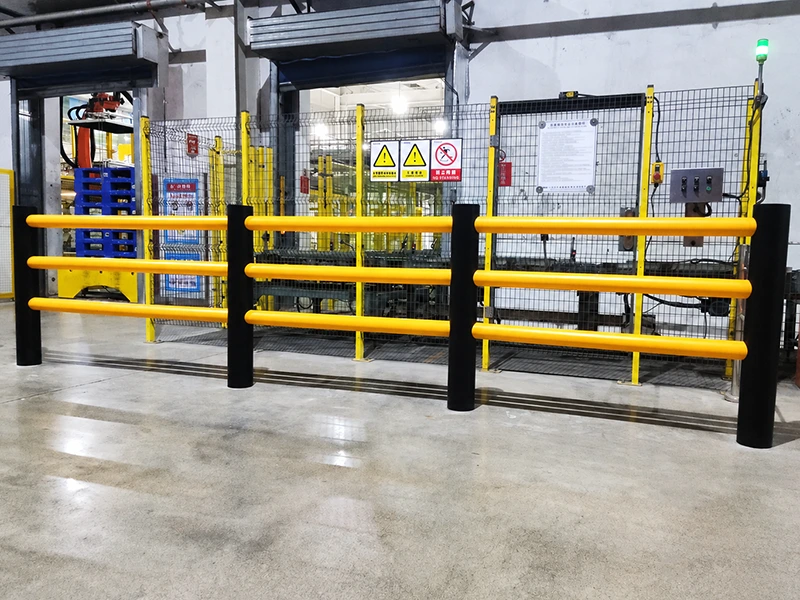
Why automated sites are rethinking barrier layouts
Autonomous logistics sites need more than traditional aisle separation. AGV routes, robot charging bays, equipment perimeters, and human-robot transfer points all need clear physical separation. In these mixed environments, Steel Barrier and other rigid traditional guardrail systems can transfer impact force back into an expensive robot body, scanner, or frame. That means a low-speed scrape may create costly secondary damage even when the barrier itself survives.
| Old layout issue | Fcbarrier response |
|---|---|
| Steel Barrier can damage robot housings on contact | Polymer Safety Barrier reduces hard-metal collision transfer |
| Retrofit work often disrupts live operations | Modular Installation supports quick add-on in active DC zones |
| Mixed traffic needs clear boundaries | Flexible Safety Barrier defines AGV routes and pedestrian safety lanes |
| Repair downtime hurts throughput | Self-Rebounding and low-maintenance structure help restore normal flow faster |
Why FCBarrier fits automation-heavy warehouses
1) Lower secondary damage than rigid steel systems
Fcbarrier is positioned as a Flexible Crash Barrier and Industrial Safety Barrier for places where a low-speed bump should not become a major asset-loss event. Its polymer structure is far less aggressive to AGV shells, AMR frames, and unmanned forklift components than a hard steel edge. That matters in distribution centres where every shutdown can ripple into picking, charging, and dispatch schedules.
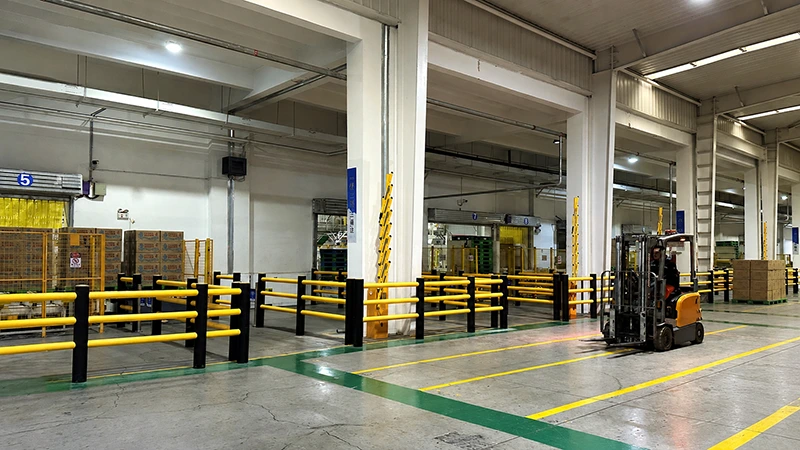
2) Modular barrier structure for live retrofit work
The product profile highlights Mortise & Tenon Quick-Install, Quick-Release, Modular Barrier, and Retrofit Barrier use cases. For operators that cannot stop the line, that structure is the real advantage: sections can be added around robot charging bays, conveyor handoff areas, and machine perimeters without rebuilding the whole route plan. It also supports easier future re-layout when automation density changes.
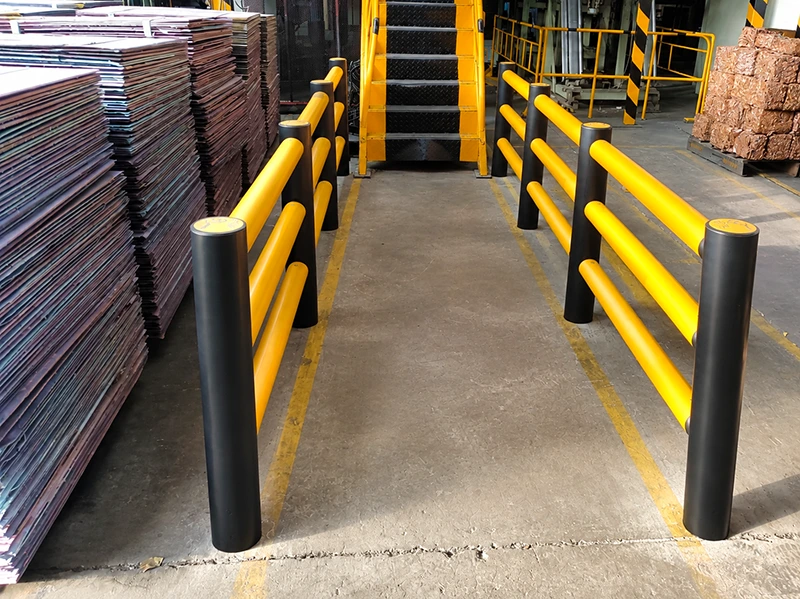
3) Designed for impact control, not just visual separation
Fcbarrier is not a decorative divider. The traffic profile identifies it with impact resistant, energy absorbing, and self-rebounding positioning, plus heavy-duty safety barrier language and a high impact rating. In practice, that means the barrier is intended to take the hit, recover, and keep the route readable for people and machines. For automation projects, that is more useful than a fence that only marks space.
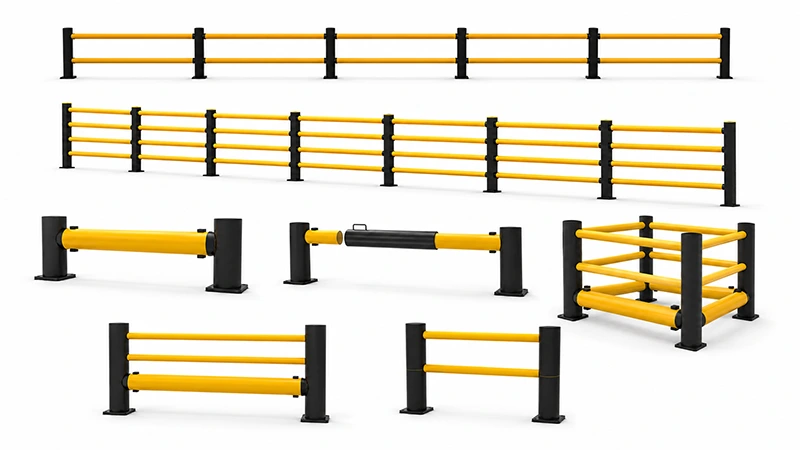
Where Plastic Safety Barrier layout works best
- AGV and AMR routes that need hard separation from pedestrian walkways
- Robot charging zones where accidental contact must not damage equipment
- Human-machine handoff areas in automated distribution centres
- Equipment perimeters around conveyors, scanners, and control stations
- Retrofit upgrades in existing warehouse safety barrier layouts
In these zones, Fcbarrier supports Workplace Safety, Forklift Accident Prevention, and Pedestrian & Asset Protection while keeping the layout flexible enough for future automation changes. The result is a safer boundary with less risk of expensive secondary damage than a rigid steel guardrail approach.
Structure evidence and practical takeaway
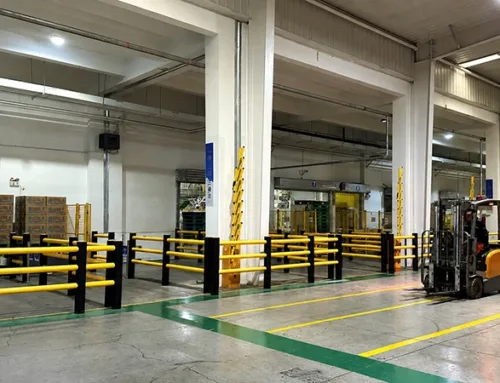
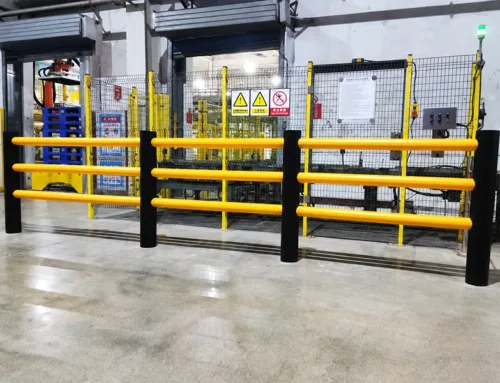
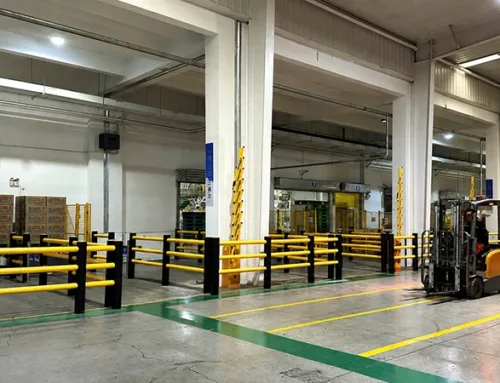
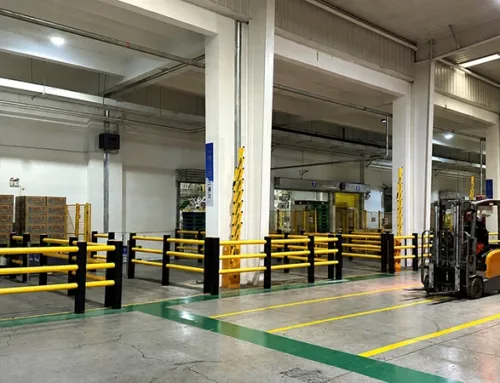
The image set shows both real-site installs and modular product views: floor-mounted posts, multi-rail configurations, continuous aisle protection, and equipment-zone segregation. That combination matters because automation sites need both proof of installation and proof of structure. Plastic Safety Barrier is strongest when the barrier must separate traffic, absorb contact, and still allow fast changes to the warehouse plan.
Plan your AGV route protection with Fcbarrier
If you are separating AGV routes, robot charging bays, or handoff zones, Fcbarrier gives you a Flexible Safety Barrier layout that is easier on automation equipment and easier to adapt during live operations.