EN
EN  DE
DE  RU
RU  PT
PT  JA
JA  ES
ES  IT
IT FCBarrier | Global EHS standardization
Polymer Safety Barrier for Global Factory Standards and Auditable EHS Control
For multinational FMCG groups operating warehouses, production plants, loading docks and cold-storage areas across multiple countries, FCBarrier turns fragmented guarding decisions into a repeatable Polymer Safety Barrier standard. Select the right module by scene, verify the impact basis, and give every site a common record for workplace safety and PAS 13 review.
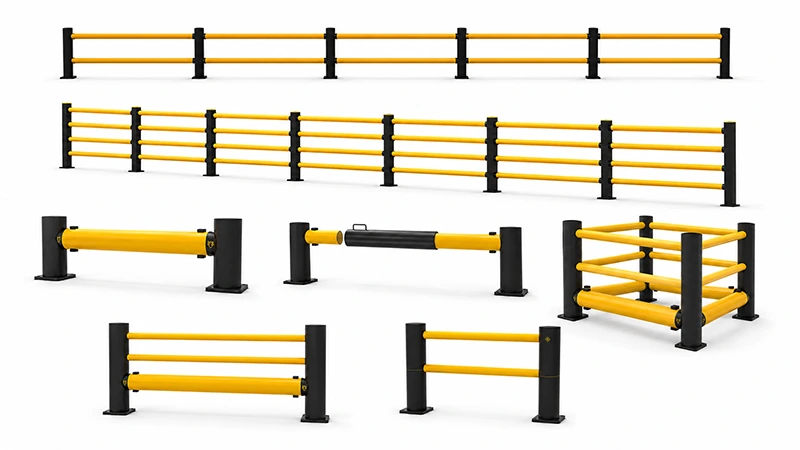
From scattered site purchases to a repeatable barrier specification
A global EHS team cannot audit a protection system consistently when one plant buys steel bollards, another installs concrete blocks, and a third uses a traditional guardrail with no traceable impact basis. FCBarrier provides a common selection logic: four series, three specification levels, and energy values that can be checked against forklift mass and speed.
| Standardization point | FCBarrier basis for site replication |
|---|---|
| Application modules | SR Single Rail for defined edge protection; DR Double Rail for warehouse racking protection; TR Traffic Rail for pedestrian and vehicle separation; CTR Column Protector for building and structural assets. |
| Specification logic | Three impact-rated levels under the same selection framework, allowing EHS teams to match barrier duty to forklift routes, pedestrian walkways, loading dock protection and equipment zones. |
| Impact reference | The top published reference is a 28,950J rated barrier for an 8-ton forklift at 9.6 km/h. The energy basis can be recalculated and attached to a site risk assessment. |
| Protection behavior | ARMORFLEX polymer construction is designed for impact resistance, energy absorbing and self-rebounding behavior; the documented product claim is absorption of 80% of energy before rebound. |
| Audit record | Use the selected series, rail configuration, impact level, installation layout and test reference as one repeatable barrier schedule for local EHS review and future retrofit work. |
Why the Polymer Safety Barrier fits a multi-plant rollout
1. One product family, four practical protection roles
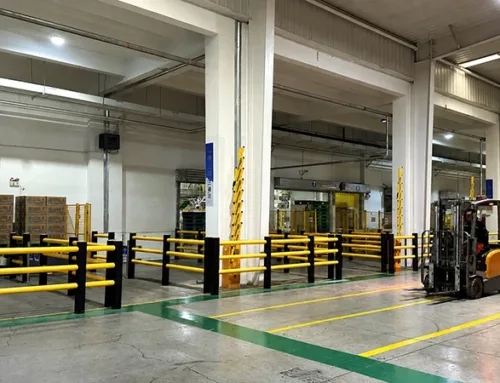
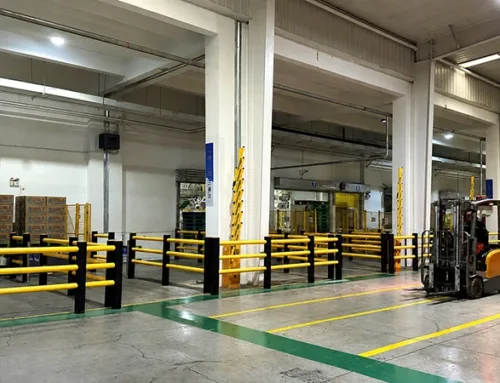
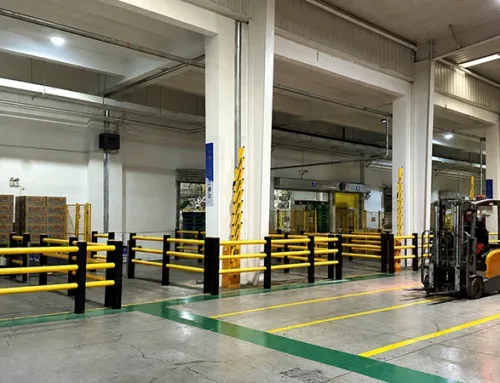
Instead of treating every project as a new steel barrier purchase, the FCBarrier family maps directly to common industrial risks: Flexible Rack Protection for storage aisles, Pedestrian Barrier layouts for people and vehicle segregation, Loading Dock Protection at transfer points, and Column Guard protection for structural assets. Modular installation makes the same decision tree usable during new construction or retrofit barrier work.
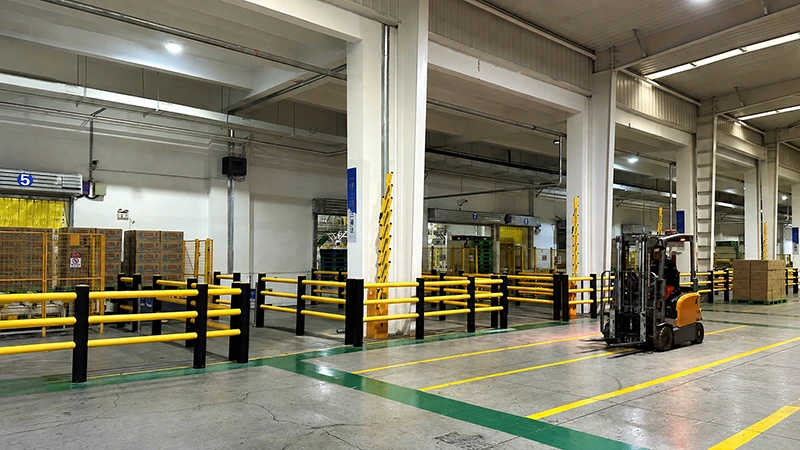
2. Match impact energy to the actual forklift zone
A credible standard must show more than a rail color or nominal height. For each site, EHS and engineering teams can record vehicle mass and speed, then compare the calculated kinetic energy with the selected high impact rating. The 28,950J reference gives a concrete benchmark for heavy-duty forklift safety barrier decisions and helps avoid both under-specification and unsupported claims.
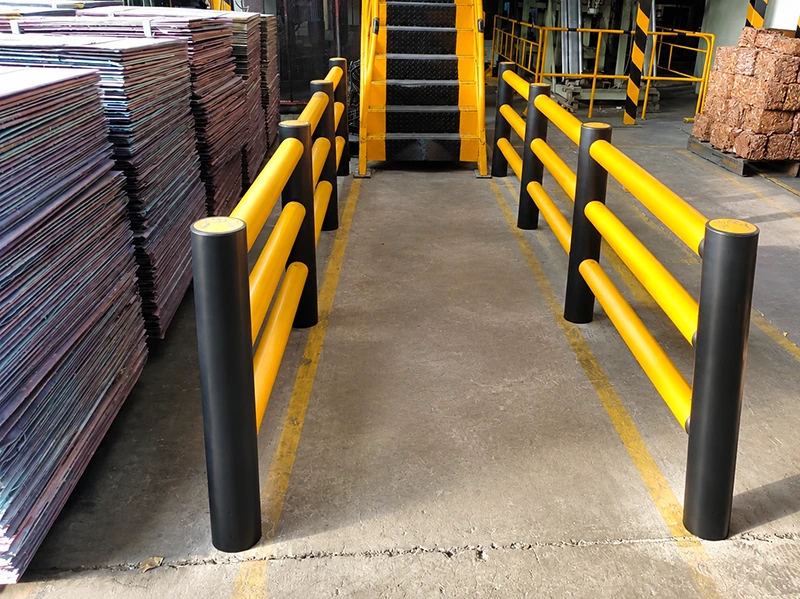
3. Make installation and inspection visible
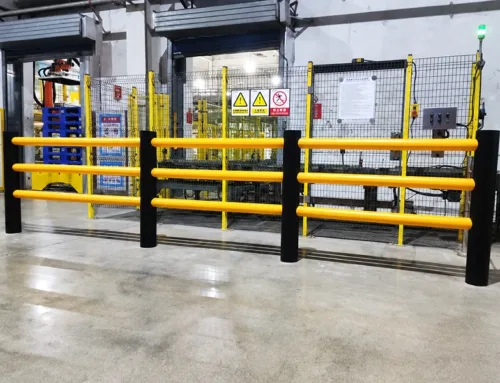
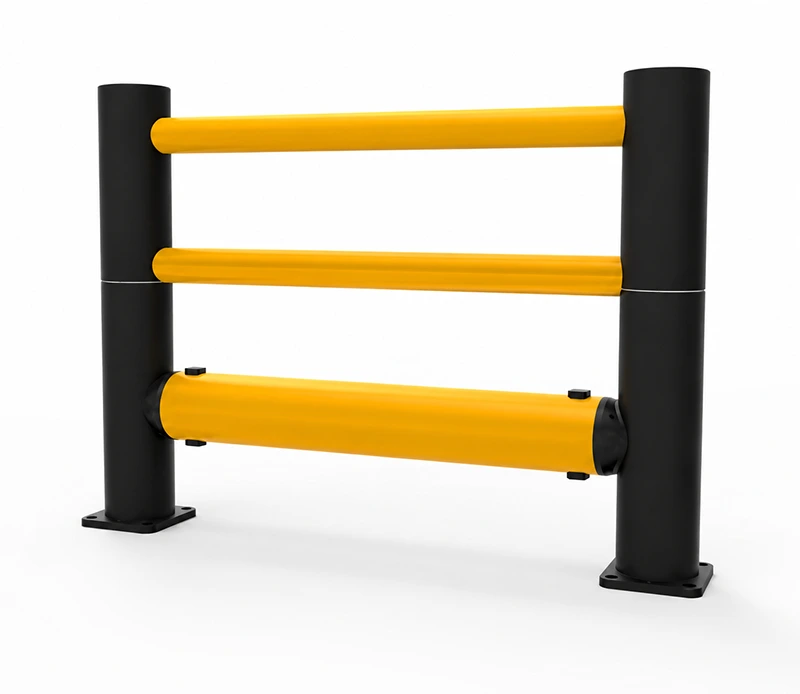
The indexed structure evidence shows segmented rails, upright posts, connectors and floor-anchored base plates. With Mortise & Tenon Quick-Install and quick-release modular parts, the barrier schedule can identify what is installed, where it is installed and what must be inspected or replaced after an impact. Self-rebounding, corrosion-free and UV-resistant behavior can reduce repair interruptions when the application and environment are properly confirmed.
Apply the same control logic across factory scenes
- Warehouse and racking protection: use SR or DR configurations to protect rack ends, aisle boundaries and forklift routes from repeated impact.
- Pedestrian safety: use TR layouts to define walkways and maintain a clear separation between people and moving equipment.
- Loading dock protection: standardize edge and transfer-zone protection where vehicles, pallets and building structures meet.
- Cold storage and hygienic production: confirm the required environmental version, then evaluate polymer barriers for corrosion-free, easy-clean protection in food, beverage and pharmaceutical areas.
- Machinery and column protection: use CTR Column Protector modules around vulnerable columns, machines and access points.
This scene-based modular selection helps a central procurement team issue a common bill of materials while allowing each plant to document its own traffic routes, anchoring conditions and risk controls.
What an auditable FCBarrier standard should contain
For each country or factory, retain the selected FCBarrier series, three-level specification choice, layout drawing, floor anchoring detail, forklift energy calculation, installation photos and post-impact inspection record. This evidence pack supports workplace safety reviews and creates a clear basis for discussing PAS 13 requirements. FCBarrier should not be presented as PAS 13 certified unless the applicable third-party certification is separately verified.
Turn one factory risk assessment into a global barrier playbook
Share your factory layout, forklift mass and operating speed, pedestrian routes, rack or column locations, and environmental conditions. SGF can map the application to SR, DR, TR or CTR modules and provide a parameter-led Polymer Safety Barrier specification that local teams can install, inspect and audit consistently.