PT
PT  EN
EN  DE
DE  RU
RU  JA
JA  ES
ES  IT
IT 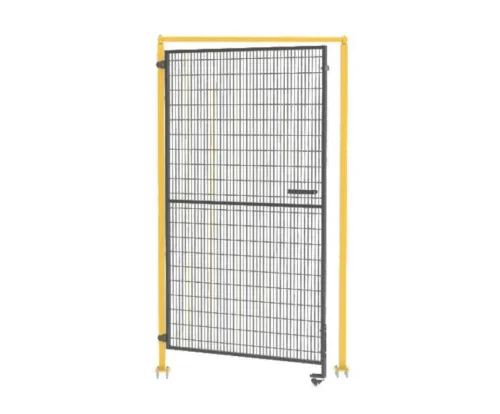

|
Integrating conveyor belts into high-speed automotive assembly cells presents a critical engineering bottleneck: standard perimeter guards leave gaping tunnel openings that fail ISO 13857 finger-safe audits. When system integrators resort to on-site hot work to patch these gaps, they destroy powder coatings, introduce rust, and delay commissioning. You need a pre-engineered barrier that seamlessly integrates with PLC safety interlocks without a single drill hole, ensuring your robotics layouts pass EHS inspections on the first run. |
The Conveyor Integration Bottleneck in Automated Assembly
In the world of turnkey automation solutions and automotive welding stations, the intersection between a moving conveyor belt and a hazardous robot work cell is a notorious compliance trap. As a system integrator, your primary directive is to maximize Overall Equipment Effectiveness (OEE) while maintaining strict safety standards. However, traditional fencing solutions often fall short when dealing with the dynamic nature of material handling systems.
The “Before” Scenario: Failed Audits and False STO Triggers
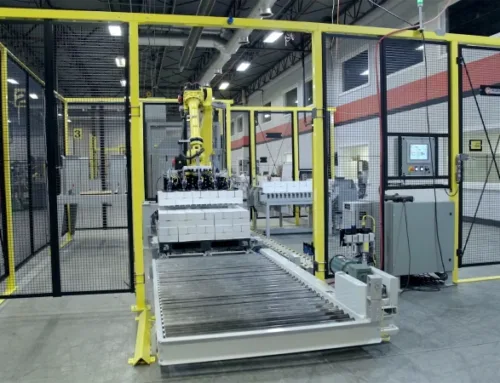
Imagine a high-speed mechanical assembly line where a blue belt conveyor feeds engine blocks into a KUKA six-axis robot cell. Using standard 50x50mm wire mesh around the conveyor opening creates a massive vulnerability. According to ISO standards, this large mesh requires a safety reach distance of up to 850mm (33.5 inches). To compensate, engineers often build oversized tunnel guards, eating up valuable floor space and narrowing forklift aisles.
Worse, when access doors are fabricated from flimsy, frameless mesh, the constant vibration of the CNC machining centers causes the door hinges to sag. This misalignment forces the Omron or Pizzato safety interlock switches out of tolerance. The result? The safety circuit breaks, triggering a false Safe Torque Off (STO) command to the PLC. The entire automated line halts, destroying your production cycle time and driving up Mean Time To Repair (MTTR).

The Engineering Logic: Framed Architecture and ISO 13857 Compliance
The Mdfence Cerca de Segurança Industrial system is engineered specifically to eliminate these integration headaches. The core of the system relies on physical physics and material science rather than guesswork.
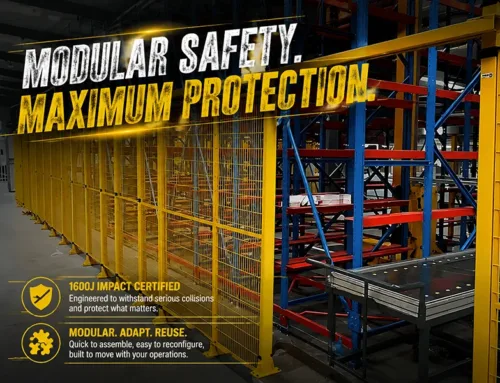
Instead of frameless mesh that warps under pressure, we utilize a 20x30x1.5mm tubular steel framed architecture. The Q235 cold-rolled carbon steel posts (60x60mm) provide a rigid backbone anchored by M10x70 expansion bolts. When a 100kg (220 lbs) machined part is accidentally ejected from a spindle at 20km/h (12.4 mph), the system absorbs the 1600 Joules of kinetic energy through plastic deformation, preventing catastrophic shrapnel damage to adjacent control equipment.
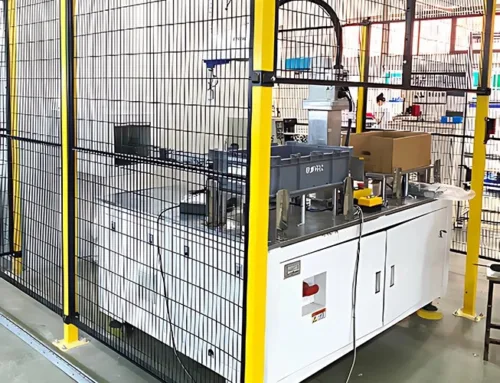
For conveyor tunnel guards, our precise 20x100mm “finger-safe” mesh spacing changes the layout geometry entirely. By restricting access to just the fingertips, ISO 13857 allows you to install the Sistemas de Proteção de Máquinas a mere 120mm (4.7 inches) away from the hazard. This reclaims nearly a square meter of floor space per machine, allowing for tighter, more efficient robotics layouts.
Seamless PLC Integration: Eliminating On-Site Drilling
As a system integrator, your technicians should be programming servo drives, not acting as blacksmiths. Traditional fencing requires on-site hot work—drilling and tapping holes into painted posts to mount safety limit switches. This introduces metal shavings into clean assembly environments and destroys the electrostatic powder coating, guaranteeing rust within months in a facility using cutting fluids.

Our Cerca de Segurança para Robôs transforms a passive barrier into an active safety node. We provide pre-engineered lock carriers (e.g., KKCK-LCK-B-D4NL-SET) designed specifically to act as an installation carrier for major interlock brands. The rigid framed door panels, supported by heavy-duty hinges or caster wheels, ensure that the actuator key aligns perfectly with the switch body every single time. Zero sagging means zero false machine stops, maintaining your automated line’s high-speed cadence.
The “After” Reality: Commissioning at 70% Faster Speeds
By switching to a modular, bolt-on architecture, you eliminate hot work permits entirely. Using only a standard wrench, two technicians can assemble 50 meters of perimeter guarding in a single day. When the automotive plant inevitably changes its layout for a new vehicle model next year, the modular clips allow for 100% asset recovery. You unbolt the panels and reconfigure the cell without cutting a single piece of steel.

| Integration Metric | Standard Welded Fencing | Mdfence Modular System |
|---|---|---|
| Conveyor Tunnel Compliance | Requires 850mm safety distance (wastes space) | 120mm safety distance (ISO 13857 compliant) |
| Safety Switch Mounting | On-site drilling, destroys powder coat | Pre-drilled lock carriers, bolt-on installation |
| Door Alignment (OEE Impact) | High risk of sagging; triggers false STO | Rigid 20x30mm frame prevents switch misalignment |
Frequently Asked Questions (FAQs)
We design custom tunnel guards using our 20x100mm mesh panels. This specific aperture restricts reach to the fingertips, allowing the guard to be placed as close as 120mm to the hazard, ensuring materials pass through while strictly preventing operator access to the automated line.
Yes. We provide pre-engineered lock carriers (such as the KKCK-LCK-B-D4NL-SET) that match the exact hole patterns of major PLC safety switches. This eliminates the need for on-site drilling and ensures perfect alignment to prevent false machine stops.
No. Unlike frameless mesh, our doors are built with a full 20x30mm tubular steel frame and utilize heavy-duty hinges or bearing rails. This structural rigidity ensures the actuator key remains perfectly aligned with the switch body, protecting your OEE.
The system is TUV-certified to withstand an impact of 1600 Joules. The Q235 carbon steel components will undergo plastic deformation (bending) to absorb the kinetic energy, rather than shattering into dangerous projectiles, effectively containing the hazard within the cell.
Not at all. The entire system uses a modular bolt-on connection with fixing rings. You can easily unbolt the panels, move the posts, and reassemble the barrier around the new layout, achieving nearly a 100% asset reuse rate with zero hot work required.