PT
PT  EN
EN  DE
DE  RU
RU  JA
JA  ES
ES  IT
IT 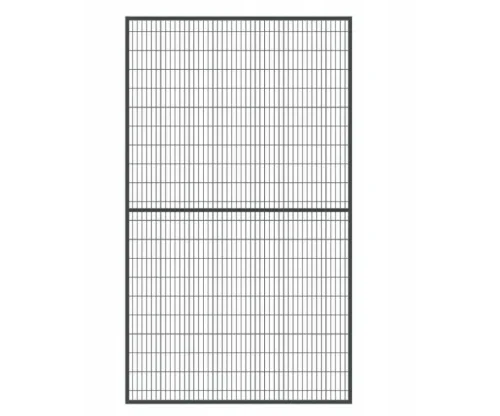

|
High-speed CNC lathes and turning centers generate lethal kinetic energy. When a spindle crashes, a carbide tool breaks, or a heavy workpiece is ejected from the chuck jaws at 3,000 RPM, standard chain-link mesh won’t stop the shrapnel. Furthermore, splashing synthetic coolants and flying metal swarf create severe slip hazards and maintenance nightmares. You need a physical barrier engineered specifically for the metalworking environment—one that contains flying debris, withstands forklift impacts in tight aisles, and integrates seamlessly with your automated bar feeders without eating up valuable shop floor space. |
The Reality of CNC Machining Hazards
In a high-production machining facility, the area surrounding a CNC lathe is a high-risk zone. Operators are constantly loading heavy steel billets, adjusting tooling offsets, and clearing stringy metal chips. The Before Scenario: Many shops rely on flimsy, locally welded wire mesh or frameless fencing. When a 50 lb (22 kg) machined part is accidentally ejected, it punches right through these cheap barriers. Additionally, these traditional fences require hot work (welding) to install, creating a massive fire hazard when sparks mix with oil-based cutting fluids on the shop floor.
By implementing purpose-built Sistemas de Proteção de Máquinas, you transition from a reactive safety posture to a proactive, engineered defense. The After Scenario: Your operators are protected by a certified physical shield, chip containment is localized, and your facility complies with stringent OSHA and ISO safety standards without sacrificing production cycle times.
Containing Kinetic Energy: Why Structural Integrity Matters
You cannot afford a fencing failure when a chuck jaw lets go. Standard aluminum profiles might look sleek, but they lack the tensile strength to absorb heavy impacts, often snapping or permanently deforming when hit by a forklift carrying a pallet of raw material.

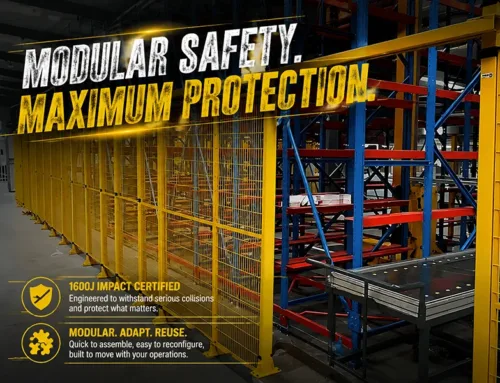
Why our system works for metalworking: The Mdfence system is constructed from high-tensile Q235 cold-rolled carbon steel. The standard 60x60mm (approx. 2.36″ x 2.36″) square tubular posts are anchored directly into the concrete using heavy-duty M10 expansion bolts. This specific architectural design allows the system to achieve a 1600 Joules impact resistance rating. To put that in perspective, it is capable of intercepting a 220 lb (100 kg) object moving at over 12 mph (20 km/h). Instead of shattering into dangerous projectiles like cast metals or tearing like cheap wire, the Q235 steel undergoes plastic deformation, absorbing the kinetic energy of a crashed tool or a forklift bump, keeping the hazard contained.
Optimizing Shop Floor Space with “Finger-Safe” Mesh
Floor space around a CNC turning center is premium real estate. You have chip conveyors, coolant tanks, and bar feeders competing for room. The Before Scenario: Using standard 50x50mm (2″x2″) mesh means an operator’s arm could easily reach through the gaps. To comply with ISO 13857 safety standards, this type of fencing must be installed up to 33.5 inches (850mm) away from the machine’s moving parts, creating dead space and choking your forklift aisles.

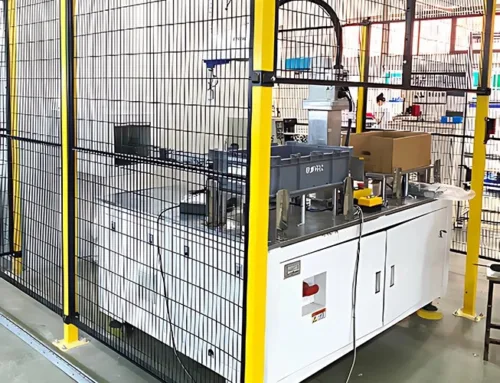
Why our system works for metalworking: We utilize a tightly woven 20x100mm (0.78″ x 3.9″) framed mesh panel. The steel wires are flat-welded onto a robust 20x30mm tubular frame, eliminating sharp burrs that could snag an operator’s uniform. More importantly, this narrow 20mm slot restricts access to just the fingertips. The After Scenario: You can legally and safely install this Cerca de Segurança Industrial just 4.7 inches (120mm) away from the lathe’s hazard zone. For a standard machining cell, this reclaims nearly 10 square feet of usable floor space per machine, allowing you to widen your logistics aisles or fit an additional CNC machine on the floor.
Seamless Access for Tool Changes and Robotic Tending
Modern CNC lathes are rarely standalone; they are often paired with robotic machine tending arms to load and unload parts. The Before Scenario: Traditional swing doors sag over time, causing safety interlock switches to misalign. This results in phantom E-stops, halting your spindle mid-cut and ruining expensive carbide inserts and workpieces.

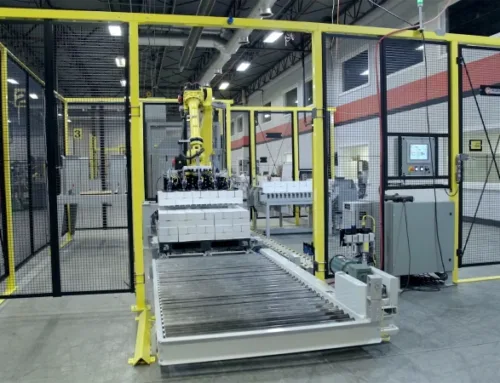
Why our system works for metalworking: We provide pre-engineered mounting plates (lock carriers) that perfectly fit industry-standard safety interlocks (like Omron D4NL or Pizzato). Whether you use our heavy-duty sliding doors for tight aisles or hinged doors, the rigid framed panels ensure the doors never sag. The After Scenario: Maintenance teams can quickly access the machine for routine tool changes or chip removal. When integrating Cerca de Segurança para Robôs for automated cells, the safety switches align perfectly every single time, ensuring your PLCs receive accurate signals, maximizing your Overall Equipment Effectiveness (OEE).
Before & After: CNC Guarding Transformation
| Operational Aspect | Traditional Guarding (Before) | Mdfence Modular System (After) |
|---|---|---|
| Impact & Hazard Containment | Frameless mesh flexes; ejected parts or broken tools can puncture the barrier. | Q235 steel with 1600J rating safely deflects 220 lb objects at 12 mph. |
| Space Utilization | Large 2″x2″ mesh requires a 33.5″ (850mm) safety distance, wasting shop floor space. | 20x100mm finger-safe mesh allows installation just 4.7″ (120mm) from the lathe. |
| Acesso de manutenção | Welded panels must be cut out with a grinder to service the spindle or chip conveyor. | Bolt-on clips allow a single panel to be removed in 10 minutes with a hex wrench. |
| Coolant & Chemical Resistance | Standard paint chips easily, leading to rapid rusting from synthetic cutting fluids. | ISO 9227 salt-spray tested powder coating resists aggressive coolants and oils. |
Frequently Asked Questions (Machining & CNC Guarding)
1. Will the powder coating on the fencing degrade when exposed to synthetic CNC coolants and cutting oils?
No. Our Q235 carbon steel components undergo an epoxy-polyester electrostatic powder coating process that passes strict ISO 9227 salt spray tests. It is highly resistant to industrial cutting fluids, tramp oils, and common shop solvents, preventing the rusting commonly seen on standard welded fences.
2. Can we customize the fence panels to allow our chip conveyors and bar feeders to pass through?
Absolutely. The modular nature of our framed panels allows us to design custom “tunnel guards” or precise cutouts. These openings are engineered to comply with ISO 13857 standards, ensuring that raw material and swarf can pass through the conveyor, but operators cannot reach inside the hazardous zone.
3. How does the 1600 Joules impact rating protect against workpiece ejection?
A 1600J rating means the fencing can absorb the kinetic energy equivalent to a 100 kg (220 lb) object hitting it at 20 km/h (12.4 mph). While CNC workpiece ejections can happen at high RPMs, the rigid 20x30mm tubular frame and flat-welded mesh act as a heavy-duty net, plastically deforming to absorb the shock rather than snapping and allowing shrapnel to escape.
4. Our shop aisles are very narrow due to forklift traffic. What door options do you have for CNC load/unload zones?
For tight machining cells, we highly recommend our sliding door or folding door systems. A sliding door (running on heavy-duty roller bearings) requires zero outward swing space, allowing forklifts to pass safely in the aisle while the operator has the door open to load a heavy billet or change chuck jaws.
5. Can we integrate our lathe’s Emergency Stop (E-Stop) circuit directly into the fencing doors?
Yes. We supply pre-engineered lock carriers and mounting plates designed specifically for industry-standard safety interlock switches (such as Omron D4NL, Pizzato, or Schmersal). Because our framed doors do not sag, the actuator key aligns perfectly with the switch every time, preventing false E-stops and ensuring the spindle halts immediately if the door is opened.