PT
PT  EN
EN  DE
DE  RU
RU  JA
JA  ES
ES  IT
IT 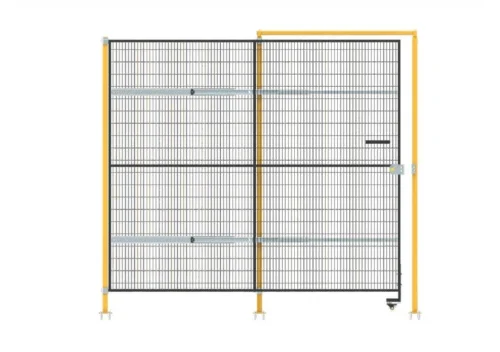

|
As a system integrator, your biggest nightmare during commissioning isn’t the PLC logic—it’s the physical footprint. When designing a high-speed mechanical assembly line or a robotic welding cell, every square inch of the factory floor costs premium rent. Forcing a standard, flimsy wire mesh around your KUKA or FANUC robots means wasting up to 33.5 inches of safety distance just to pass ISO audits. You need a physical barrier that shrinks the dead zone, integrates seamlessly with your STO (Safety Torque Off) circuits without on-site drilling, and survives forklift impacts in high-traffic AGV paths. |
Optimizing safety fence for machinery layout design in Automotive Automation
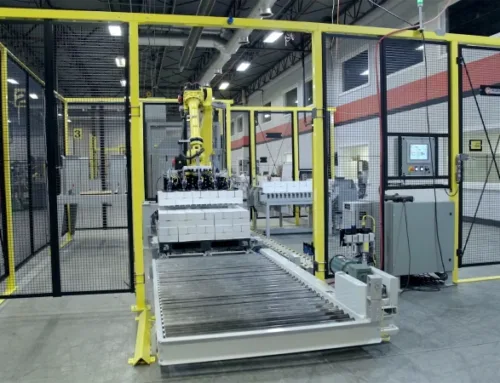
When engineering turnkey solutions for automotive manufacturing, the physical Cerca de Segurança Industrial is often treated as an afterthought. However, relying on local fabrication or standard 2×2 inch chain-link panels creates a cascading failure in your robotics layouts. The wrong perimeter guarding leads to bloated footprints, phantom machine stops due to sagging doors, and delayed EHS sign-offs. To maximize Overall Equipment Effectiveness (OEE) and streamline your design-for-automation method, your physical barriers must act as an engineered extension of your control equipment.
The Footprint Dilemma: Reclaiming Floor Space in CNC Machining Centers
The Integrator’s Pain Point: You are laying out a dedicated manufacturing line with multiple CNC machining centers and robotic material handling areas. If you use a generic mesh with 50x50mm openings, ISO 13857 regulations dictate that the fence must be placed up to 850mm (approx. 33.5 inches) away from the hazard to prevent an operator’s arm from reaching the pinch points. This forces you to widen the entire cell, choking the adjacent AGV paths and reducing the number of machines you can fit into the facility.
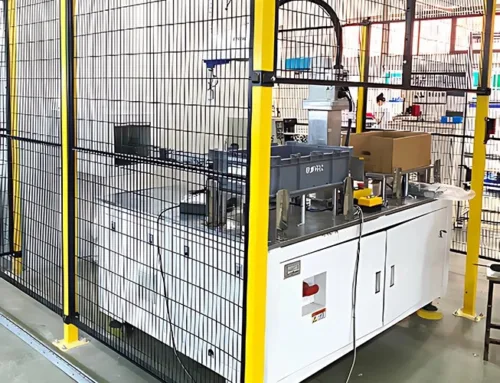
The Engineered Logic: The Mdfence system utilizes a highly specific 20x100mm (approx. 0.78 x 3.9 inches) framed mesh design. The 20mm narrow slit acts as a “finger-safe” barrier, physically preventing anything larger than a fingertip from passing through.
The Real-World Benefit: By utilizing this specific mesh geometry, you can legally and safely shrink your safety distance down to just 120mm (4.7 inches) from the hazard. For a 150-foot automated production line, this reclaims hundreds of square feet of premium floor space, allowing you to widen forklift aisles or add an extra quality inspection cell without altering the building’s blueprint.

Eliminating Hot Work: Seamless Safety Interlock Integration
The Integrator’s Pain Point: Your electrical engineers have specified Omron D4NL or Pizzato safety interlocks for the robotic cell’s access doors. Standard fencing arrives as bare metal. Your installation crew has to break out the power drills on the factory floor, drilling into painted posts to mount the switches. This creates metal shavings that threaten nearby electro-optical elements, ruins the powder coating (leading to rust), and burns through expensive commissioning hours.
The Engineered Logic: True Sistemas de Proteção de Máquinas are proactive, not passive. The system features pre-engineered, standardized lock carriers and L-shaped mounting brackets. The robust 60x60mm Q235 carbon steel posts and 20x30mm panel frames provide a perfectly rigid baseline for mounting.
The Real-World Benefit: Zero on-site drilling. Your technicians simply bolt the safety switches onto the pre-fabricated mounting plates using standard hex wrenches. The structural rigidity of the framed panels ensures that the actuator key aligns perfectly with the switch every single time, eliminating the “nuisance tripping” and STO circuit faults caused by flimsy, vibrating fences.

Material Handling Access: Solving the Sagging Door Crisis
The Integrator’s Pain Point: In automotive welding stations, you frequently need to move massive engine blocks or tooling jigs in and out of the cell via forklift. This requires an opening of 10 to 14 feet. If you use standard double swing doors, the heavy steel will inevitably sag on its hinges within months. Once the door sags, the safety interlock misaligns, the PLC registers a breach, and your high-speed assembly line grinds to a halt.
The Engineered Logic: For extreme spans, the layout design must shift from hinges to overhead bearing rails. The double sliding door system is built using the same rigid 20x30mm framed panels, suspended on heavy-duty industrial rollers, and guided by a top door frame beam that locks the vertical posts in parallel alignment.
The Real-World Benefit: You achieve a massive, unobstructed entryway for material handling without compromising the structural integrity of the Cerca de Segurança para Robôs. The doors glide open with minimal operator effort, the safety switches remain perfectly aligned for years, and your OEE metrics stay protected.

Surviving the Warehouse Floor: Impact Resistance vs. Aluminum Profiles
The Integrator’s Pain Point: Many system integrators default to T-slot structural aluminum because it looks sleek on CAD drawings. However, when a 5,000 lb forklift slightly misjudges a turn in the warehouse AGV path and taps the aluminum frame, the metal permanently bends or shatters. You now have a compromised perimeter and a machine that cannot legally run until custom aluminum extrusions are ordered and rebuilt.
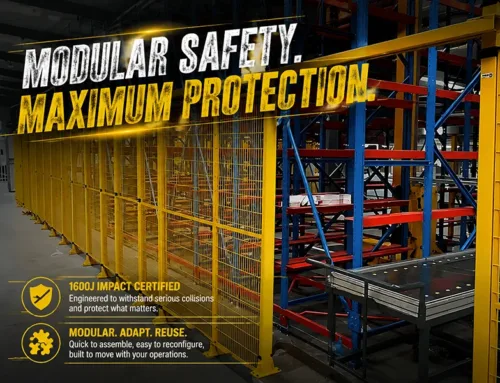
The Engineered Logic: The foundation of this system relies on Q235 cold-rolled carbon steel. The 60x60mm posts are anchored to the polished concrete using four M10x70mm expansion bolts. Unlike brittle aluminum, Q235 steel has excellent plasticity. It is TUV-certified to withstand up to 1600 Joules of impact energy.
The Real-World Benefit: When a collision occurs, the steel fence acts like a vehicle’s crumple zone. It absorbs the kinetic energy through controlled plastic deformation rather than snapping into dangerous shrapnel. It stops the forklift from destroying your $100,000 industrial robot, and the modular design means your maintenance crew can unbolt and replace the single damaged panel in 10 minutes, getting the line back up immediately.

Workflow Comparison: Traditional Guarding vs. Modular System Integration
| Integration Phase | Standard Aluminum / Local Welding | Modular Q235 Steel Fencing |
|---|---|---|
| Layout & Design | Guesswork on safety distances; large mesh forces bloated cell footprints. | 20x100mm mesh allows 120mm close-proximity installation, optimizing plant floor space. |
| PLC / Interlock Integration | Requires on-site drilling, creating metal dust near sensitive control equipment. | Pre-drilled mounting plates for Omron/Pizzato; zero hot work or metal shavings. |
| Durability & MTTR | Aluminum bends permanently; welded steel requires angle grinders to repair. | Absorbs 1600J impacts; damaged panels are swapped in 10 minutes with a hex wrench. |
Frequently Asked Questions for System Integrators
1. How does the 20x100mm mesh specifically improve my robotic cell layout design?
According to ISO 13857, the 20mm width prevents fingers from reaching through to the hazard. This allows you to position the fence just 120mm (4.7 inches) away from moving robotic arms, saving up to 700mm of floor space per linear meter compared to standard 50x50mm mesh.
2. Can we integrate our standard Omron D4NL safety switches without modifying the posts?
Yes. The system includes pre-engineered lock carriers (e.g., KKCK-LCK-B-D4NL-SET) designed specifically for the hole patterns of industry-standard switches like Omron and Pizzato, ensuring plug-and-play integration with your STO circuits.
3. What is the impact rating for areas with heavy forklift and AGV traffic?
The Q235 steel posts and framed panels are TUV-certified to withstand 1600 Joules of impact energy. This is equivalent to stopping a 100kg (220 lbs) object moving at 20 km/h, preventing catastrophic damage to your internal automation equipment.
4. How fast can we reconfigure the fencing when the automotive assembly line changes next year?
Because the entire system uses a bolt-on connection clip mechanism with zero welding, two technicians can dismantle and reconfigure the layout using only hand tools. Asset reusability is near 100%, making it ideal for dynamic manufacturing environments.
5. Do you provide CAD/3D models to drop into our turnkey solution layouts?
Yes, full 3D STP files are available for all posts, panels, and door systems. This allows your engineering team to perform clash detection and verify ISO safety distance compliance directly within your CAD environment before any hardware is shipped.