PT
PT  EN
EN  DE
DE  RU
RU  JA
JA  ES
ES  IT
IT ROBOT CELL DELIVERY | MACHINE GUARDING
Machine safety fence for robot cells: keep welded-fence work off the delivery critical path
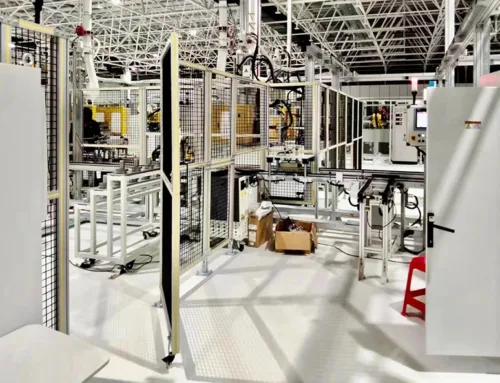
When a robot cell is ready to ship, a machine safety fence should not become the last open work package. Alfence uses bolt-free, modular post-and-panel assembly so standard components can be prepared alongside the robot and installed without on-site welding, cutting, grinding, or painting.
Why welded steel fencing delays cell commissioning
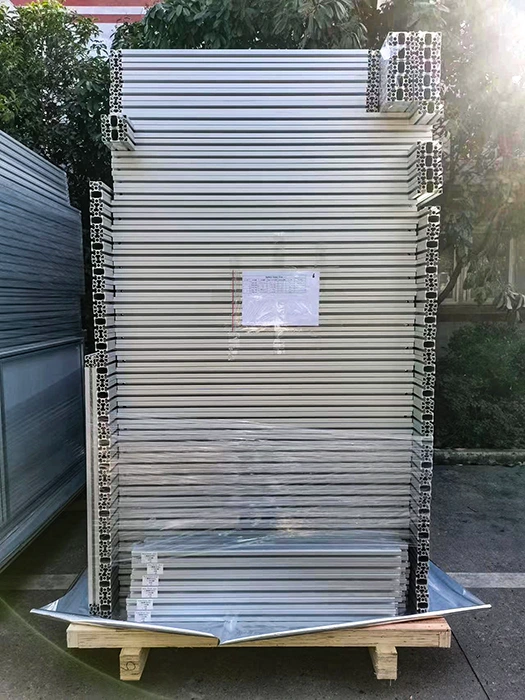
For integrators working to a fast handover date, a welded steel fence often adds a separate fabrication stream to the robot cell. Cutting, welding, grinding, coating, and site adjustment depend on specialist labor and usually run in sequence. That makes perimeter guarding a potential critical-path item instead of a parallel installation package.
| Delivery requirement | Alfence machine safety fence response |
|---|---|
| Install while the robot is being prepared | Predefined aluminum profiles, steel wire mesh panels, connectors, and standard doors can be staged as a component package. |
| Avoid on-site hot work | Bolt-free panel assembly and bolted floor fixing remove the need for site cutting, welding, grinding, and touch-up painting. |
| Adapt to a changing cell layout | The removable, reconfigurable post-and-panel system can be disassembled and rebuilt when equipment or access points change. |
| Fit a machine guarding safety distance | The 20×100 mm mesh option supports closer-to-hazard layouts, with approximately 120 mm safety-distance planning referenced to EN ISO 13857. |
Structure and site evidence behind the faster installation route
Standardized aluminum posts and prefabricated panels
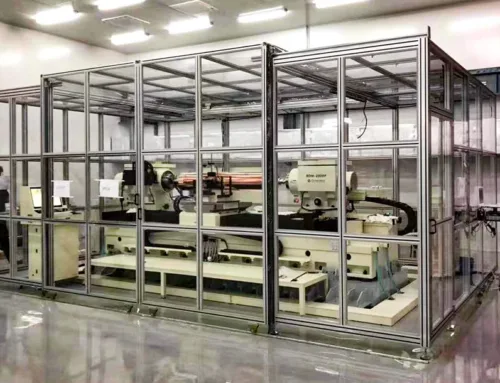
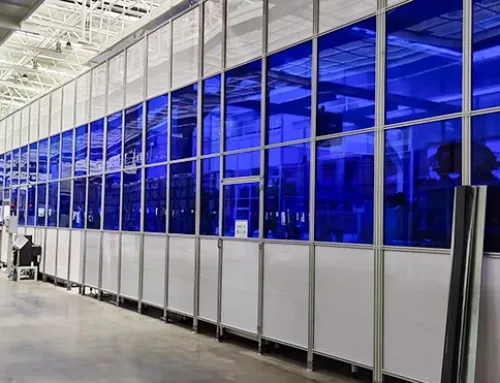
Alfence combines T-slot aluminum posts in 40×40 mm or 45×45 mm sections with prefabricated welded wire mesh panels and standard access doors. Post lengths can reach 0–2200 mm; panel heights include 1000, 1800, and 2000 mm, with widths from 200–1200 mm. The modular frame turns machine guarding into an assembly task rather than a custom welding job.
Floor-mounted protection for robot workstations
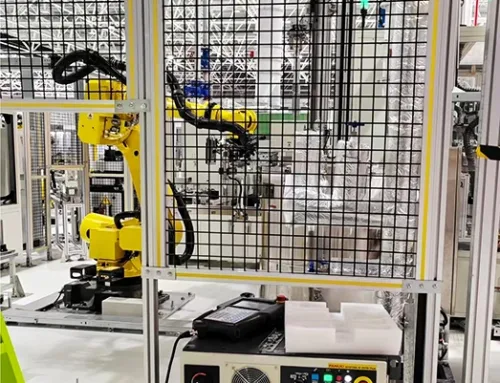
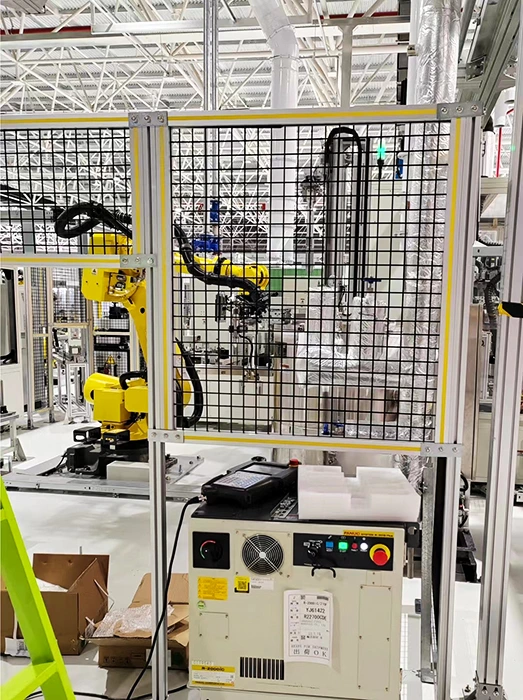
On a robot cell, expansion bolts and foot connectors secure the posts to the floor while the panels define the perimeter. The indexed installation evidence shows anchored posts around a yellow robotic automation cell, matching the intended robot cell guarding and unauthorized-access prevention use case.
Access and maintenance points stay part of the layout
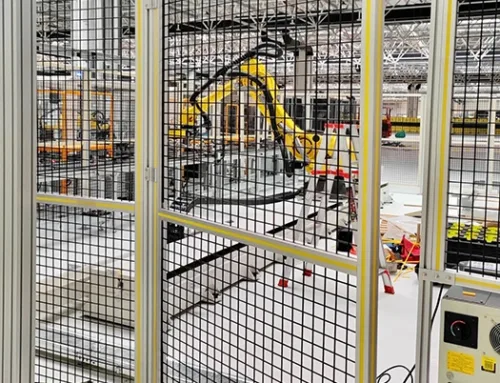
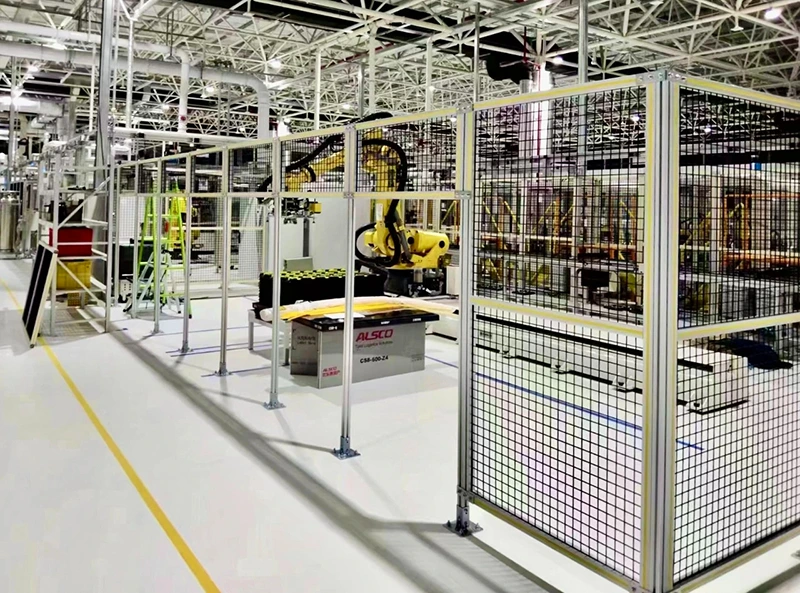
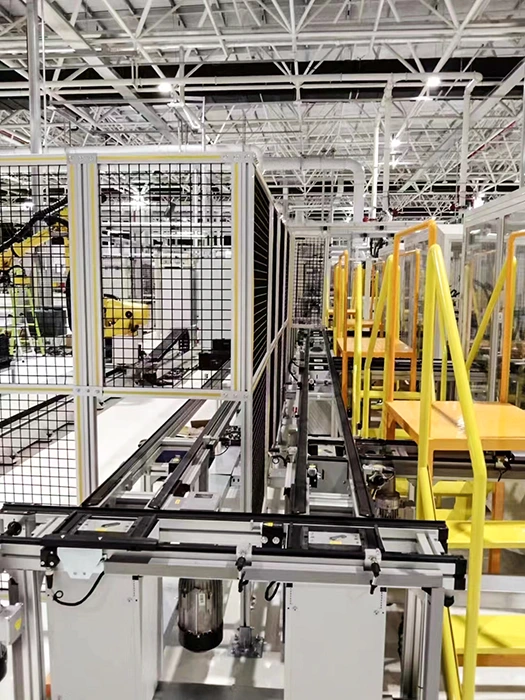
Machine guarding is not only a perimeter line. Alfence supports hinged, sliding, or folding safety doors, magnetic handles, safety interlock switches, and safety light curtains where the risk assessment requires them. A conveyor-line installation image shows the fence working with a transfer line, access platform, and maintenance route rather than blocking service work.
Where this delivery model fits
- Robot cell guarding for automotive and general automation integrators
- CNC machine guarding and machine tool guarding where the enclosure must be adjusted during commissioning
- Conveyor guarding, palletizer guarding, and packaging line guarding
- AGV path guarding, shuttle car protection, and automated warehouse guarding
- Retrofit guarding and relocatable guarding inside an operating plant
For indoor plant installation, the lightweight, corrosion-resistant aluminum profile system can be assembled close to the hazard and later reconfigured for line changes. Project teams should confirm the final height, mesh, access, interlock, and safety-distance arrangement against the machine risk assessment and applicable requirements, including EN ISO 14120 and EN ISO 13857.
What to define before quotation
Provide the robot or machine footprint, perimeter dimensions, required access doors, floor condition, guarding height, mesh or transparent-panel preference, and any safety interlock or light-curtain interfaces. Alfence can then be planned as a standardized component package that is available for installation while the robot build and cell controls proceed in parallel.
Keep machine guarding from becoming the cell handover bottleneck
Replace a sequential welded-steel fence workflow with bolt-free modular assembly, reusable components, and a reconfigurable perimeter. Send your robot cell layout and target handover date to review the Alfence configuration.