PT
PT  EN
EN  DE
DE  RU
RU  JA
JA  ES
ES  IT
IT AUTOMATED WAREHOUSE · MODULAR SAFETY FENCE
Proteção Perimetral para Expansão Faseada de Armazém Automatizado com Alfence
When an automated warehouse grows in stages, perimeter guarding must expand with new storage zones, AGV paths, conveyors, and handling equipment. Alfence is a bolt-free modular safety fence designed for reconfigurable layouts, so existing bays can be moved or extended instead of discarded.
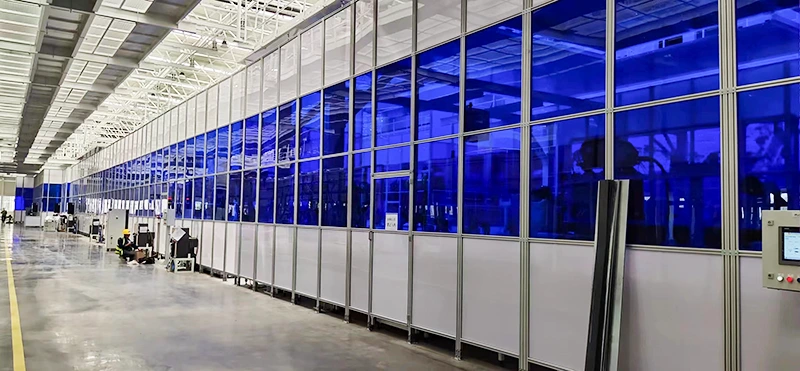
Why a phased warehouse needs reconfigurable perimeter guarding
Automated warehouse projects are often commissioned by capacity stage. A first storage zone may later need another ASRS aisle, an AGV path, a conveyor extension, or a new material-handling robot. A welded steel fence can isolate the first phase, but additions usually require cutting, re-welding, repainting, and installation downtime. That makes layout changes expensive and can leave usable fence sections stranded when the line moves.
| Expansion requirement | Alfence response |
|---|---|
| Add a new warehouse bay | Standard posts, panels, doors, and connectors extend the existing post-and-panel system without on-site welding. |
| Change AGV or conveyor routing | Removable and reconfigurable panels can be relocated as the traffic or material-handling layout changes. |
| Protect a new storage or robot zone | Modular safety fence sections can create storage zone isolation, AGV path guarding, conveyor guarding, or material-handling robot guarding. |
| Keep safety distances consistent | The design can be planned around the required machine-guarding clearance, including the 120 mm safety distance reference in EN ISO 13857 where applicable. |
How Alfence supports expansion without scrapping existing investment
Standard modules make “add a few bays” practical
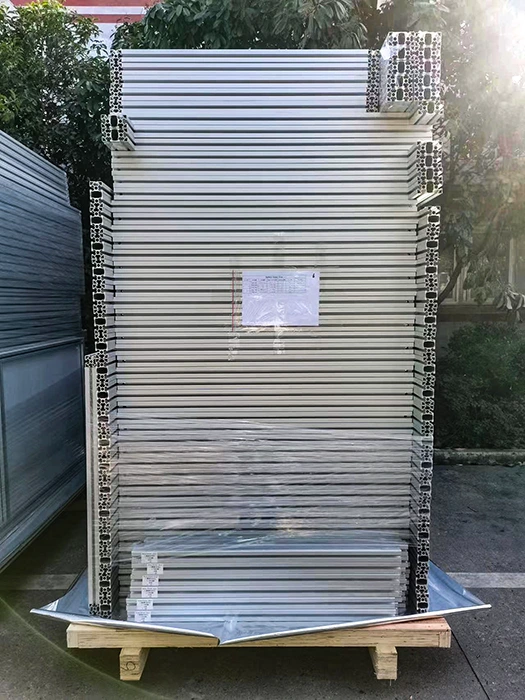
Alfence uses a modular frame with T-slot aluminum posts, steel wire mesh panels, doors, foot connectors, and expansion bolts. The components are selected as a system, then assembled into the required post-and-panel sequence. When a later phase needs more perimeter guarding, the same component logic supports a straight extension or a new branch in the layout. The palletized aluminum extrusion components shown here also illustrate why spare or recovered sections can be handled as reusable modules rather than treated as welded scrap.
Bolt-free assembly simplifies relocation and retrofit guarding
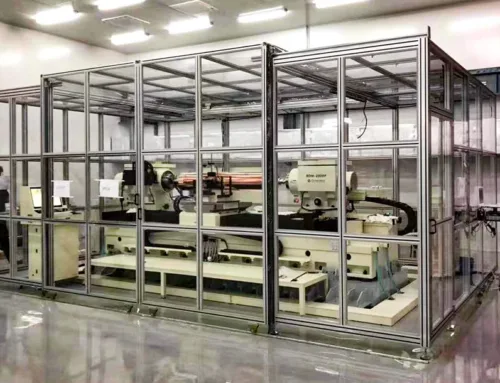
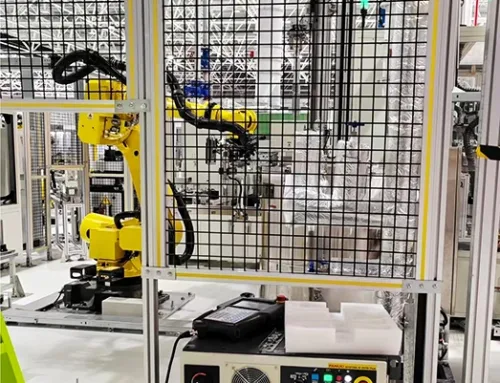
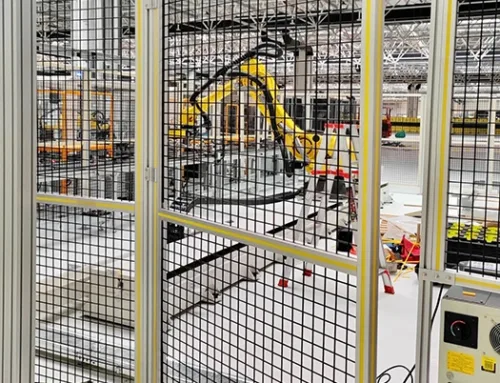
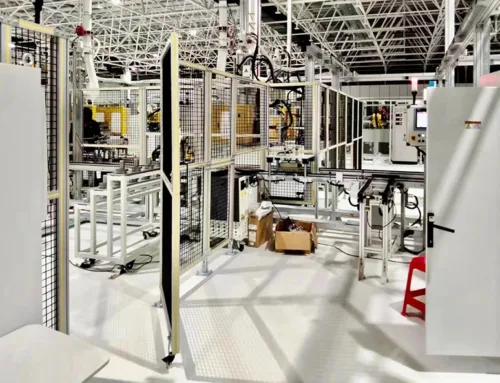
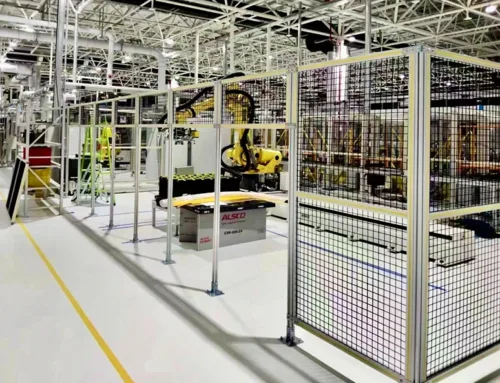
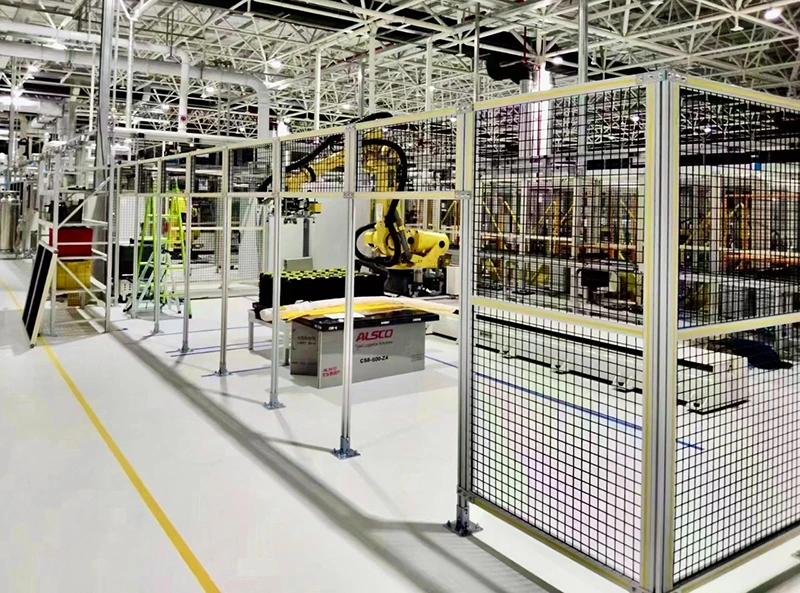
Compared with a welded steel fence, bolt-free panel assembly avoids on-site welding labor during routine changes. A section can be detached, moved, and connected to a new post position while the warehouse layout is being revised. Floor-mounted installation uses foot connectors and expansion bolts where required; the anchored modular wire mesh installation shown below provides visual evidence of a practical machine-guarding boundary around an automation cell.
Reconfigurable panels follow capacity and process changes
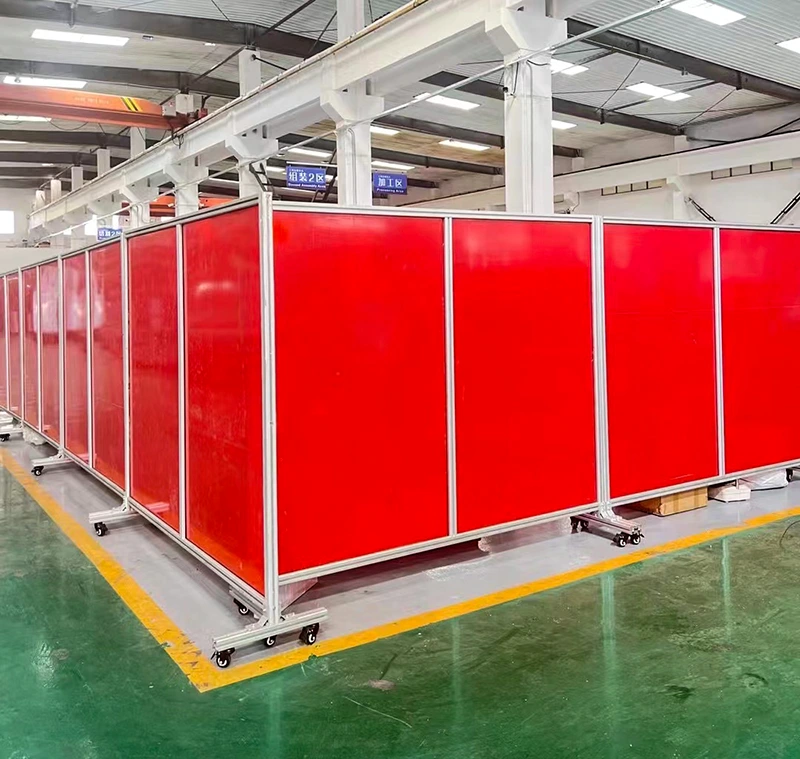
Reconfigurable panels allow the same safety guarding fence to move with a new aisle, packing line, or robot work area. Where a temporary or relocatable boundary is appropriate, aluminum frames and caster wheels can support a movable partition; fixed zones can use floor anchors. This approach helps reduce repeat purchasing, shorten downtime during line changes, and preserve usable components when the next warehouse phase begins.
Where expandable perimeter guarding is applied
- ASRS and high-bay storage guarding: isolate storage zones as automated warehouse capacity is added.
- AGV path guarding: separate vehicle routes and personnel areas while keeping future routing changes practical.
- Conveyor and shuttle car protection: extend or relocate panels around new transfer points and handling equipment.
- Material-handling robot guarding: protect robot cells and service access points with mesh panels and safety doors.
- Retrofit guarding: replace or supplement a welded steel fence when an existing plant needs a cleaner reconfiguration path.
For indoor plant installation, Alfence combines lightweight, corrosion-resistant aluminum alloy profiles with welded wire mesh or transparent panel options. Mesh selection and layout should be checked against the hazard, access needs, and applicable machine-guarding requirements, including EN ISO 14120 and EN ISO 13857 where relevant.
Specify the next expansion before ordering the first fence
Map the current and planned zones, access doors, AGV or conveyor routes, and the locations that may need to move. Alfence supports common 40×40 mm or 45×45 mm post options, 20×100 mm mesh grid options, panel heights of 1000, 1800, or 2000 mm, widths from 200 to 1200 mm, and single or double sliding door configurations subject to the project design. Confirm the final dimensions, safety distance, panel type, door hardware, and anchoring method with the project engineer.
Build a perimeter guarding plan that can grow with the warehouse
Share the current warehouse phase, the next planned expansion, and the layout changes you expect. SGF can help develop an Alfence modular safety fence arrangement using reusable posts, panels, doors, and connectors—so future capacity does not require rebuilding the entire boundary.