PT
PT  EN
EN  DE
DE  RU
RU  JA
JA  ES
ES  IT
IT 
The Importance of Caution Labels: Ensuring Safety in Everyday Products

Caution labels play a vital role in our daily lives, alerting us to potential dangers associated with various products. From household items to industrial equipment, these labels provide crucial information that can prevent accidents and ensure user safety.
Enhancing Consumer Awareness:
Caution labels serve as a means to educate consumers about potential risks associated with a particular product. By providing clear and concise warnings, labels effectively communicate vital safety instructions, thereby enhancing consumer awareness. Whether it’s a household cleaner, power tool, or medication, caution labels guide users on proper usage, potential hazards, and necessary precautions. Through this information, consumers can make informed decisions and minimize the risk of accidents or injuries.
Preventing Accidents and Injuries:
The primary purpose of caution labels is to prevent accidents and injuries. By highlighting potential hazards or risks, these labels serve as visual reminders to exercise caution. Whether it’s a sharp edge, high voltage, or toxic content, caution labels alert users to potential dangers, allowing them to take necessary precautions. Furthermore, these labels often include instructions on safe handling, storage, and disposal, reducing the likelihood of mishaps. By incorporating caution labels on products, manufacturers and regulators contribute to the overall safety of consumers.
Legal Compliance and Liability:
Caution labels also fulfill legal requirements, ensuring that manufacturers comply with safety standards and regulations. Failure to provide appropriate warning labels can expose companies to legal liabilities in the event of accidents or injuries. By adhering to labeling guidelines, manufacturers protect themselves legally and demonstrate their commitment to consumer safety. Furthermore, these labels contribute to product traceability, enabling authorities to identify potential safety issues and initiate appropriate measures.
Continuous Improvement and Risk Mitigation :
Caution labels are not static; they evolve with advancements in technology and knowledge. Regular evaluation of product safety and risk assessment allows manufacturers to update caution labels to reflect new hazards or safety guidelines. By continuously improving warning labels, manufacturers prioritize risk mitigation and stay proactive in ensuring consumer safety. Moreover, consumer feedback and incident report aid in identifying areas of improvement, prompting manufacturers to revise labels and address potential issues promptly.
Caution labels serve as an essential tool in safeguarding consumers from potential hazards. By enhancing consumer awareness, preventing accidents, fulfilling legal requirements, and promoting continuous improvement, these labels play a crucial role in ensuring the safety of everyday products. Consumers should always pay attention to caution labels and follow the instructions provided to protect themselves and their loved ones from harm.
Interlock Switch Mounting Without Drilling: Why Alfence T-Slot Posts End Phantom Stops
Bolting an interlock switch bracket through a powder-coated steel post drills the coating, drops swarf into the cell and leaves a rust line — and when the hinged leaf sags, the tongue misaligns and the PLC reports a phantom guard fault. Alfence mounts sensors, e-stops and conduit in the T-slot groove of a 40×40 mm or 45×45 mm aluminum post, with door hardware sized to keep the safety switch aligned.
Phantom Safe Torque Off Stops: T-Slot Guarding Fence Posts Mount Interlocks Without Drilling
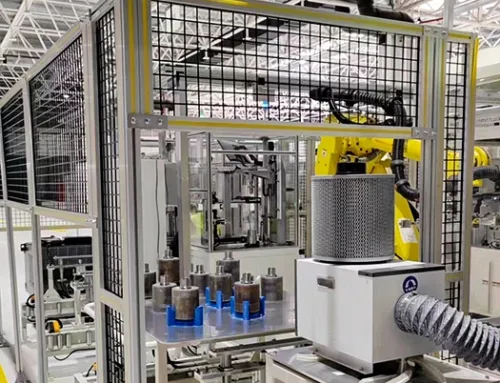
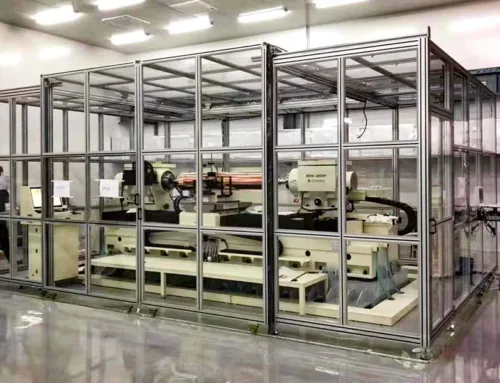
Painted steel guarding posts force maintenance to drill for interlock switches, dropping swarf in the cell and breaking the coating where rust starts. Sagging hinge doors then misalign the interlock tongue and the PLC trips Safe Torque Off while the gate is closed. Alfence industrial safety fence mounts sensors, e-stops and cable routing into the T-slot aluminum profile post without drilling, and uses hinged, folding or sliding door frames that keep interlock geometry stable - protecting OEE through phantom stops and line changes.
Automotive Plant Industrial Safety Fence: Keep the Robot Cell Close to the Hazard
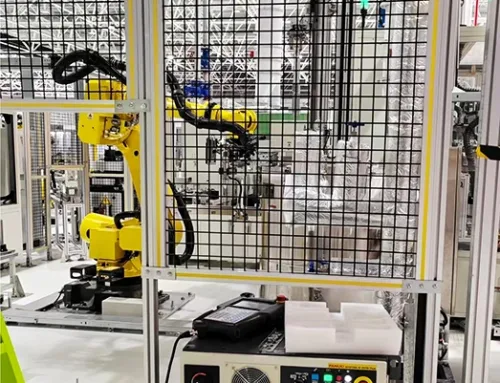
Automotive plants cannot afford to lose production floor to an oversized machine guarding perimeter. Alfence combines 20×100 mm mesh with slim 40×40 mm or 45×45 mm aluminum posts for a compact, reconfigurable industrial safety fence layout, with final clearance confirmed by the project risk assessment.