PT
PT  EN
EN  DE
DE  RU
RU  JA
JA  ES
ES  IT
IT Flexible Rack Protection for bottling plant aisles
Why Bottling Plant Aisles Need Flexible Rack Protection
When steel guardrails keep getting bent, repainted, or replaced, the hidden cost is not the panel itself. It is the shutdown time, the forklift damage, and the repeat maintenance cycle. Flexible Rack Protection replaces that cycle with a self-rebounding Polymer Safety Barrier that protects both racking and vehicles.
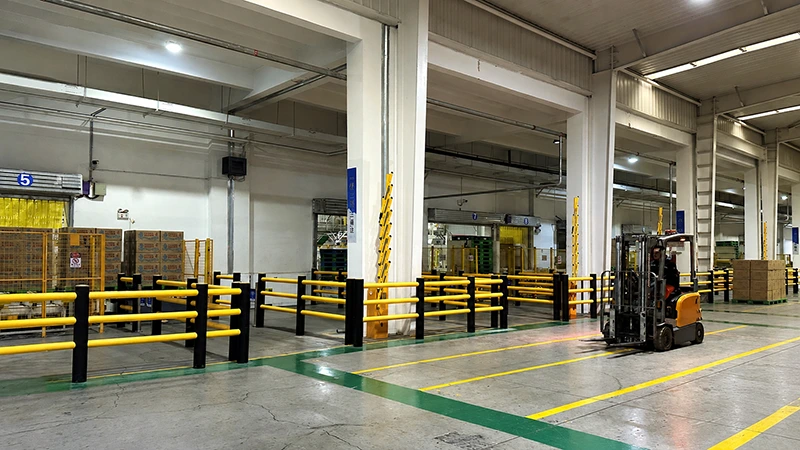
What Flexible Rack Protection changes in a metal-barrier retrofit
The job is not simply to block impact. The real goal is to stop the same collision from becoming a repair ticket every month. In bottling plants, that usually means separating rack faces, forklift routes, machine access points, and loading-bay edges with an Industrial Safety Barrier that can absorb impact, rebound, and keep working.
| Point | Resultado de campo |
|---|---|
| Scene | Warehouse Safety Barrier use in bottling plant aisles, loading bays, and rack ends where forklifts turn tight. |
| Old problem | Steel Barrier panels bend, need repainting, and can damage the forklift frame on impact. |
| Product behavior | Flexible Safety Barrier / Polymer Safety Barrier with impact-resistant, self-rebounding, energy-absorbing performance. |
| Design evidence | Floor-Anchored Base, Modular Barrier layout, and Mortise & Tenon Quick-Install logic support fast retrofit work. |
| Outcome | Protect Racking from Forklift Damage, Reduce Repair Cost, and Reduce Accident Downtime across the aisle network. |
| Selection note | The product profile references a 28,950J rated barrier family and low-maintenance service life; confirm the rail configuration against your impact path. |
Why the barrier fits the damage pattern better than steel
1. Stop the repeat repair loop at the point of impact
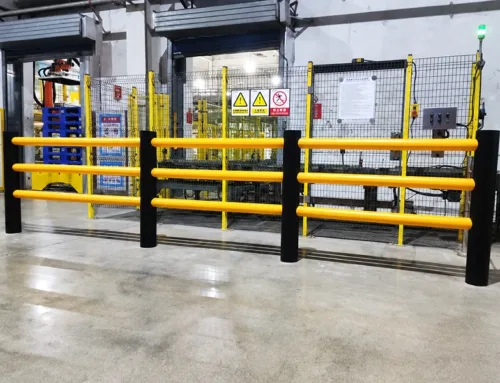
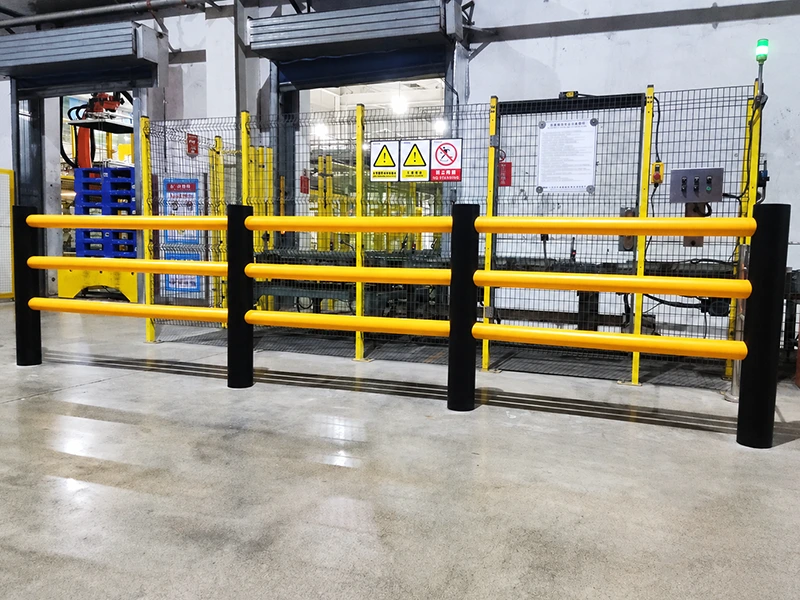
Traditional steel barriers often turn one forklift hit into several follow-up jobs: straighten the posts, repaint the coating, inspect the rack line, and sometimes repair the truck itself. In a bottling plant, that means traffic gets rerouted and the aisle loses time again and again. The image below shows the kind of access point where that cycle usually starts: machine entrances, narrow lanes, and high-traffic edges. Flexible Rack Protection changes the physics. Instead of acting like a rigid strike surface, the polymer system is designed to absorb energy and rebound, so the barrier is less likely to become scrap after a single collision.
2. Separate people, pallets, and forklifts without rebuilding the floor plan
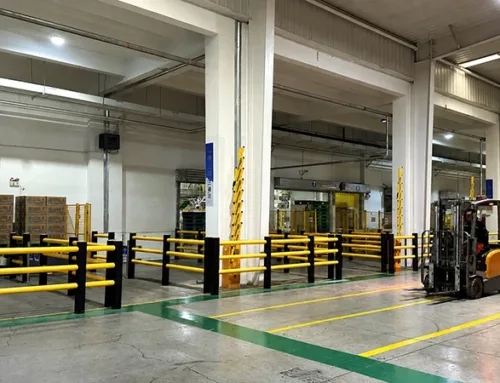
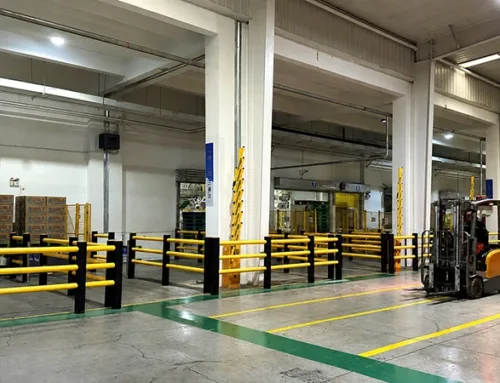
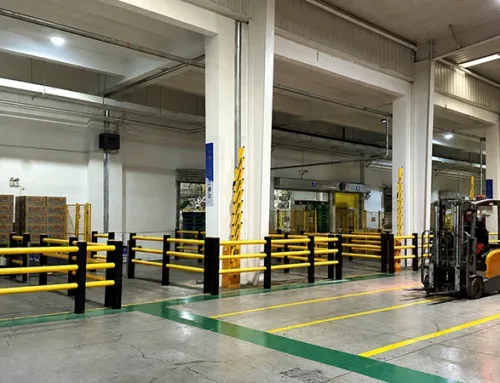
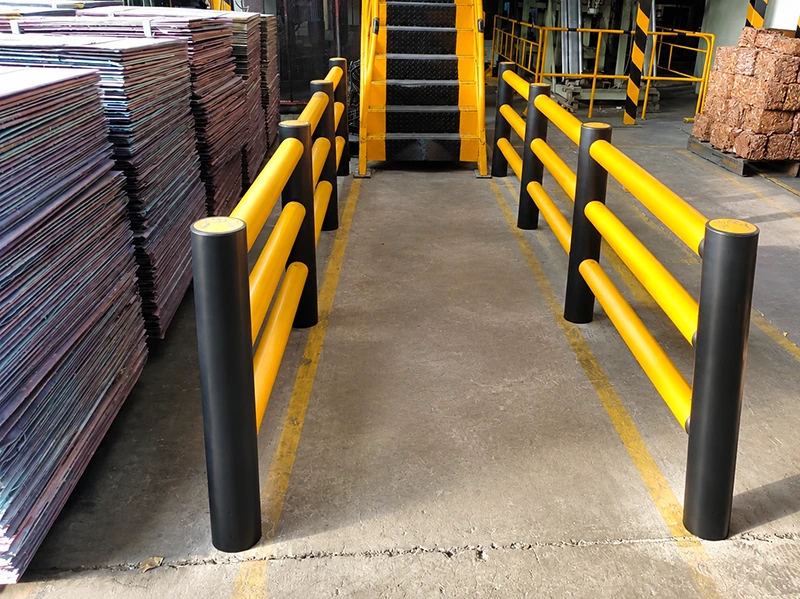
Bottling sites rarely have extra width. A barrier only works if it fits the real route geometry: turn radius, aisle width, rack ends, and pedestrian crossings. The floor-mounted dual-rail layout shown here is a practical example of Industrial Safety Barrier planning. It creates a visible boundary for forklift safety while still allowing equipment access where it is actually needed. That matters because the value is not just “protection”; it is keeping forklift movement predictable, so one collision does not become a chain reaction through the aisle.
3. Make retrofit work faster with modular anchoring
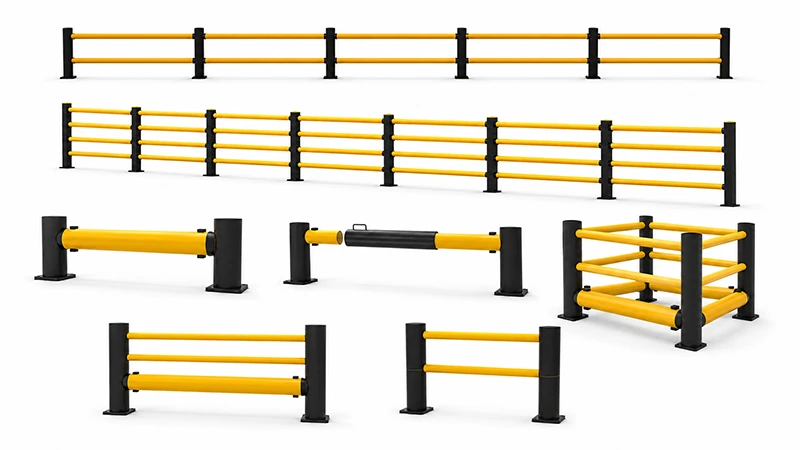
Replacement projects fail when they behave like construction projects. Flexible Rack Protection is built as a Modular Barrier system with bolted base plates and quick-install logic, which is why it suits retrofits in active facilities. For operators, that means less time shutting down an aisle just to swap a damaged section. For maintenance teams, it means the same system can be extended, reconfigured, or repaired without starting over. The combination of low maintenance and long service life is what makes the lifecycle cost lower than repeated steel replacement.
Where this flexible barrier is most useful
- Rack-end protection in bottling plant aisles where forklifts swing into narrow turns.
- Loading bay protection where repeated vehicle contact damages steel guardrails.
- Machine access segregation where operators need a clear, durable boundary.
- Retrofit projects replacing corrosion-prone metal barrier sections with a low-maintenance Polymer Safety Barrier.
In each case, the buying question is the same: does the barrier just survive impact, or does it also reduce the cost of the next impact? Flexible Rack Protection is built for the second outcome. It protects racking, reduces the chance of forklift body damage, and keeps the aisle available instead of sending it back to maintenance after every hit.
What to specify before you replace steel guardrails
Start with the collision path, not the old barrier footprint. Measure aisle width, turning radius, rack exposure, forklift speed, and the points where vehicles actually clip the line. Then map those points to the barrier family: single-rail, double-rail, or higher-visibility traffic layouts. When the layout is matched to the impact zone, the result is better than a like-for-like steel swap: less repainting, less downtime, and less secondary damage to the truck.
Replace the maintenance cycle, not just the metal
If your aisle keeps paying for bent steel, repainting, and forklift repairs, Flexible Rack Protection is the cleaner upgrade path. Send the aisle width, impact points, and rack layout, and we will help map a Polymer Safety Barrier plan that protects both assets and vehicles.