PT
PT  EN
EN  DE
DE  RU
RU  JA
JA  ES
ES  IT
IT Food plant forklift lanes · Warehouse Safety Barrier · Loading Dock Protection
When people, forklifts, tow trolleys, and AGVs share one narrow floor plan, warning signs only explain the risk. Flexible Rack Protection builds a fixed physical boundary that absorbs impact, rebounds after a hit, and keeps rack ends, columns, and pedestrian edges out of the strike zone.
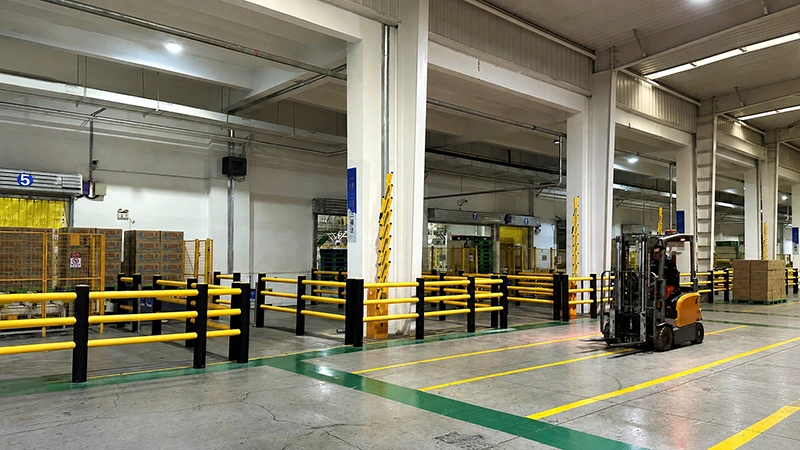
FCBarrier is positioned for manufacturing plant safety, warehouse safety barrier layouts, and food & beverage safety barrier use where the real problem is repeated contact, not a one-off mistake. It is not a road barrier, not a decorative bollard, and not a mesh fence. It is a polymer safety barrier designed for impact resistance, self-rebounding behavior, and low-maintenance service in busy indoor traffic lanes.
Why mixed traffic in food plants turns into the first incident
In fast-moving food and consumer-goods plants, the floor plan is tight, the lane changes are frequent, and the collision risk is repeated every shift. Forklifts run between production, warehousing, and dispatch. AGVs share the same corridors. People still need to cross for cleaning, maintenance, quality checks, and replenishment. Once the aisle gets compressed, the first thing that fails is usually not the operator’s attention. It is the absence of a hard physical separator.
Steel barrier, concrete barrier, and painted warning lines all have the same weakness: they can mark a boundary, but they do not manage impact energy well. After a hit, steel usually bends. Concrete can crack and transfer load into the floor. Tape and signs do nothing once a driver misjudges the turn. That is why repair cost and accident downtime keep coming back.
Flexible Rack Protection solves that problem differently. The FCBarrier system uses ARMORFLEX™ polymer, with official material notes stating it can absorb up to 80% of impact energy and then rebound. In other words, the barrier is built to take the strike, control the force path, and return to service without turning every incident into a demolition job.
Specification logic: pick the barrier by risk, not by guess
| Series | Official impact rating | Equivalent condition | Best fit in the plant |
|---|---|---|---|
| SR190 | 21,350J | 6 ton vehicle @ 9.6 km/h | Single-line boundary control, lighter rack protection, shorter runs |
| DR190 | 28,950J | 8 ton forklift @ 9.6 km/h | Forklift Safety Barrier at rack ends, loading bays, and high-hit corridors |
| TR190+ | 28,950J | 8 ton forklift @ 9.6 km/h | Pedestrian Safety edges, mixed-traffic lanes, and walkways beside production |
| CTR190+ | 28,950J | 8 ton forklift @ 9.6 km/h | Column Protector use, asset corners, and structural points that cannot be hit twice |
The key is not the biggest number on the page. It is matching the lane speed, vehicle mass, and collision frequency to the correct barrier family. That is what makes the layout a racking protection system instead of a generic fence line.
What the images prove about FCBarrier
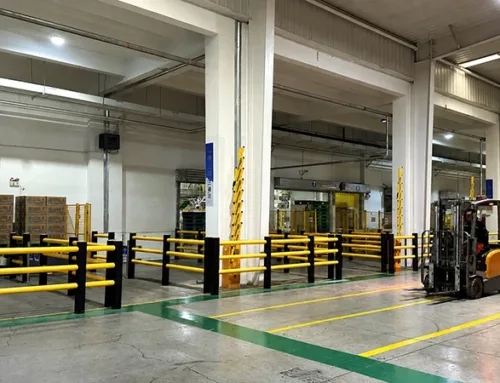
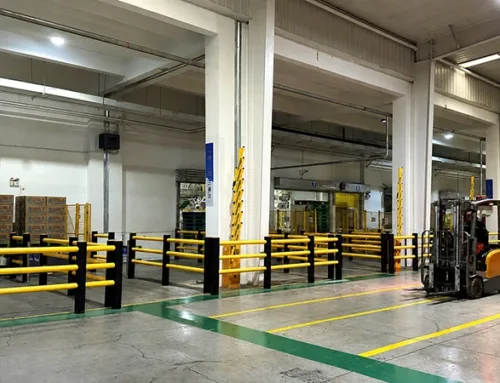
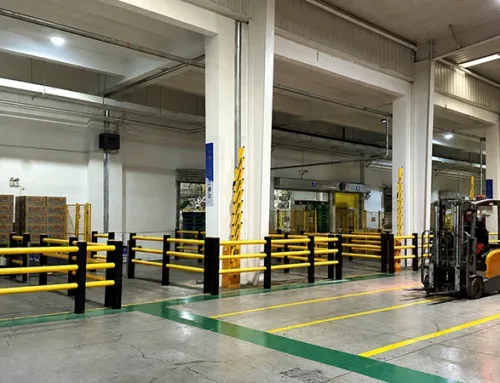
1) The warehouse image shows the exact failure point
This field photo puts the problem in plain view: a forklift lane runs next to rack ends, loading bays, and structural columns. That is the zone where an impact becomes expensive fast. The barrier line is doing two jobs at once: it keeps traffic off the protected edge and it gives the floor plan a visible, physical stop point.
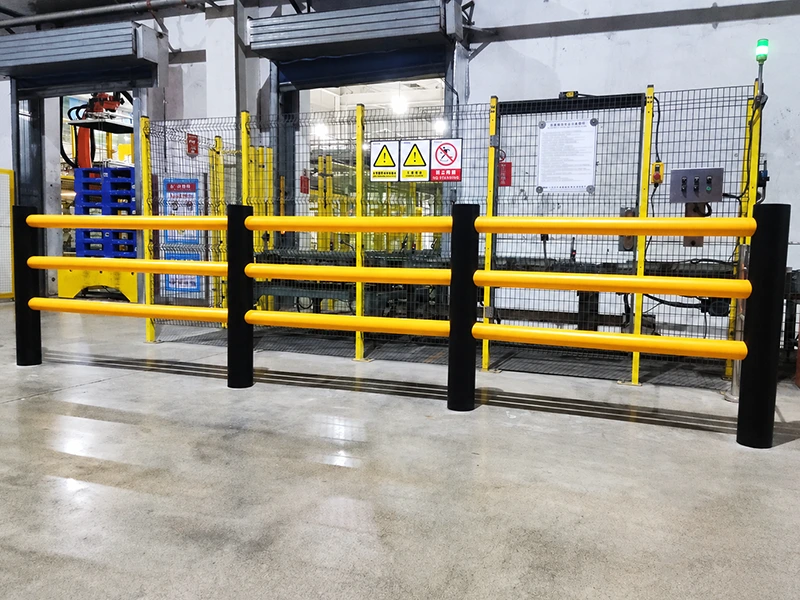
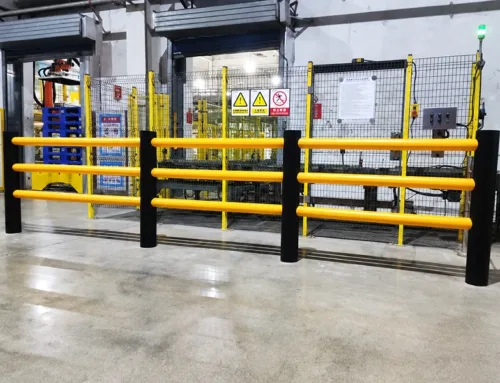
2) The machinery-access image shows why training alone is not enough
At production entrances and machine access points, people and vehicles converge. A warning sign tells staff to be careful. A physical barrier changes the path. That is the difference between a procedure and a control measure. For manufacturing plant safety, that difference matters because the incident is usually caused by routine movement, not a rare event.
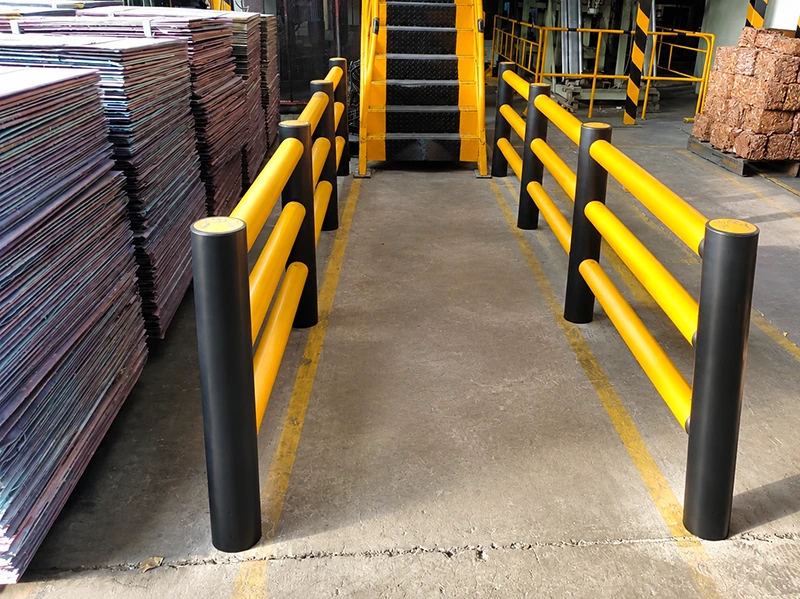
3) The dual-rail image shows how tight food lines stay usable
The dual-rail layout is important for compact food plant corridors. It creates separation without turning the aisle into dead space. That makes it a practical Pedestrian Safety boundary where the site must preserve access for cleaning, maintenance, and internal logistics. The slim, modular form factor is a better fit than bulky rigid steel in narrow corridors.
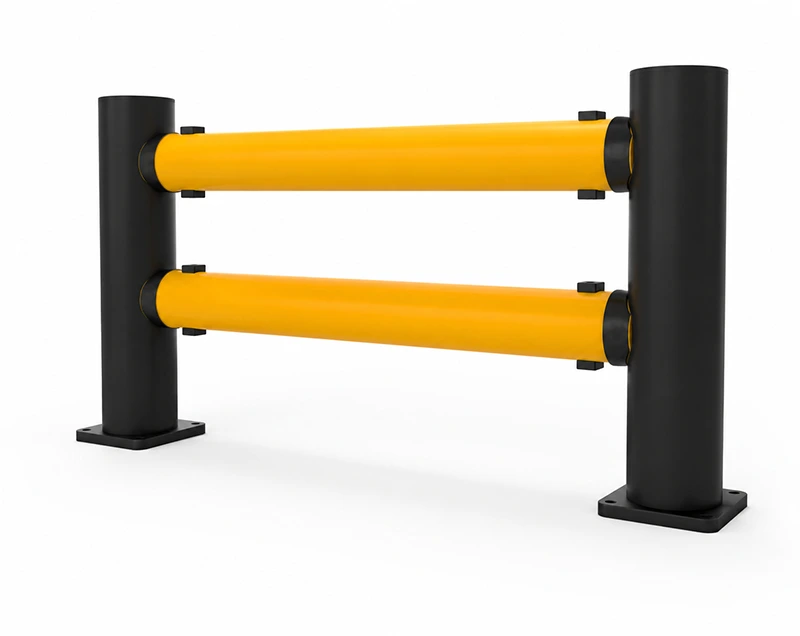
4) The 3D render shows the structure behind the claim
Modular Barrier design is not a marketing word here. The base plate, bolt-mounted fixation, and repeated rail geometry are visible in the render. That matters because repair speed depends on how the system is built. When a section takes damage, a quick-replace layout is more useful than a rigid welded frame that forces a long shutdown.
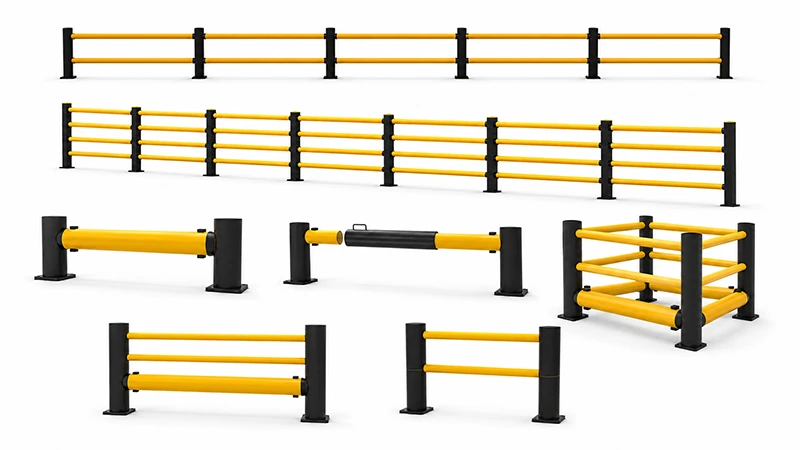
5) The configuration image shows how to scale protection by risk level
This layout makes the selection logic obvious. Lower-risk edges can use lighter series; high-hit forklift lanes and loading docks need DR190 or TR190+. The result is a better capital decision because you are not overbuilding low-risk zones or underprotecting the high-risk ones.
Where FCBarrier fits best
- Warehouse Safety Barrier lines beside rack ends and cross-aisles.
- Forklift Safety Barrier protection at loading dock edges and dispatch corridors.
- Racking Protection around end-of-run storage positions and vulnerable columns.
- Pedestrian Safety boundaries between walkways and equipment lanes.
- Loading Dock Protection where repeated approach angles create impact risk.
- Machinery Protection around conveyor openings, service access points, and control zones.
- Retrofit Barrier upgrades for existing facilities that need separation without a full rebuild.
FCBarrier is also a strong fit when the buyer is comparing a Flexible Barrier vs Steel Barrier or looking for an A-SAFE Alternative or Boplan Alternative. The practical question is not which product looks heavier. The practical question is which one absorbs force, rebounds after impact, and keeps the line running.
Como é o resultado final
The outcome is a floor plan that stops depending on training alone. People get a clearer path. Forklifts get a controlled route. Columns, rack ends, and machine edges get a physical buffer. Because the barrier system is corrosion free, low maintenance, and modular, the site does not inherit a long repair cycle after every hit.
For food plants, that means fewer unplanned shutdowns, less floor damage, and a cleaner way to manage mixed traffic in spaces that are already too tight. For procurement, it means choosing a barrier based on real impact rating and real application, not on guesswork.
Ready to separate people, forklifts, and assets with a physical barrier?
Send the aisle width, vehicle type, and the points you need protected. We will map the barrier family to the zone and keep the recommendation aligned with the actual traffic pattern.