PT
PT  EN
EN  DE
DE  RU
RU  JA
JA  ES
ES  IT
IT Food & beverage forklift zones
Why a Flexible Safety Barrier matters in food & beverage forklift zones
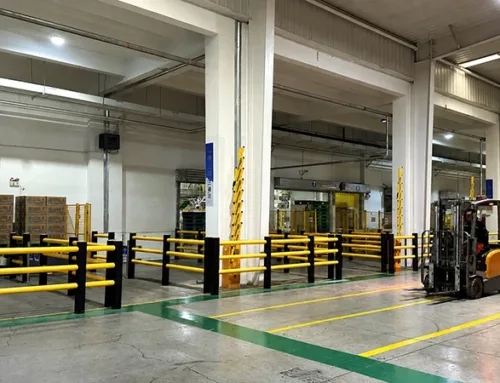
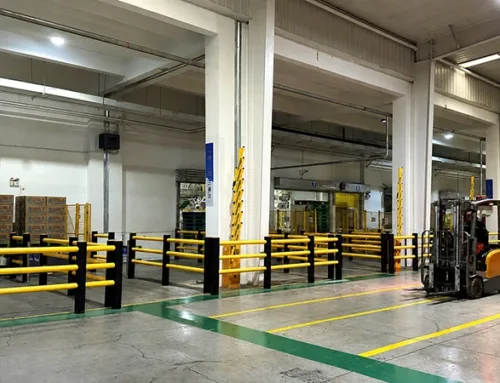
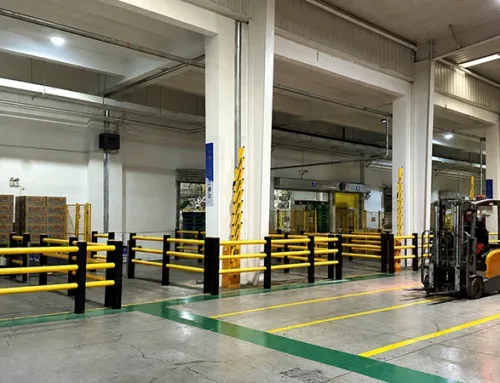
When transport lanes, people, and production flow share the same floor, a barrier is not decoration. Fcbarrier creates a permanent physical split between pedestrian routes and vehicle lanes, while protecting rack ends, columns, and corners with a self-rebounding impact system.
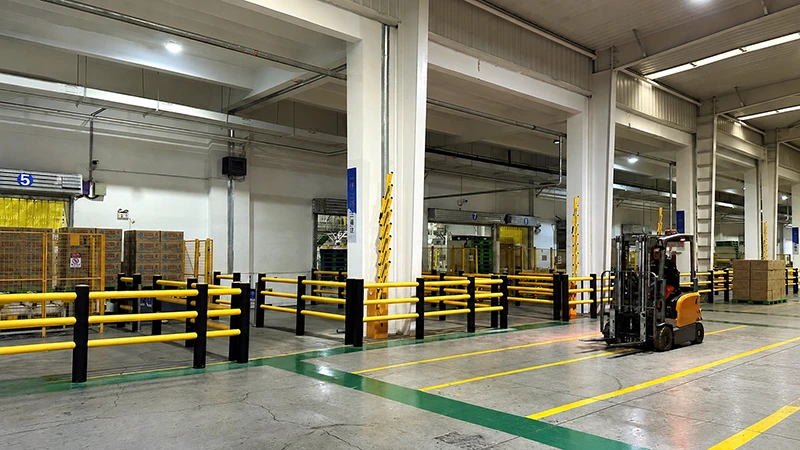
Why steel barriers keep failing in wet, high-traffic plants
Food and beverage manufacturing does not fail because the plant lacks rules. It fails when people, forklifts, trolleys, and service traffic keep crossing the same narrow corridors under schedule pressure. In that environment, rigid steel often bends once, transfers force into anchors and concrete, and leaves the site paying again for repair, downtime, and rework. Fcbarrier is designed for repeat-impact duty, not for a one-time visual boundary.
| O que a planta precisa | How Fcbarrier answers it |
|---|---|
| Permanent separation between pedestrians and vehicle lanes | TR and DR layouts create a physical line that does not depend on memory, signage, or shift discipline. |
| Protection for rack ends, columns, and loading edges | SR, DR, and CTR point protection can be placed exactly where forklifts tend to clip assets. |
| Recovery after repeated bumps, not after a single hit | ARMORFLEX™ is specified to absorb up to 80% of impact energy and rebound after impact. |
| Capacity for serious forklift contact | The top rating reaches 28,950 J, equal to an 8-ton vehicle at 9.6 km/h. |
| Less disruption when damage does occur | Modular sections support local replacement, so the whole line does not need to come out. |
| A retrofit that fits live plants | The barrier system is built as a modular layout for aisles, corners, access points, and loading bays. |
Where the system earns its place
Access points that stay protected after repeated hits
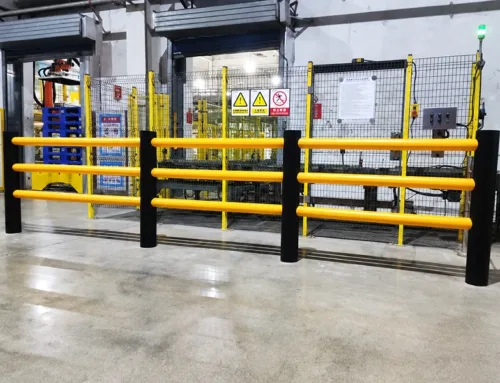
Food and beverage plants often have conveyor openings, equipment entrances, and service gaps that look harmless until a pallet truck or forklift clips them on a busy shift. This is where a Flexible Safety Barrier has real value: it gives the site a defined edge, and it handles repeated contact without the same failure pattern as a bent steel run. The modular structure also makes local repair practical instead of forcing a complete shutdown of the whole perimeter.
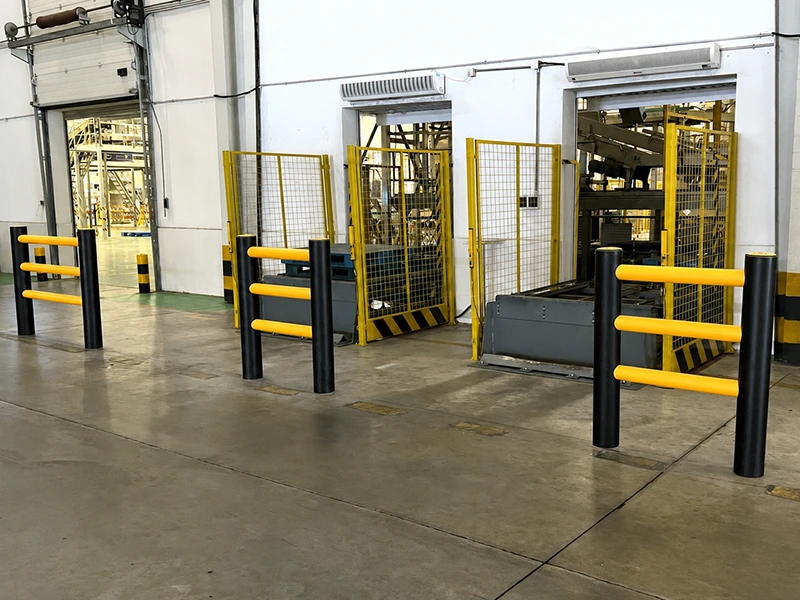
A line that separates people from traffic without relying on perfect behavior
Training helps, but training is not a physical barrier. In a 600-person plant with forklifts, bottling lines, and constant movement, the safer choice is a passive engineering control layer that stays in place every shift. Fcbarrier is used to create that boundary between walkways and vehicle routes, so the plant does not have to depend on every person making the right call at the right second.
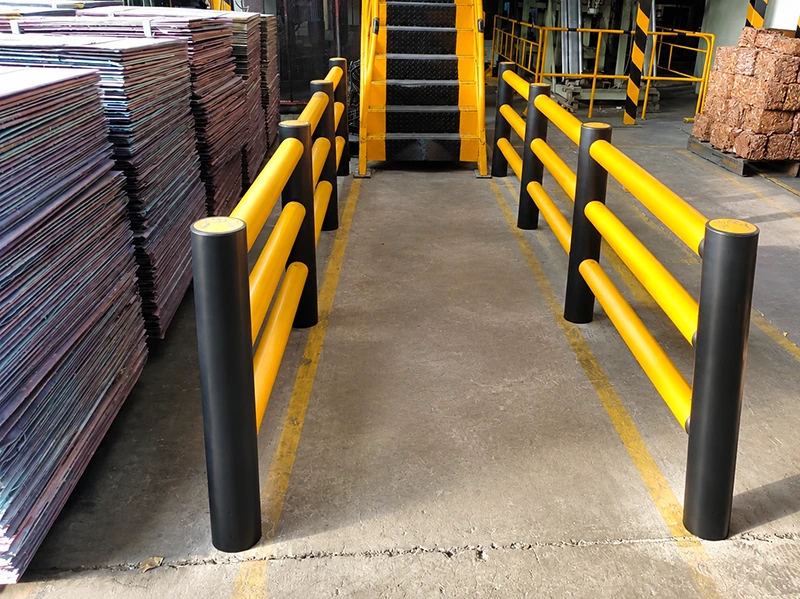
The layout details that make the specification practical
The product family covers SR single-rail, DR double-rail, TR pedestrian protection, and CTR column protection, so the plant can specify one system across different risk points instead of mixing unrelated barriers. For higher-energy exposure, the 28,950 J rating gives buyers a concrete reference point for forklift zones, loading bays, and rack-end exposure. The result is a barrier that is easier to deploy, easier to maintain, and more stable than a run of rigid steel that has to be replaced after every serious hit.
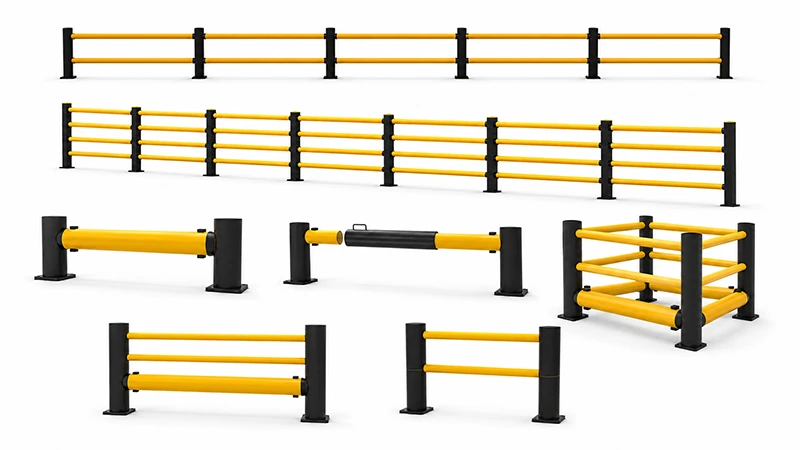
Best-fit applications in food and beverage manufacturing
- Forklift lanes in bottling, mixing, filling, and packing halls
- Warehouse aisles, dispatch routes, and loading bay edges
- Rack ends and building columns in tight traffic corridors
- Conveyor openings, machine entrances, and service access points
- Retrofit projects where live production cannot stop for long
That is the real value of a Flexible Safety Barrier in this sector: it reduces the chance that a vehicle strike turns into a people problem, an asset problem, and a floor repair problem at the same time. When the boundary is physical, the plant gets a better result than signage, tape, or a bent steel line that no longer protects anything.
Resumo de especificações
Fcbarrier is built around a modular safety barrier family with SR, DR, TR, and CTR options; the top configuration is rated to 28,950 J, and the material system is designed to absorb about 80% of impact energy before rebounding. For food and beverage plants, that combination matters because the barrier must protect people and assets across repeated shifts, not just survive a single incident.
Use a barrier that still works after the first hit
When forklift traffic is unavoidable, the safest move is to stop treating impact protection as a one-time install. Fcbarrier gives food and beverage manufacturers a physical separation layer, point protection for racks and columns, and a maintenance model built around modular replacement rather than whole-line teardown.