EN
EN  DE
DE  RU
RU  PT
PT  JA
JA  ES
ES  IT
IT Mdfence | Machine Fencing
Robotics layouts protection for corrosive machining shops
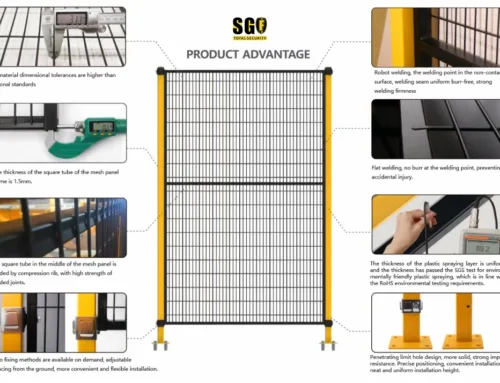
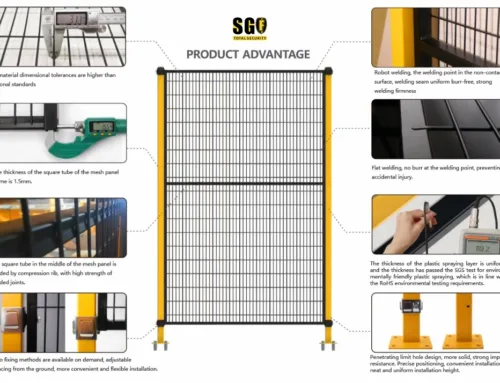
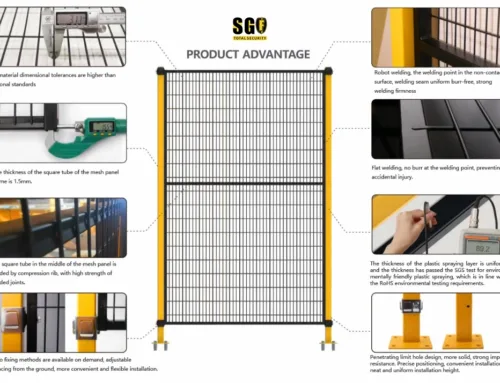
When coolant mist, cutting oil, and washdown splash stay in the air, a cheap fence turns into rust, flaking paint, and a weak safety boundary. Mdfence is built for robotics layouts protection with a 60-80 micron electrostatic powder coating, ISO 9227 salt spray resistance, and flat full-welded contact points that do not trap grime.
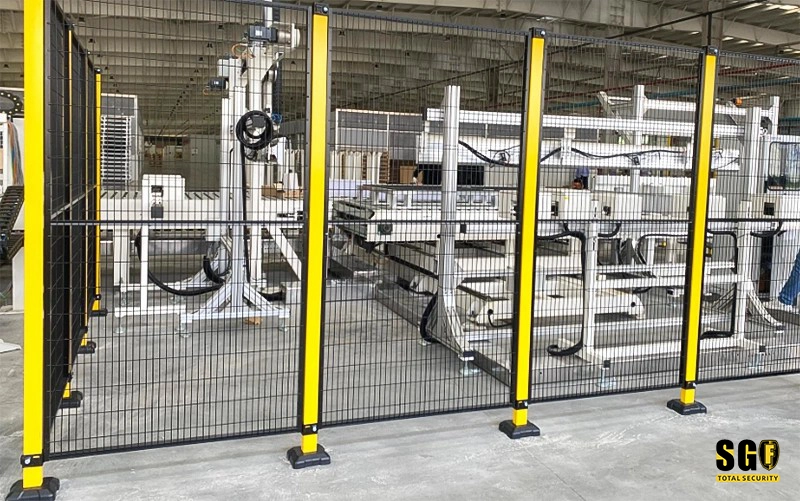
Why the old fence fails first
In metalworking cells, the problem is not just appearance. The same liquids that stain floors and machines also attack poor surface finish, open weld points, and loose joints. Once a fence starts rusting, the line loses safety margin, cleaning time goes up, and the whole area looks unmanaged. Mdfence is selected for corrosive environments because it gives you a hard, sealed surface and a welded frame built for long service around changing automation layouts.
| Specification | Why it matters in a wet machining shop |
|---|---|
| Electrostatic powder coating: 60-80 microns | Thicker surface coverage helps the fence stay stable against coolant haze, minor impacts, and daily cleaning. |
| ISO 9227 salt spray tested | Confirms the coating and base metal package can handle harsh corrosion exposure, not just a dry showroom floor. |
| Flat full-welded steel-to-frame contact points | Removes hidden seams where oil, dust, and slurry collect, so the fence stays cleaner and corrodes more slowly. |
Three details that make the layout protection work
1) Coating thickness that is built for abuse
The first line of defense is the surface. A 60-80 micron electrostatic powder coating gives the panel a visibly stronger shell than thin paint finishes that fail after a few months of oily vapor and repeated wipe-downs. In a robotics layout, that means the fence keeps its color, keeps its edge definition, and keeps the cell looking like a controlled process zone instead of a damaged corner of the shop.
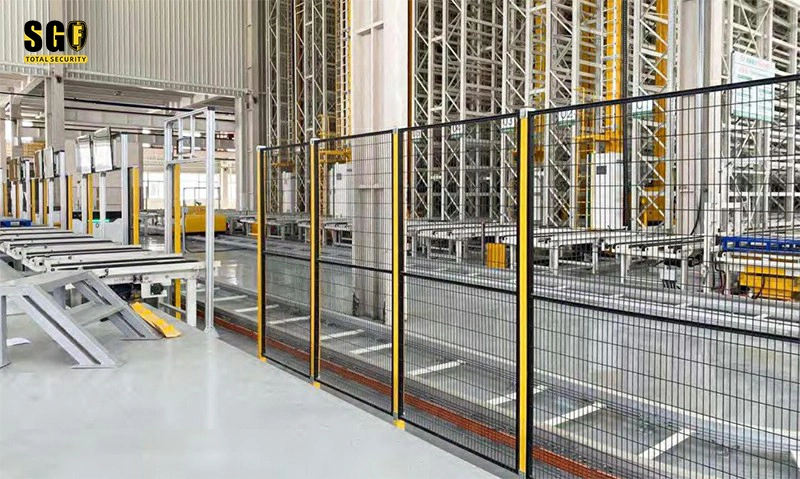
2) Flat full-welded contact points that are easier to clean
Corrosive shops punish every gap. If a frame has exposed seams, the trapped residue becomes a corrosion starter and a hygiene problem. Mdfence uses full-welded contact points with a flat finish, which reduces places for cutting fluid, grease, and metal dust to sit. That is why the fence supports both corrosion resistance and a better 5S result: fewer ledges, fewer traps, less rework.
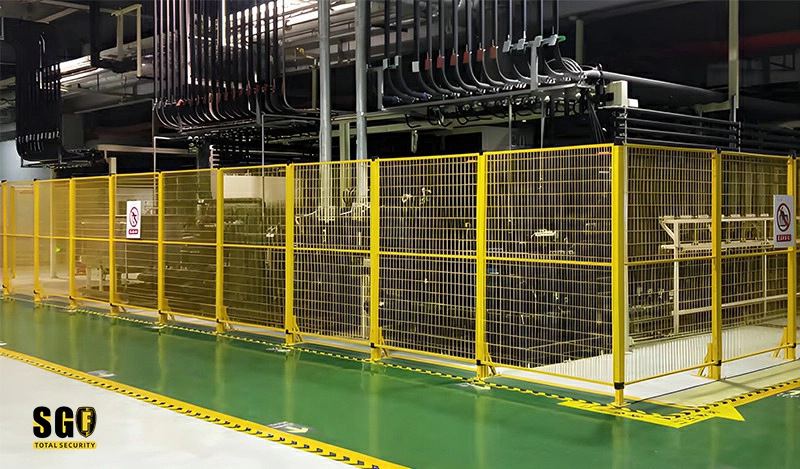
3) A layout that stays clean as the cell expands
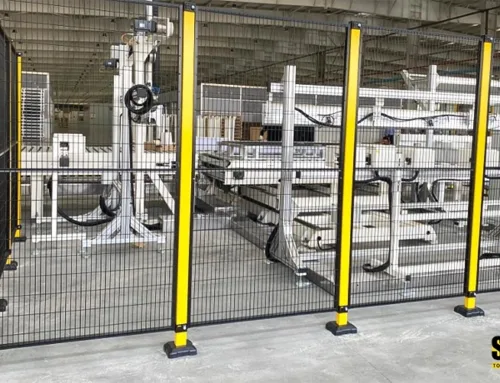
Machine shops do not stay fixed. New robot cells, transfer points, and service lanes appear, and the fence has to follow. The wide installed layout shows how Mdfence keeps a straight perimeter around a live production line while still leaving room for access and maintenance. That is the practical side of robotics layouts protection: a barrier that keeps working after the layout changes.
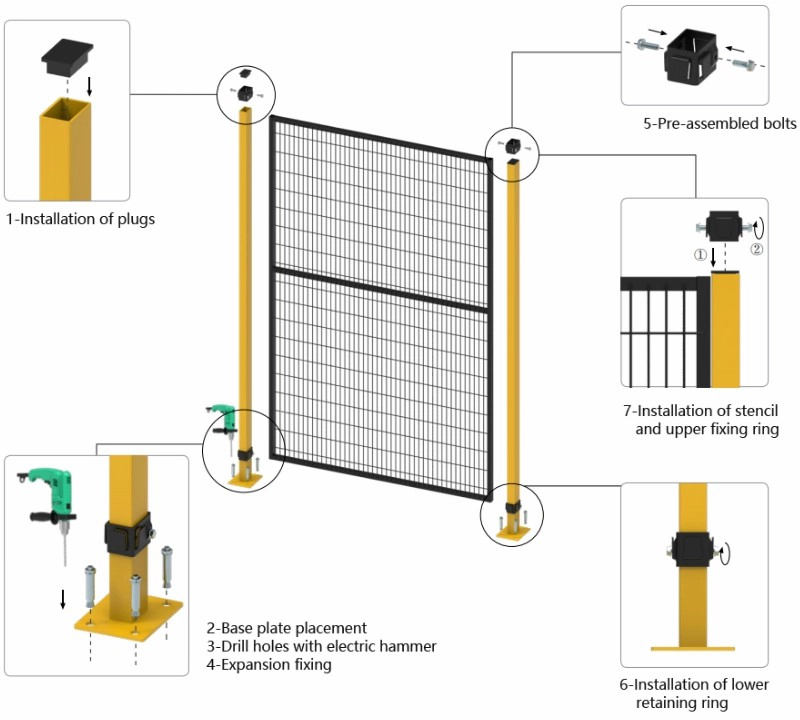
Where Mdfence fits best
- Robot and automation cells exposed to coolant mist, cutting oil, and frequent floor cleaning.
- Metal fabrication and machining aisles where rust quickly damages cheap guards and hurts the 5S image.
- Perimeter guarding around transfer zones, conveyor edges, and service access points that need clean, visible boundaries.
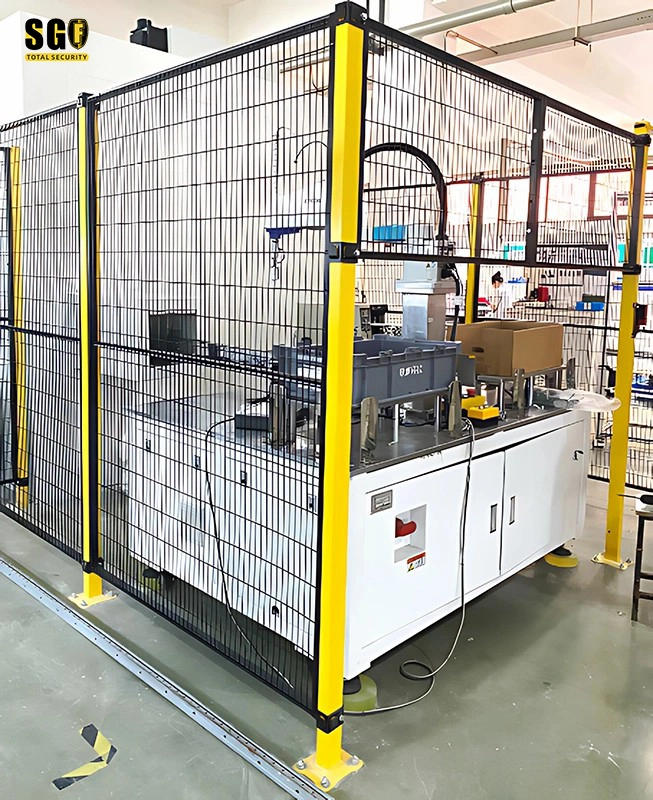
For corrosive machining environments, the result is simple: the fence lasts longer, the layout looks disciplined, and safety hardware does not become a rust problem after the first season.
What to ask for before you specify a fence
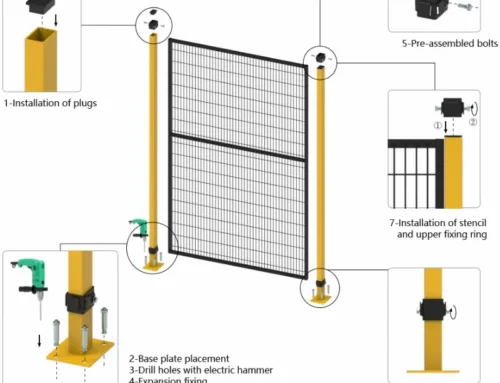
Ask for coating thickness, salt spray test evidence, weld treatment details, and the actual installation method for the base plate. Those are the points that decide whether a fence can survive a wet industrial floor. Mdfence answers them with a 60-80 micron powder coat, ISO 9227 verification, and full-welded contact points designed for long-term use in harsh layouts.
Build a cleaner, longer-lasting machine perimeter
If your current fence is already rusting, flaking, or collecting grime in the joints, it is costing more than the replacement price. Mdfence gives you robotics layouts protection that stays readable, durable, and easier to maintain in corrosive machine shops.