EN
EN  DE
DE  RU
RU  PT
PT  JA
JA  ES
ES  IT
IT Mdfence | Machine Fencing
Robot Safety Fencing Systems Built for High-Corrosion Machine Shops
Robot Safety Fencing Systems for metalworking plants where coolant mist, lubricant haze, and frequent wash-downs make cheap guardrails rust fast, lose finish, and hurt both safety strength and 5S presentation.
Why these robot safety fencing systems hold up in corrosive production areas
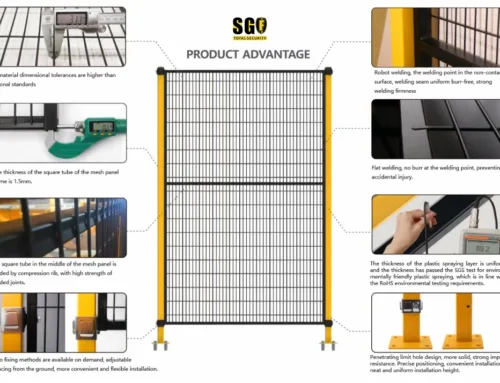
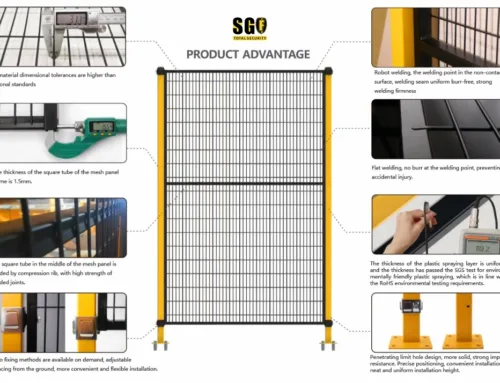
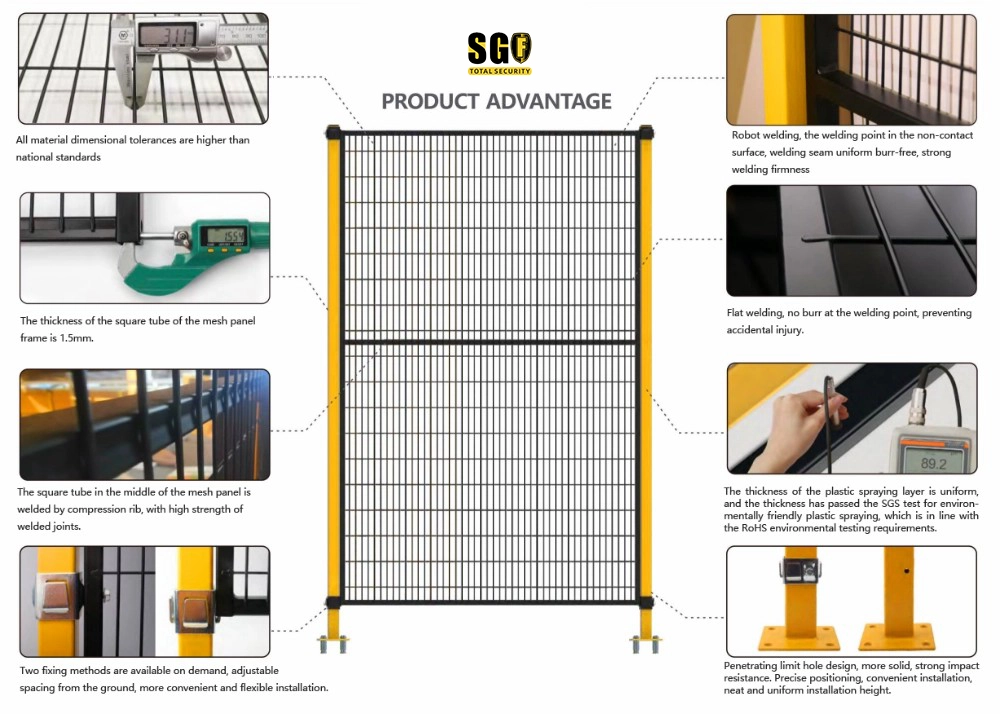
In machining shops, the failure mode is predictable: an inexpensive fence looks fine at handover, then cutting fluid, oil mist, and airborne residue start attacking the coating. Rust creeps in, the surface chalks, and the frame becomes a maintenance problem before the line has even stabilized. Mdfence is built for that environment: a powder-coated steel system with 60-80 micron surface coverage, ISO 9227 salt spray resistance, and flat full-weld contact points that avoid dirt-trapping seams.
| Item | What it means on site |
|---|---|
| Surface coating | 60-80 micron electrostatic powder coating helps delay rusting and finish failure in oily, humid, and chemically exposed shops. |
| Salt spray verification | ISO 9227 testing gives buyers a clear corrosion-resistance reference instead of a vague “painted steel” promise. |
| Joint construction | Flat full-weld steel-wire-to-frame contact points remove pockets where coolant residue and grime can sit. |
| Maintenance outcome | Cleaner edges, less flaking, and better long-term 5S presentation around robots, CNC lines, and transfer zones. |
What makes the system suitable for corrosive machine guarding
1) The problem starts with the old fence, not the new line
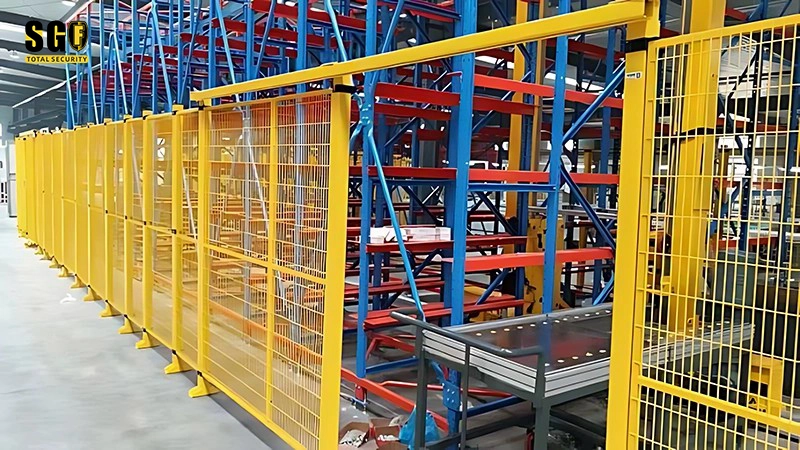
Most plant teams do not plan for corrosion as a “fence issue.” They plan for guarding, then discover that low-cost panels cannot survive the actual shop atmosphere. Coolant mist, lubricants, and metal dust settle on the frame, coating breaks down, and rust marks appear around corners, welds, and lower members. Once that happens, the fence starts looking like a temporary fix instead of part of a controlled robot cell. A system designed with thicker powder coverage and weld continuity gives the line a much better chance of staying presentable and structurally dependable over time.
2) The construction details are what protect the finish
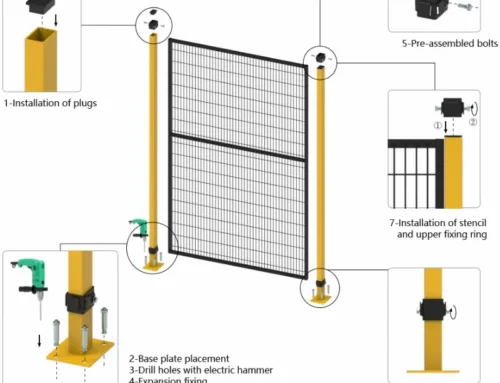
Mdfence is not relying on appearance alone. The coating thickness is specified at 60-80 microns, and the structure uses flat full-weld contact points between the wire and frame, so the contact zones are less likely to collect residue and become corrosion starters. That matters in real production: if the finish sits on top of a weak joint, the paint fails first at the seam, then the metal follows. When the frame is welded cleanly and the coating is continuous, the system is easier to wash, easier to inspect, and more stable through long service cycles.
3) Controlled access still has to work after the fence ages
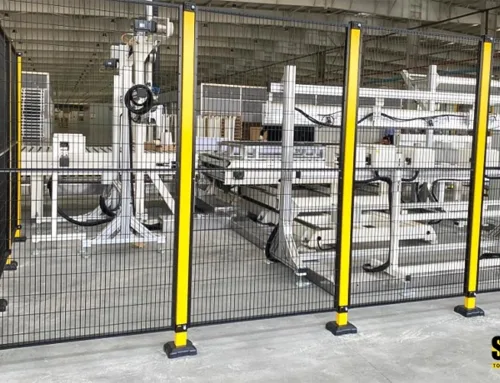
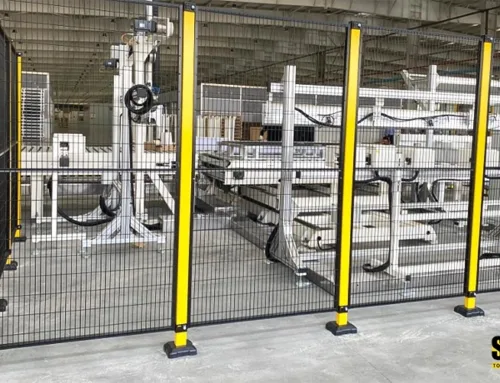
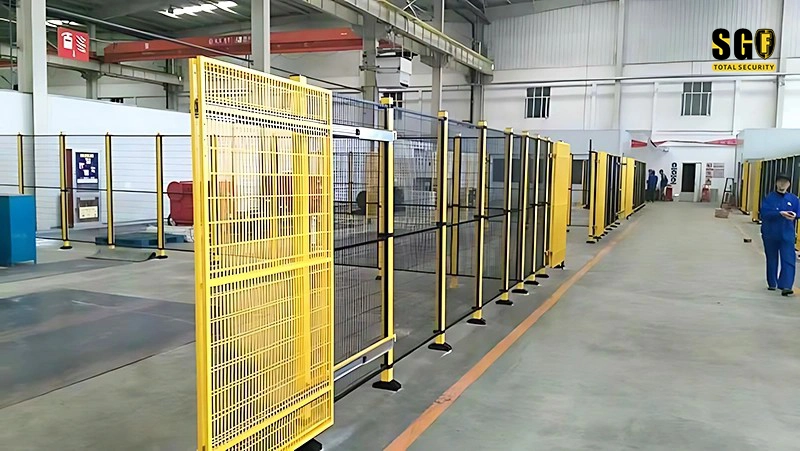
Corrosion resistance only matters if the guarding system remains practical in daily use. Robot cells still need entry points for setup, cleaning, inspection, and maintenance. That is why the gate, posts, and base plate detail matter. A stable access module keeps the opening aligned, keeps the frame readable, and supports a clear separation between operator movement and machine activity. In a wet, oily shop, that combination reduces the chance that a worn-out guard becomes the weak link in the safety plan.
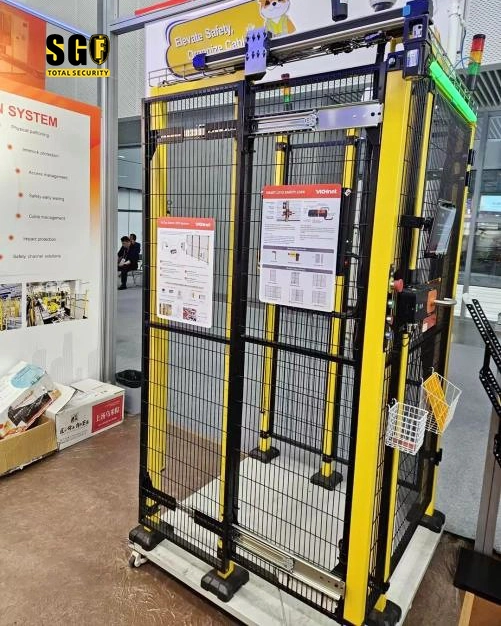
Where Mdfence fits best
- Robot cells in coolant-heavy machining bays
- CNC and metal-processing lines exposed to lubricant mist
- Transfer corridors and equipment perimeters that need clean visual boundaries
- 5S-sensitive plants that want a guard system to stay readable, not rusted and patchy
- Maintenance-access zones that need controlled entry without sacrificing long-term appearance
For these sites, the real benefit is not only safety separation. It is keeping the enclosure useful, easy to inspect, and visually consistent after months of exposure to the exact conditions that destroy cheap fencing.
What to specify before you buy
When your environment is corrosive, do not compare fences by price alone. Specify the coating thickness, ask for the salt spray reference, check how the wire meets the frame, and confirm the gate and base plate details before approval. That is how you avoid a “new” fence that starts to fail as soon as it enters the shop.
Need robot safety fencing systems for a harsh machining environment?
Send the layout, the corrosion exposure level, and the access points. We will match the fence structure, gate style, and finish specification to the site instead of forcing a generic guardrail into a demanding plant.