EN
EN  DE
DE  RU
RU  PT
PT  JA
JA  ES
ES  IT
IT Corrosive machining environments · machine guarding
Machine Guarding Fence Panels are a practical fit for high-corrosion machining shops where coolant mist, lubricant haze, and frequent washdowns destroy ordinary fencing fast.
The problem: corrosion eats safety fencing before the fence ever wears out
In metalworking and precision machining plants, the air is rarely clean. Cutting fluid, oil mist, and metal dust settle on every exposed surface. A low-cost fence may look acceptable on day one, but in a few months the coating begins to blister, the edges rust, and the structure starts to look older than the machine line it protects. That is not only a cosmetic issue. Once corrosion reaches joints, posts, and contact points, the fence becomes harder to clean, harder to inspect, and harder to trust.
For plant teams chasing 5S discipline, this creates a double loss: the safety zone looks neglected, and maintenance keeps interrupting production just to repaint or swap panels.
Why Machine Guarding Fence Panels fit this environment
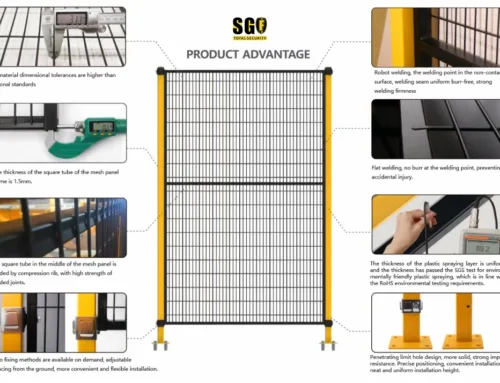
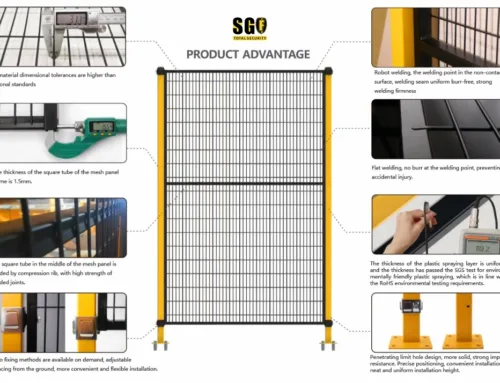
Mdfence is built around the details that matter in corrosive shops. The surface uses a 60-80 micron electrostatic powder coating, which gives the fence a tougher barrier than thin decorative paint. The coating is backed by ISO 9227 salt-spray testing, so the anti-corrosion claim is not just a visual promise; it is tied to a standardized test result. Just as important, every steel wire-to-frame contact point uses a flat full-weld process, so there are no easy gaps for grime, coolant residue, or moisture to sit and start hidden rust.
That combination is why the product is suitable for machine cells, perimeter guarding, and aisle isolation in shops that expose metalwork to constant chemical and liquid stress.
Structure proof: what the images show
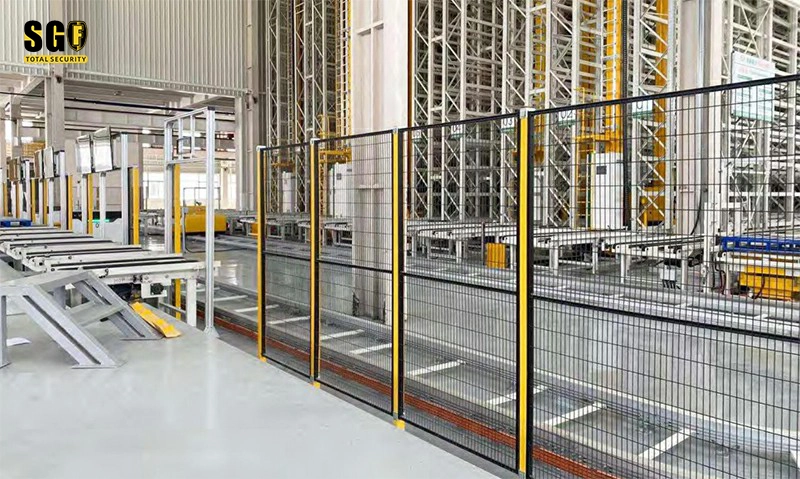
The technical front view makes the panel structure clear: post, mesh, and fixing clamp work together as one repeatable module. That matters because modularity reduces cut edges and messy field repairs, both of which can become corrosion starts in a wet shop.
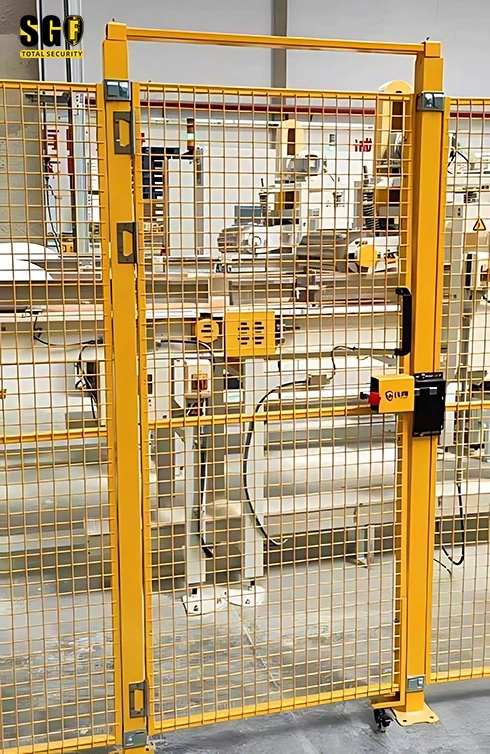
The gate close-up shows the lock hardware and framed mesh interface. When access control is part of the same corrosion-resistant build, operators do not need a separate weak point at the entry zone.
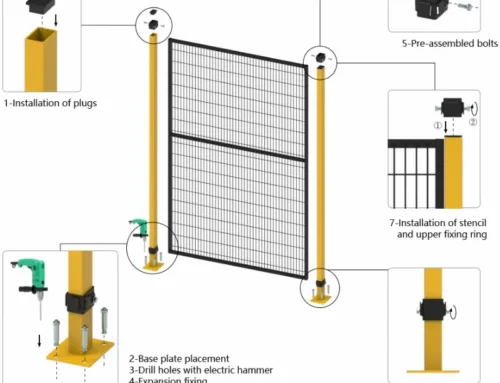
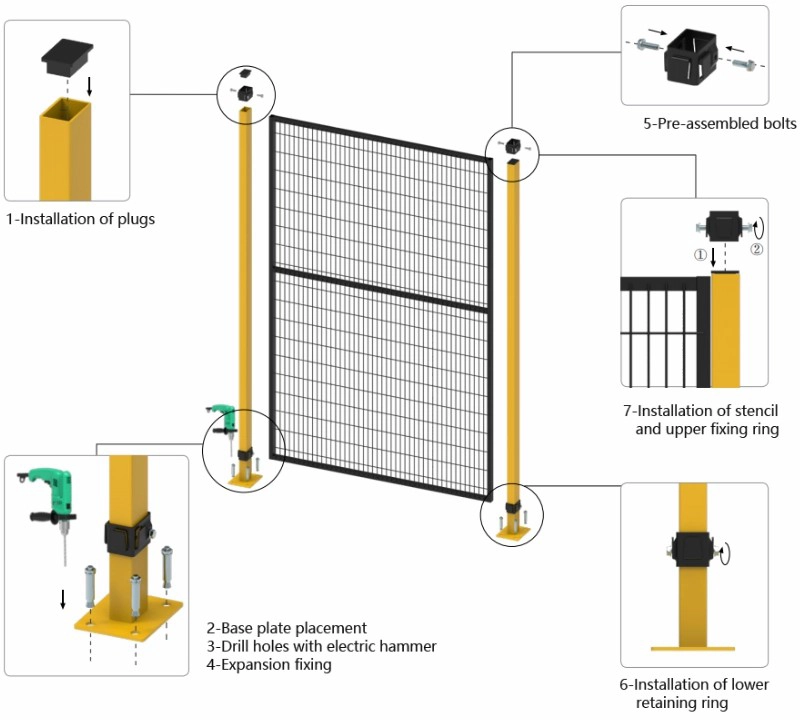
The installation diagram shows base plate drilling, expansion bolts, and retaining rings. This is the kind of fastening detail that supports stable long-term use in industrial floors where vibration, cleaning, and traffic are normal.
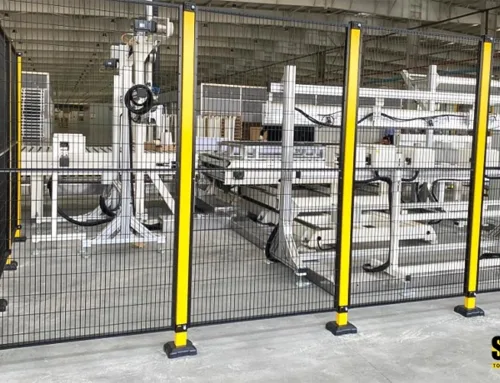
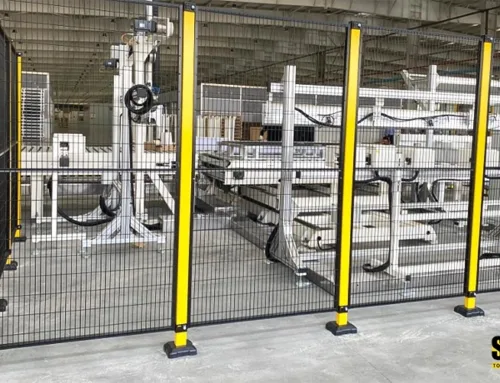
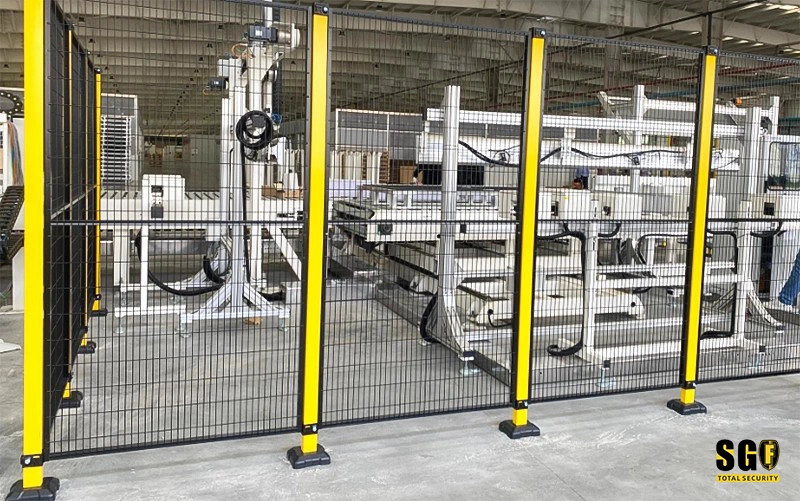
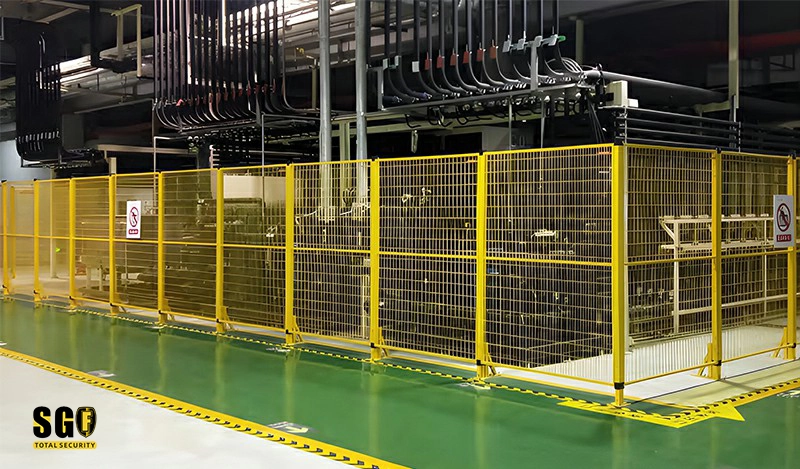
The wide-shot proof is the end result plant managers care about: a clean perimeter line that still looks orderly after installation. In a corrosive shop, appearance is not vanity; it is a sign that the barrier can survive the environment without turning into a maintenance headache.
Key specifications that solve the corrosion problem
| Requirement in a harsh machining shop | Mdfence response |
|---|---|
| Rust resistance under coolant mist and oil haze | 60-80 micron electrostatic powder coating |
| Proof against aggressive corrosion exposure | ISO 9227 salt-spray tested finish |
| Hidden dirt and moisture in joints | Flat full-weld contact points with no easy crevices |
| Stable installation on industrial floors | Base plate and anchored fixing layout shown in the installation diagram |
The result: longer service life, less repainting, better 5S
When the fence surface resists corrosion and the weld points do not trap residue, the whole guarding system stays presentable longer and needs less reactive maintenance. That means fewer unscheduled touch-ups, less time spent replacing ugly damaged panels, and a cleaner line of sight across the machine cell. For teams that manage safety and appearance together, that is the real return: a barrier that still looks like a controlled industrial asset after exposure to the shop floor, not a disposable accessory.
For corrosive processing areas, Machine Guarding Fence Panels are not just about enclosure. They are about keeping safety visible, durable, and easy to maintain.
Plan a guarding layout for your corrosive machining line
Share your aisle width, machine footprint, and exposure conditions, and we will map the right fence layout for the environment.