EN
EN  DE
DE  RU
RU  PT
PT  JA
JA  ES
ES  IT
IT Safety Fence Industrial for corrosive machining lines
Safety Fence Industrial Built for High-Corrosion Machine Shops
When coolant mist, cutting fluid, and lubricant spray live in the air, a cheap guard fails fast. Safety Fence Industrial is built to hold its structure, keep its finish, and stay presentable in the kind of metalworking environment that destroys ordinary fencing.
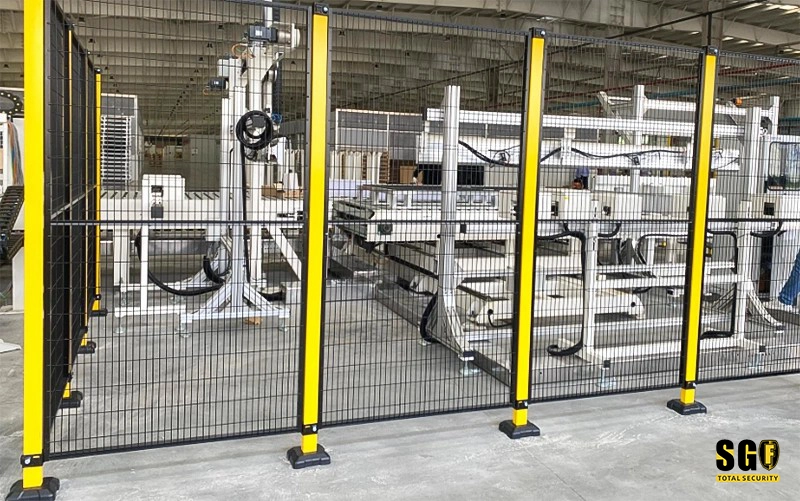
Why this fence survives where low-cost panels fail
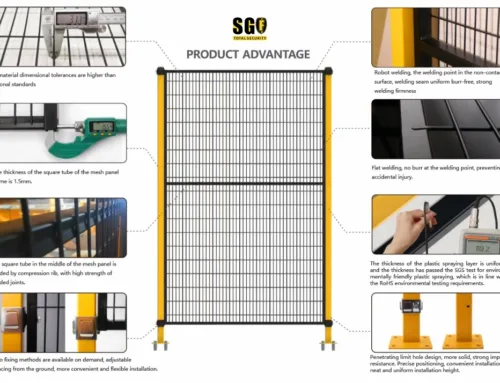
The problem is not only rust. In a deep-processing workshop, rust means weakened joints, flaky paint, dirty floor edges, and a safety barrier that stops looking like professional equipment. Safety Fence Industrial is designed for those conditions with a 60-80 micron electrostatic powder coating, ISO 9227 salt spray performance, and fully flat full-weld contact points that remove easy dirt-trap gaps.
| What the shop needs | What Safety Fence Industrial delivers |
|---|---|
| Protection in coolant and oil mist | Powder-coated surface with 60-80 micron coverage helps resist fast surface failure |
| Long service life in corrosive zones | ISO 9227 salt spray-tested finish supports a stronger anti-rust claim than basic painted guards |
| Easy cleaning for 5S management | Flat full-weld contact points reduce crevices where sludge and grime collect |
| Stable guarding appearance | Rigid welded details keep the fence looking like plant equipment, not disposable sheet metal |
Structural details that make the difference
1) Coating and weld quality are the first line of defense
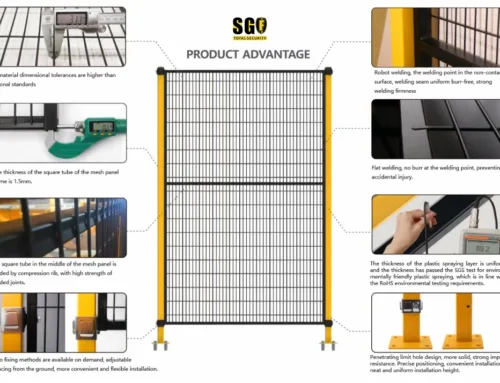
The hero board image shows what matters before the fence goes into a corrosive workshop: surface coating, weld seam consistency, and base plate detailing. Those are not cosmetic extras. They are the parts that decide whether the fence stays stable after months of exposure to fluid vapors and repeated cleaning.
2) Full-weld contact points remove weak, dirty seams
Cheap fencing often rusts first at the joints. Once the seams open up, moisture and sludge sit in the gaps and the problem spreads. Safety Fence Industrial uses flat full-weld contact points, so the structure does not leave easy pockets for contamination. That makes the guard easier to wipe down, easier to inspect, and better suited to 5S-driven plants.
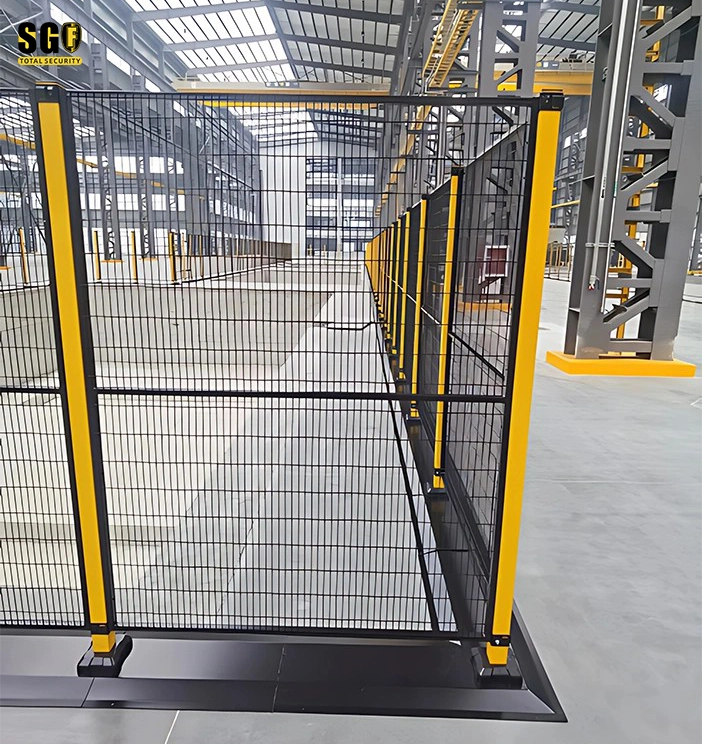
3) Tight perimeter closure keeps machine zones controlled
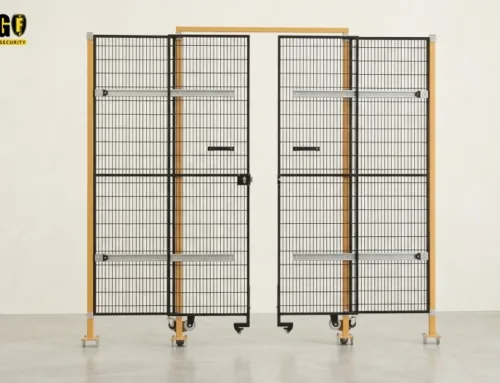
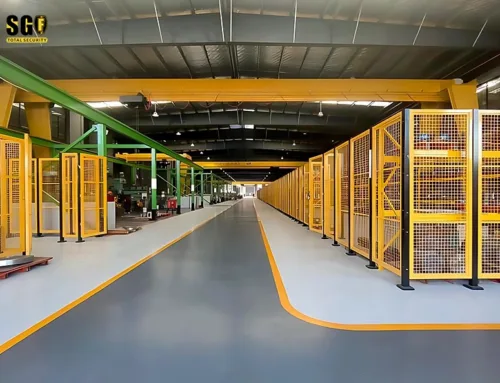
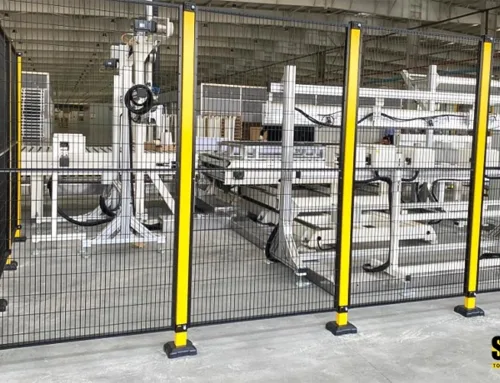
The enclosure does not only need to survive corrosion; it must still define the work zone clearly. The corner and cell images show a clean perimeter, strong top beam alignment, and the kind of closed geometry that works in compact machine cells, retrofit areas, and mixed-production layouts. That is why the fence fits both new lines and existing shops.
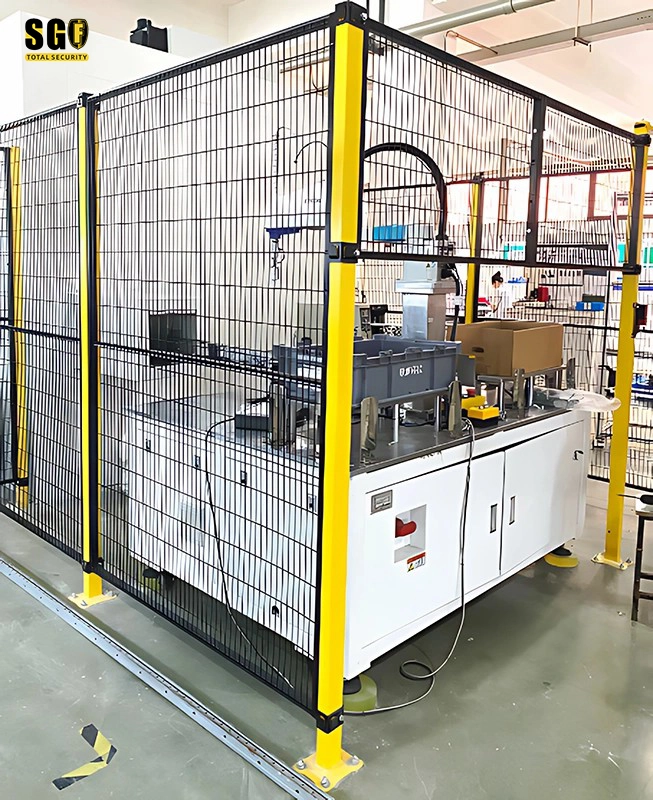
Best-fit applications in corrosive manufacturing
- Deep machining workshops with coolant haze and lubricant spray
- Metalworking cells where low-cost paint quickly peels or rusts
- Equipment perimeters that need stable 5S visual control
- Retrofit machine zones where clean corner closure matters
- Robot or automation cells that need strong, corrosion-ready guarding
In each of these environments, the result is the same: Safety Fence Industrial keeps the barrier readable, durable, and cleaner for longer. That means fewer premature repainting jobs, less visible corrosion, and a better safety image for the whole workshop.
What to ask for before you specify a fence
State the exposure conditions, cleaning frequency, and required perimeter size. Then ask for the coating thickness, weld method, and salt spray performance data. If your site is dealing with cutting fluid, oil mist, or regular washdown, Safety Fence Industrial is already aligned with those requirements instead of forcing you to accept a light-duty finish.
Stop replacing guards that rust too early
Cheap fencing is easy to buy and expensive to keep. Safety Fence Industrial is the better choice when the real cost is not purchase price, but repeated corrosion, weak appearance, and downtime from constant maintenance. Ask for a layout matched to your machine zone and corrosive exposure level.