EN
EN  DE
DE  RU
RU  PT
PT  JA
JA  ES
ES  IT
IT Mdfence Blog
Robot fencing systems for corrosive machine shops that rust cheap guards fast
Robot fencing systems built for cutting-fluid mist, lubricant aerosol, and wet shop floors need more than a basic painted finish. In high-corrosion machining areas, Mdfence keeps the enclosure looking clean, staying strong, and supporting safer 5S discipline for longer.
Why corrosive machining environments punish ordinary guards
Metal deep-processing shops rarely stay dry and clean. Cutting fluid haze, lubricant mist, and fine debris settle on every exposed surface. Cheap robot fencing systems may look acceptable on day one, but once the coating thins or the weld seams trap residue, rust spreads quickly. The result is not only a visual problem. Corrosion weakens the frame, damages the shop image, and makes daily safety housekeeping harder than it should be.
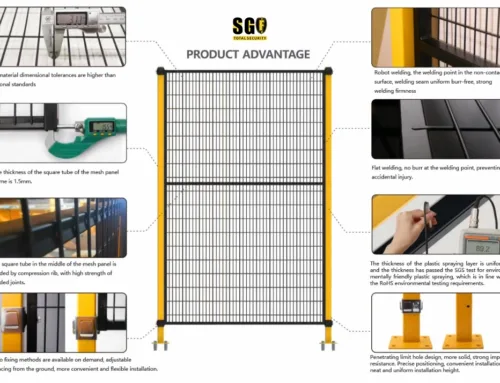
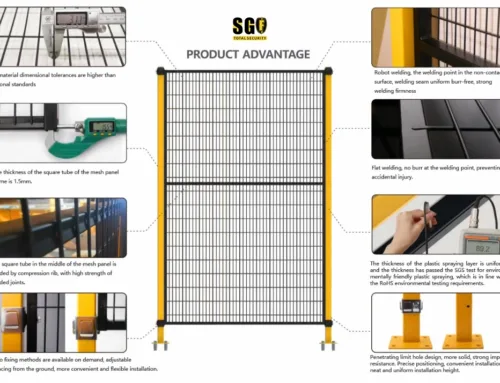
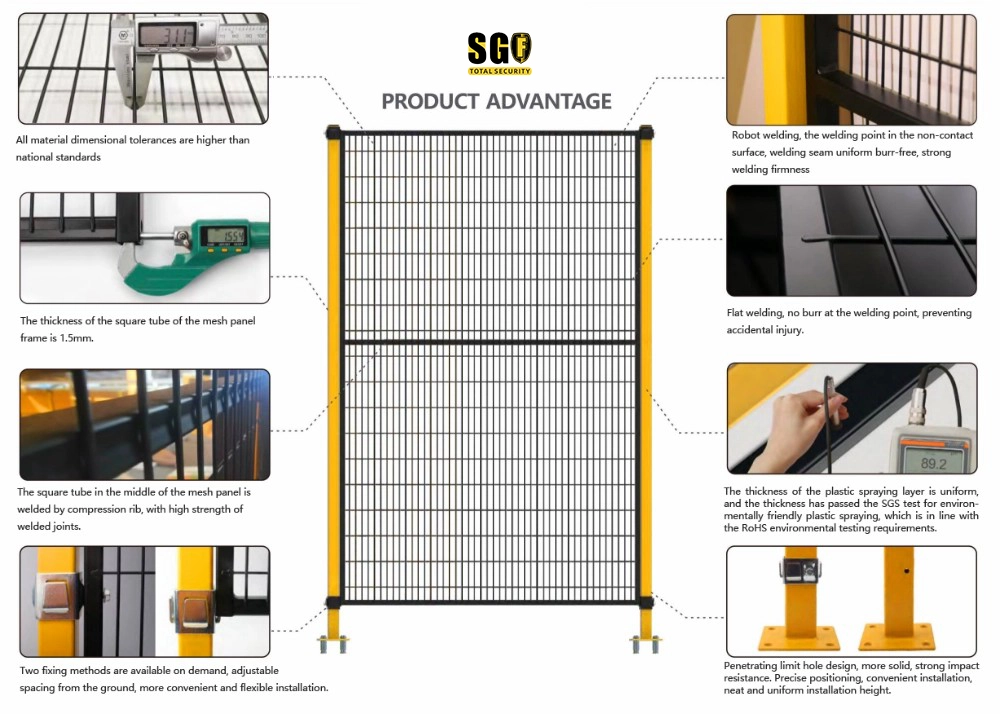
Mdfence is fit for this kind of environment because the protective design is built around the failure points that usually start the damage. The surface uses a 60-80 micron electrostatic powder coating, the weld contact points between wire and frame use flat full-weld construction, and the system has passed ISO 9227 salt spray testing. That combination is what gives the fence a real advantage in harsh machining zones.
| Evidence point | Mdfence specification | Why it matters in the shop |
|---|---|---|
| Surface protection | 60-80 μm electrostatic powder coating | Helps resist moisture, oil mist, and coating wear |
| Corrosion proofing | ISO 9227 salt spray tested | Supports long-term use in aggressive industrial air |
| Structural cleanliness | Flat full-weld contact points | No hidden gaps for dirt buildup or liquid retention |
| Operational result | Stable enclosure life in harsh machining environments | Better safety, cleaner appearance, lower maintenance pressure |
Old painted guards fail at the edges first
In corrosive machining lines, failure often starts where the structure is hardest to clean: edges, joints, and lower frame areas. Once a low-cost guard starts peeling, the exposed steel catches liquid residue and rust moves fast. Mdfence addresses that by combining a thicker powder coating with welded contact points that do not leave dirt-trapping seams.
Why the enclosure stays visually strong longer
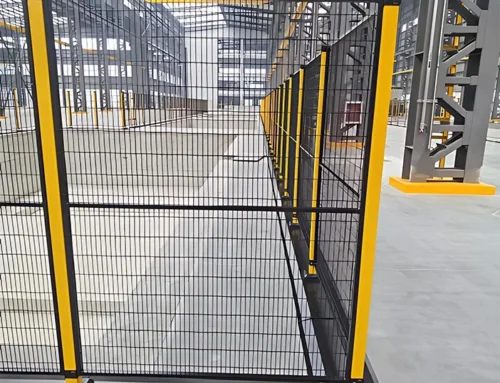
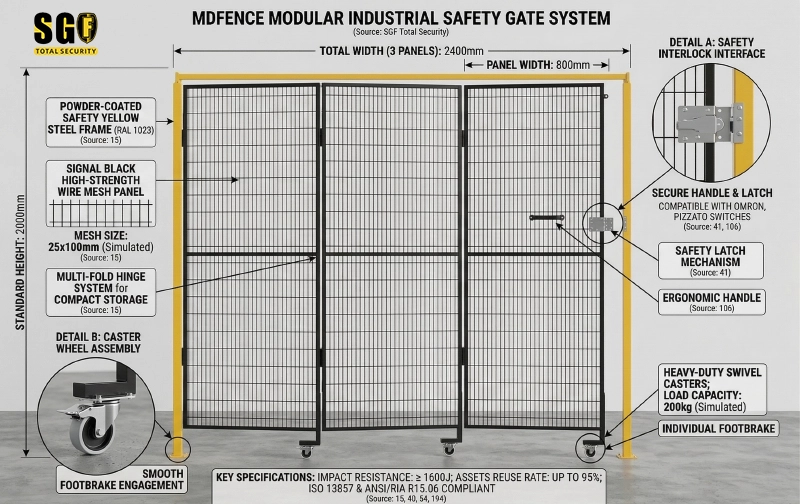
A rust-stained fence sends the wrong message in a precision shop. A clean, stable enclosure supports both machine safety and plant discipline. Because the Mdfence system is designed to hold its finish under industrial exposure, it stays better aligned with the appearance standards expected in modern production cells.
Access points need the same corrosion discipline
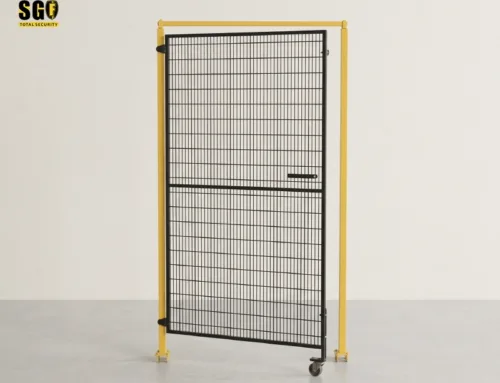
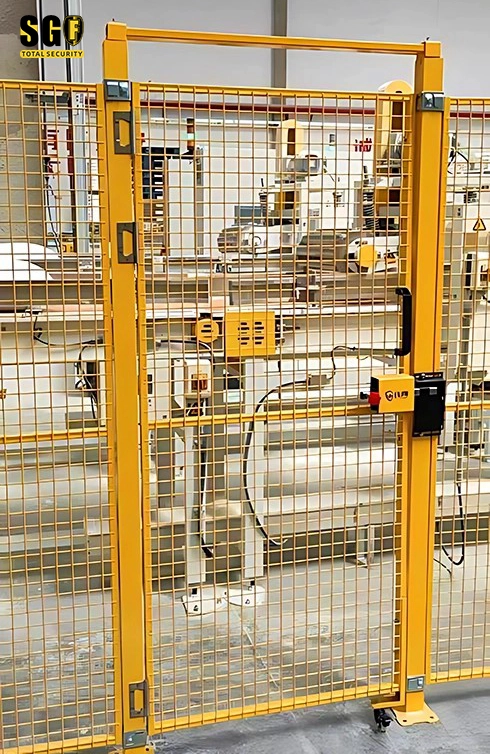
Gate hardware is often the first place where water, oil, and dust collect. The secure access layout shown here is only useful if the surrounding steel keeps its integrity. Full-weld contact points help reduce weak seams, while the powder-coated finish protects the gate frame during daily use.
Where this matters most
Robot fencing systems for machining environments are a good fit for metal deep-processing shops, automated work cells, transfer lines, and any production floor where lubricants or cutting fluid are constantly airborne. If the site has repeated corrosion, frequent cleaning, or strict 5S expectations, the enclosure has to be specified for durability, not just initial price.
Mdfence fits that brief because the anti-corrosion performance is tied to the build method, not just the paint color. The coating thickness, salt spray resistance, and welded joint construction all work together to keep the fence serviceable for longer in hard-use conditions.
Structure proof beats broad claims
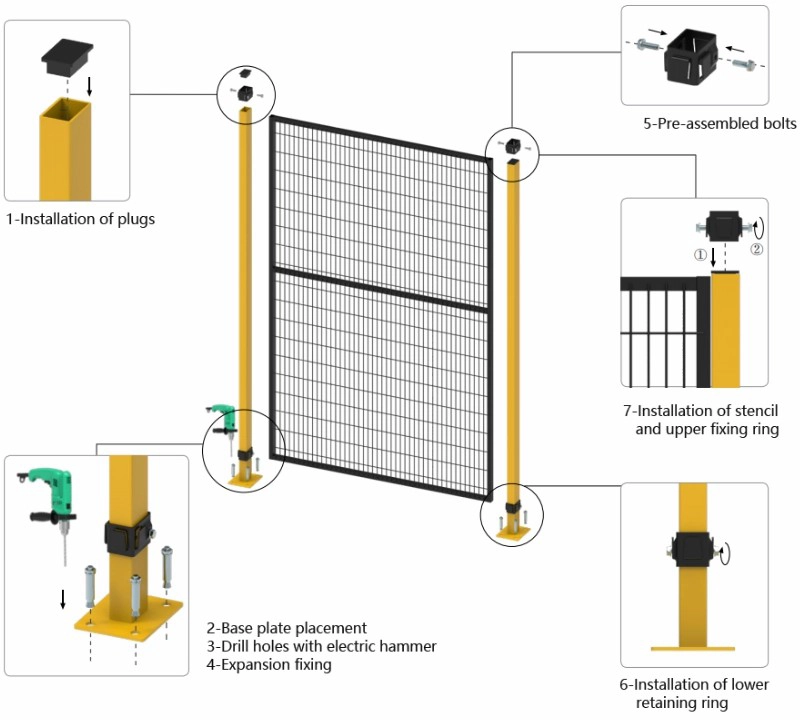
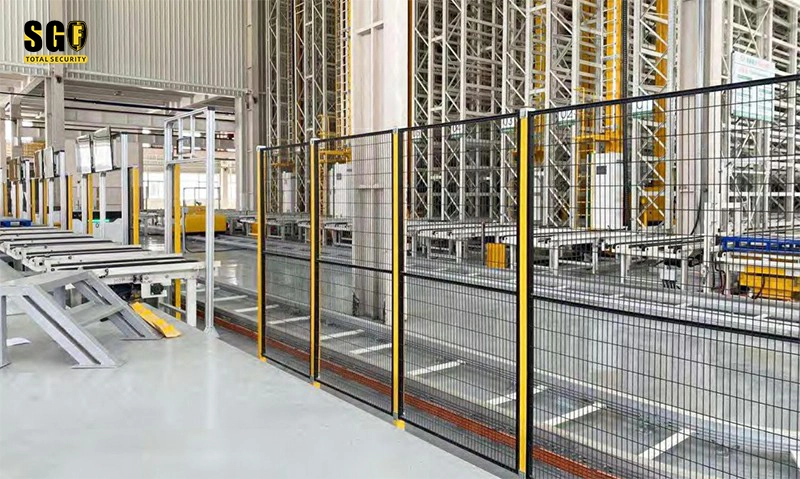
The technical layout shows the relationship between posts, mesh panels, and fixing clamps. That matters because a corrosion-resistant system still has to stay mechanically consistent. Clean alignment helps installation, inspection, and future maintenance, which reduces the chance of hidden damage developing around the frame.
Installation details support long service life
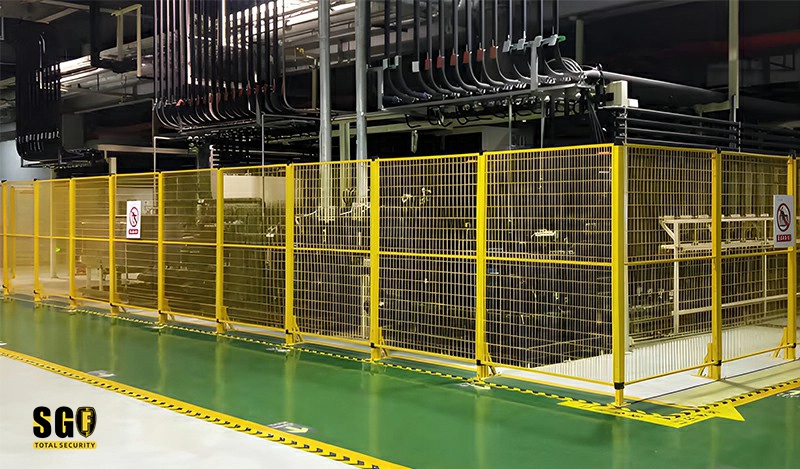
Good corrosion resistance works best when the fence is installed correctly from the start. Base plate drilling and expansion bolts keep the enclosure secure, so the structure can do its job in a shop where vibration, cleaning, and traffic are all part of daily operations.
Final result
For corrosive machine shops, the right robot fencing systems are the ones that remain stable after the novelty fades. Mdfence reduces the chance of early rust, protects the safety perimeter, and preserves the clean, controlled look that modern production floors need.
If your plant is fighting rust, peeling paint, and constant rework, specify the enclosure built for harsher industrial exposure.