EN
EN  DE
DE  RU
RU  PT
PT  JA
JA  ES
ES  IT
IT Reconfigurable offsite manufacturing
Safety fence industrial for plants that keep redesigning robot cells
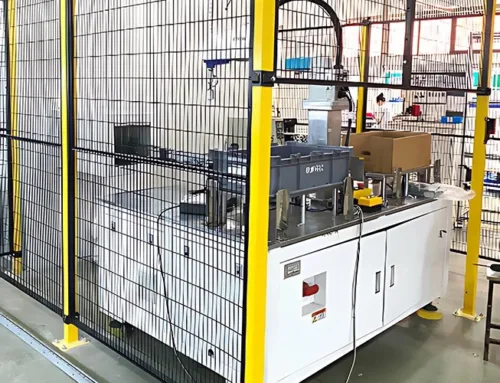
When a British offsite manufacturer kept changing its automation layout, safety fence industrial from Mdfence preserved the line instead of becoming scrap: 100% modular cold assembly, fast non-destructive teardown, and 95%+ asset reuse.
Why the old welded fence stopped working
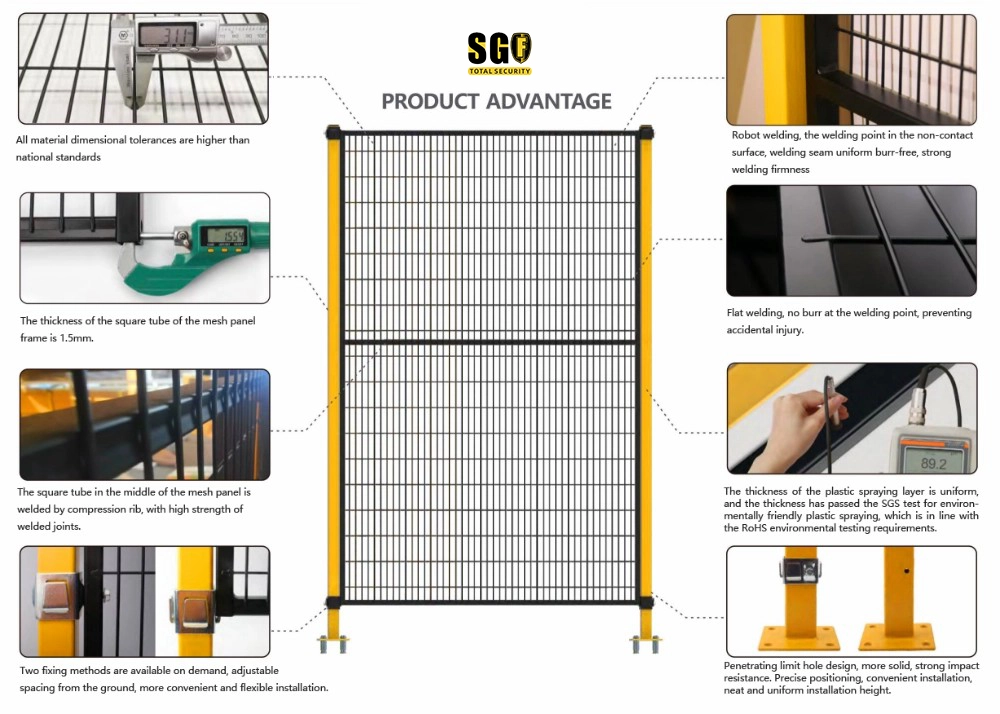
In the first 18 months after launch, the customer repeatedly reworked the process flow, including a major fastening change from nails to screws. A locally welded fence behaves like a dead asset: once the layout changes, dismantling usually means scrap, rework, and avoidable delay. Mdfence was selected because the guarding system had to move as quickly as the line itself.
| Decision point | Mdfence answer |
|---|---|
| Frequent process upgrades | 100% modular cold assembly with clamp-ring connections for fast layout resets |
| Need for non-destructive changeover | Panels can be dismantled and reinstalled without site welding or destructive cutting |
| Capital efficiency | 95%+ asset reuse rate keeps guarding in service across repeated line changes |
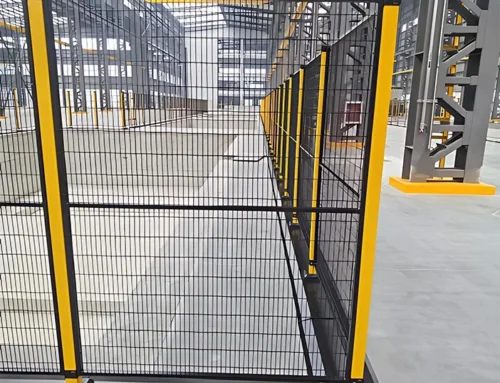
| Automation cell protection | Stable industrial perimeter guarding around robot units, conveyor zones, and transfer points |
Why Mdfence fit the line better than welded guarding
Cold assembly keeps the site flexible
Mdfence is built around a fully modular installation logic. Because the system uses clamp-ring style connections and cold work assembly, the guarding can be moved when the cell changes, not only when the fence reaches end of life. That matters in offsite manufacturing, where the floor plan is never final for long.
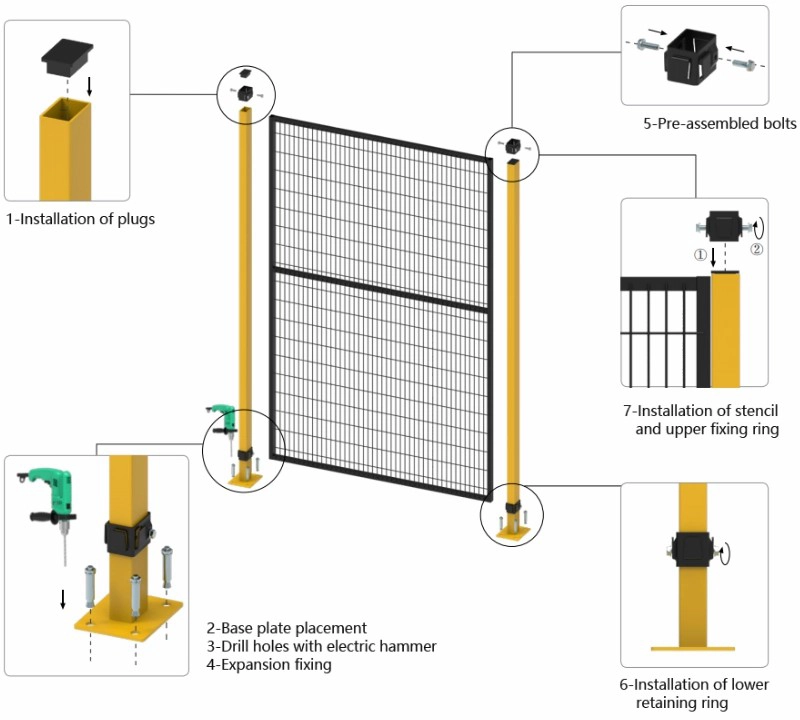
Installation evidence shows how the system moves
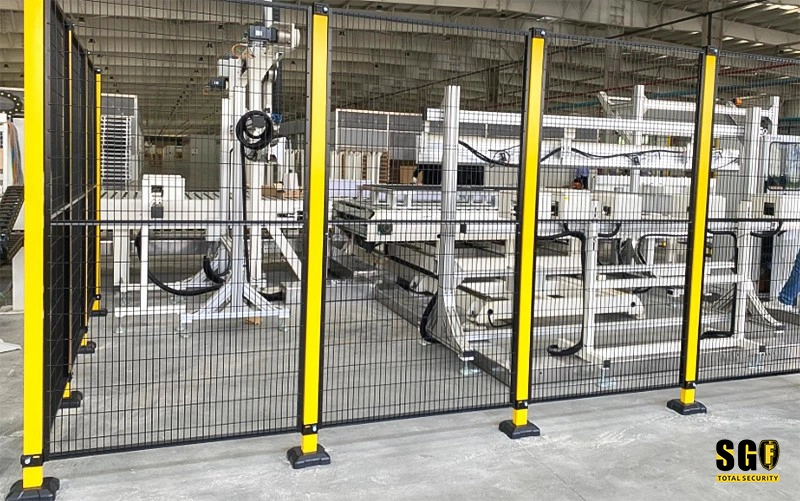
The installation image makes the practical value obvious: base plates are located, drilled, fixed, and then locked into a repeatable assembly sequence. That is the opposite of a welded dead asset. It gives the customer a guarded cell that can be expanded, shortened, or rebuilt as the automation program evolves.
Structure stays readable during future re-layouts
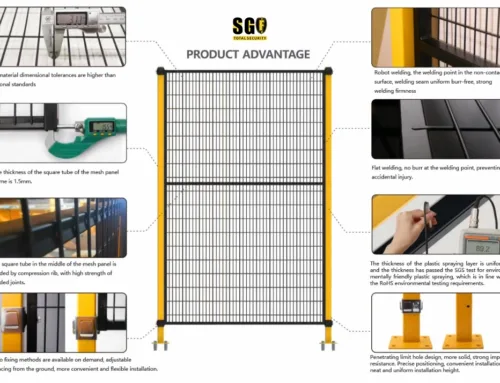
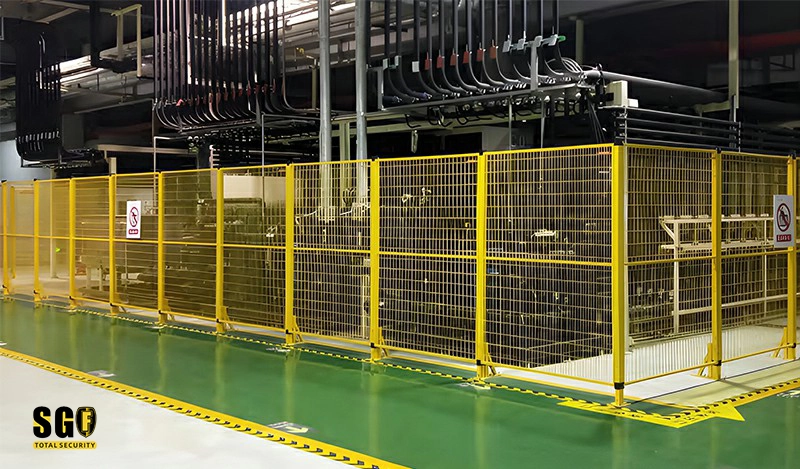
The technical front view shows the post, mesh panel, and fixing clamp relationship clearly. That matters when maintenance teams need to reconfigure a machine cell quickly: the parts stay easy to identify, easy to swap, and easy to reinstall in the next project phase.
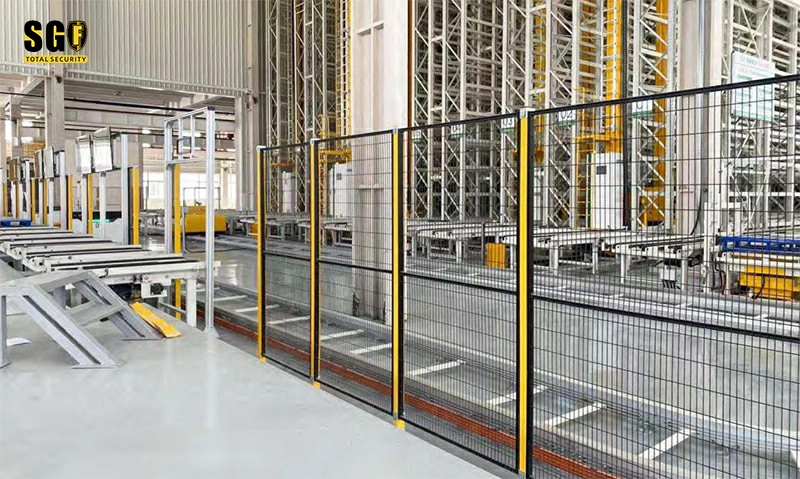
Where this solution is strongest
- Offsite factories that keep changing robot cell boundaries
- Automation lines that need fast expansion without scrapping the existing fence
- Conveyor and transfer areas that need safe perimeter control during process upgrades
- Plants that value reuse, speed, and non-destructive asset management over welded permanence
For this customer, the result was straightforward: the guarding no longer blocked change. Instead of forcing the production team to choose between safety and flexibility, Mdfence let the line evolve while keeping the perimeter intact, reusable, and ready for the next redesign.
What the buyer actually gets
A modular machine fencing system that supports repeated line edits, protects automation cells, and avoids the waste cycle created by welded local fences. The business case is not only safer operation; it is better capital recovery over every future layout change.
Plan the next layout change before it happens
If your automation line is still changing, your safety fence should be able to change with it. Mdfence gives you a repeatable guarding platform built for reconfiguration, reuse, and practical uptime.