EN
EN  DE
DE  RU
RU  PT
PT  JA
JA  ES
ES  IT
IT Industrial Safety Fencing for plants that keep changing layout
How one UK offsite manufacturer used Industrial Safety Fencing to rebuild robot cells without welding
When a line is still evolving, the fence must evolve too. This Industrial Safety Fencing project was chosen because it supports fast, no-damage layout changes, cold-site assembly, and reuse on the next cell build.
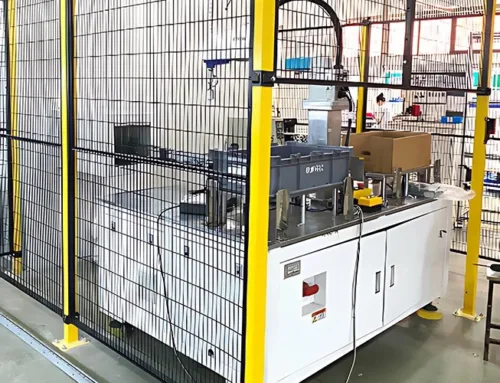
Why this site needed a fence that could keep up with process changes
The customer was not protecting a frozen line. They were protecting a line that kept changing: the process moved, the robot cell changed, and a fixing method that looked right at launch often became wrong after the next upgrade. Traditional welded local barriers turned those changes into waste. Once removed, they became dead assets.
| Item | Project-relevant answer |
|---|---|
| Assembly method | 100% modular cold assembly with clamp-ring connection, no site welding |
| Reconfiguration need | Fast dismantling and rebuild when robot units or process flow are upgraded |
| Asset outcome | High reuse rate, with 95%+ of the system reusable on the next layout |
| Operational fit | Supports lean manufacturing teams that adjust lines repeatedly during ramp-up |
Why Industrial Safety Fencing fit this reconfigurable offsite cell
No-weld structure for fast changeovers
The strongest fit was not only protection. It was flexibility. Industrial Safety Fencing built with modular cold assembly means the guard line can be taken apart, moved, and rebuilt without cutting or grinding. That is critical when a plant changes from one fastening method to another, or when a robot island needs to be resized around a new process step.
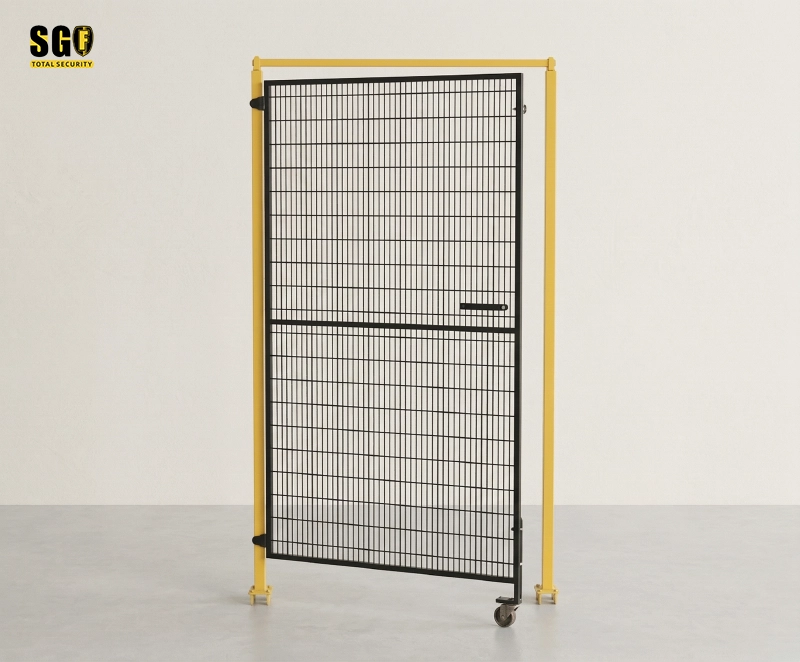
Structure that proves the system is built for reuse
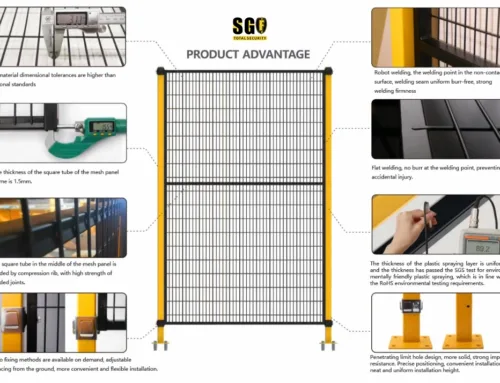
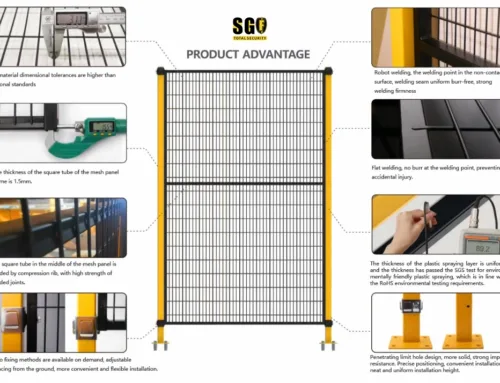
The technical front view makes the logic easy to see: post, mesh panel, and fixing clamp are separate parts, so the system behaves like an asset kit rather than a dead welded frame. That is why the fence can be re-specified for the next production phase instead of scrapped after the current one.
Specification evidence that supports the buying decision
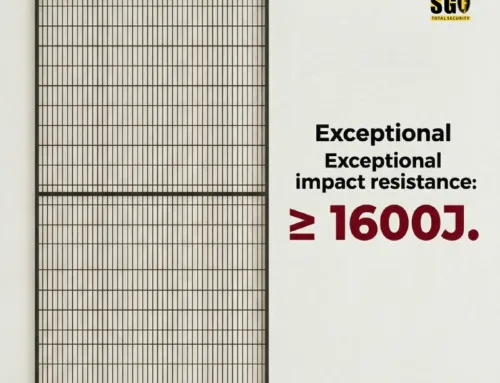
The proof board matters because buyers in this segment do not want marketing language. They want to know the frame, weld seam, coating, and base plate are all consistent enough to survive repeated teardown and reinstallation. This is where the product matches the customer’s operating model: every layout revision can preserve most of the original investment.
What changed after the fence became modular
- The robot cell could be re-planned without scrapping the original guard line.
- Process upgrades no longer forced a full rebuild of the safety perimeter.
- The team could change layout quickly during lean ramp-up, then reuse the same fence hardware in the next phase.
- Capital tied up in protection hardware stayed productive instead of becoming waste.
For a plant that values flexible evolution and responsiveness to demand, Industrial Safety Fencing is not a fixed barrier. It is a reconfigurable infrastructure layer that supports change instead of resisting it.
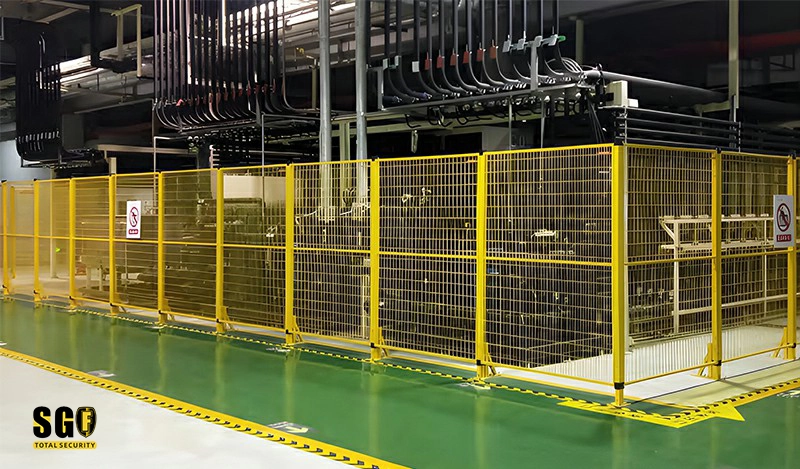
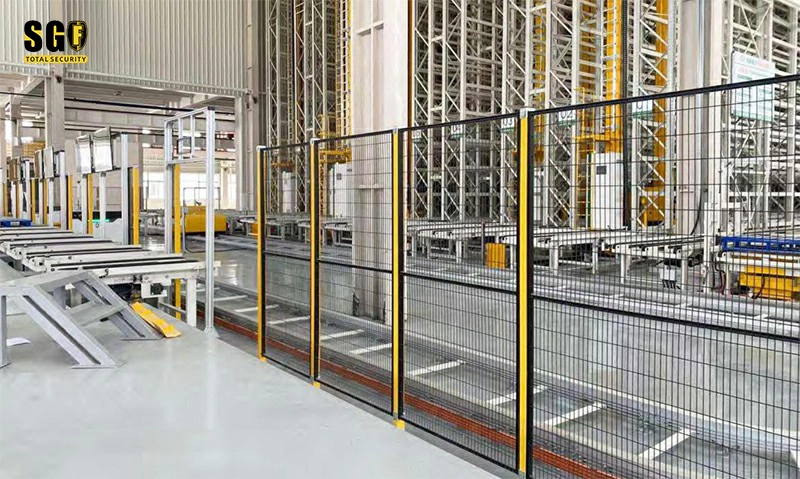
Evidence from the field
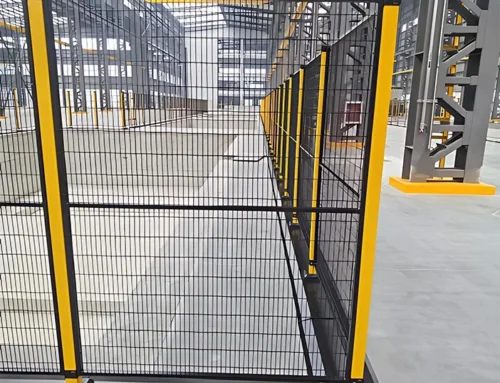
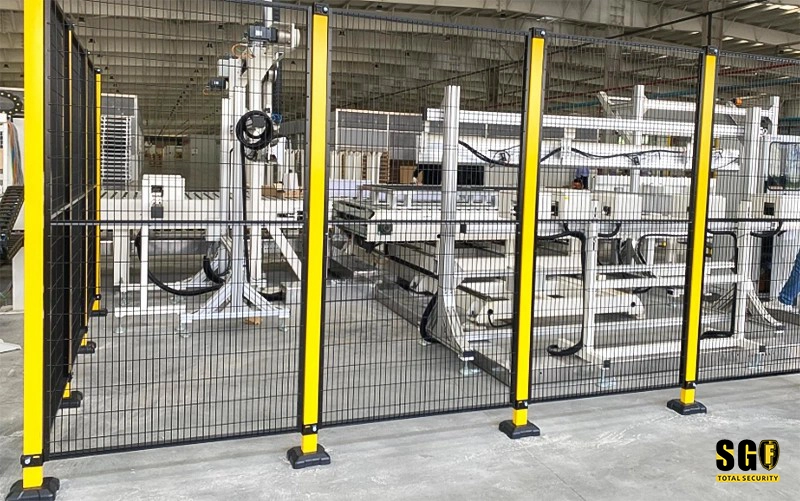
The aisle view and corner detail show the same message from two angles: modular separation, clean access control, and a layout that can be changed again when the next process revision arrives. That is the real advantage of Industrial Safety Fencing in a fast-moving offsite environment.
Need a safety fence that can be rebuilt, not scrapped?
If your line is still changing, your protection system should be designed for that reality. Use Industrial Safety Fencing when you need quick rebuilds, cold-site assembly, and high reuse across multiple production stages.