EN
EN  DE
DE  RU
RU  PT
PT  JA
JA  ES
ES  IT
IT Machine safety fence for cut-heavy light-steel panel lines
Machine safety fence for cut-heavy light-steel panel lines
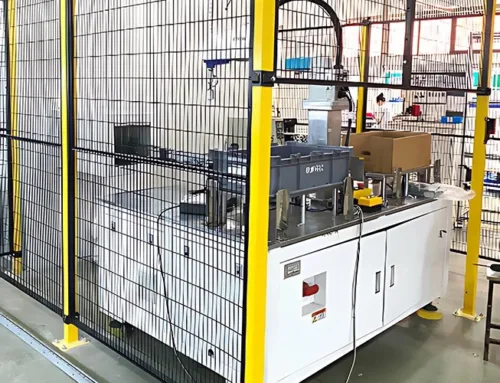
When a light-steel panel line is cutting window and door openings at speed, the real problem is not only guarding the robots. It is stopping flying metal chips and gypsum dust while keeping the whole 8-robot line visible from the aisle. Mdfence is built for that exact balance.
Why this machine safety fence fits the line
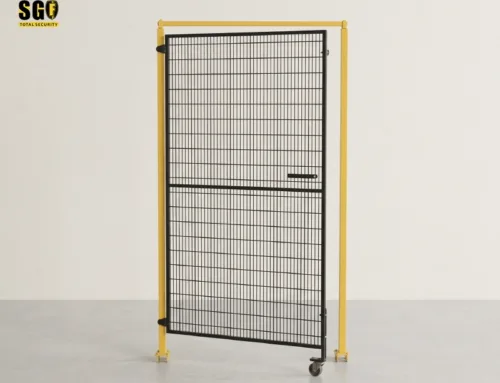
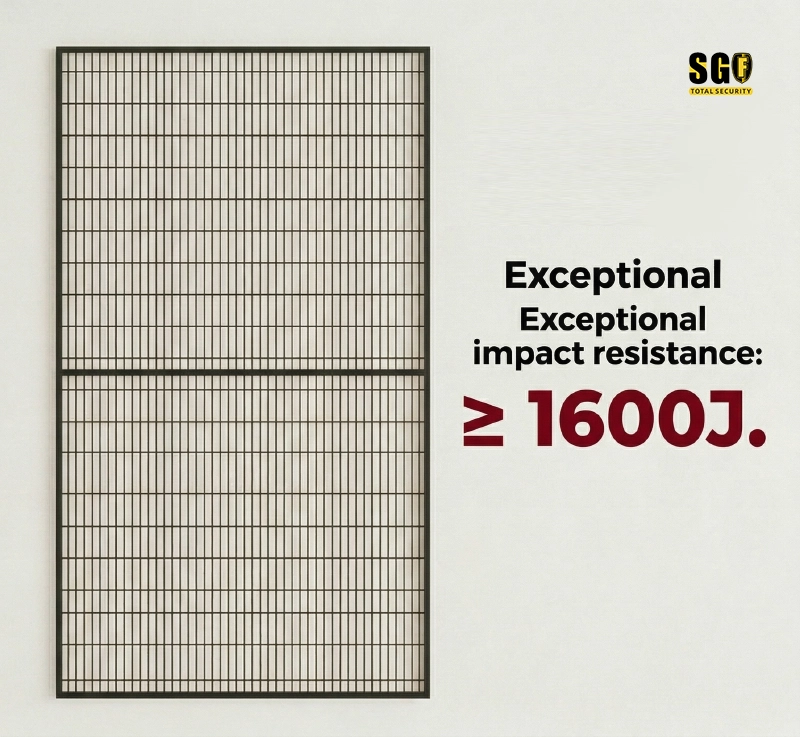
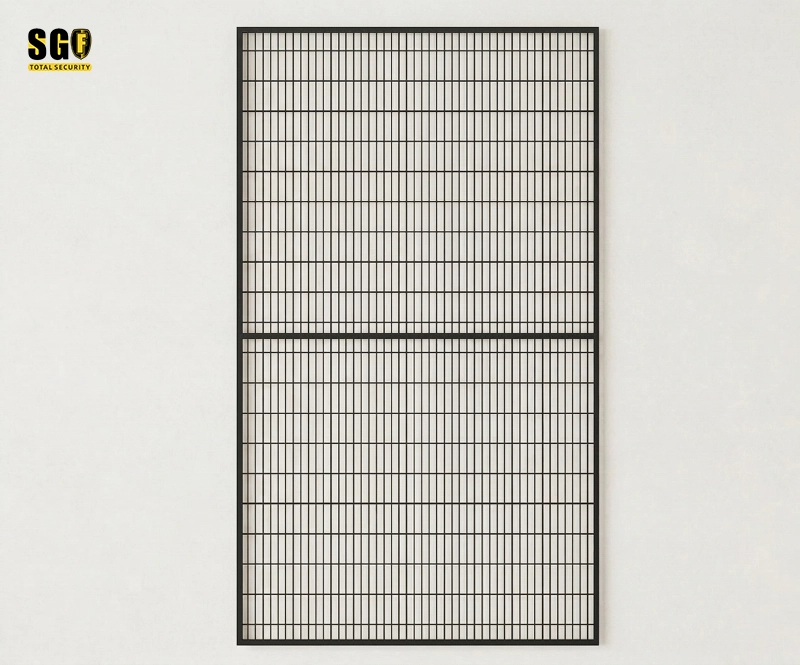
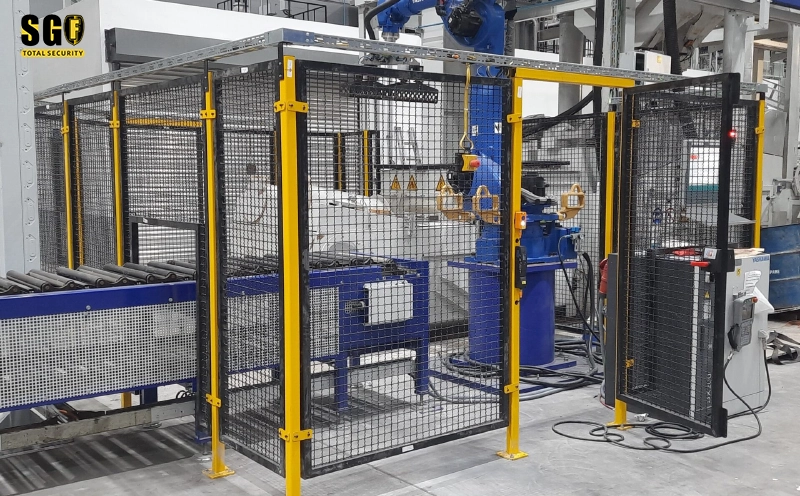
A cut-heavy production cell needs two things at once: a barrier that can stop high-speed debris, and a fence line that does not turn the shop floor into a blind corridor. Mdfence addresses both with a standard mesh panel built around a 20x30x1.5mm rectangular tubular frame, full welding between the steel wires and the frame, a narrow-aperture mesh structure, black mesh in RAL 9005, and safety-yellow posts in RAL 1023.
| Problem on site | Mdfence response |
|---|---|
| Flying chips and gypsum dust around cutting stations | Narrow-aperture steel mesh and full-welded panel structure help contain debris inside the cell. |
| Supervisor needs clear sightlines across 8 robots | Deep black mesh and safety-yellow posts keep the line readable from the aisle without creating visual dead zones. |
| Frequent impact and daily operation stress | 20x30x1.5mm tubular frame gives the panel a rigid perimeter for machine guarding use. |
What the structure proves
Full-welded frame for real guarding duty
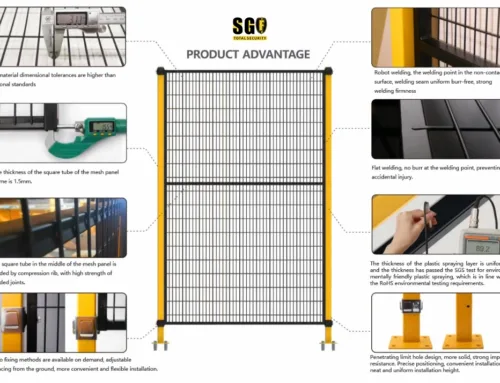
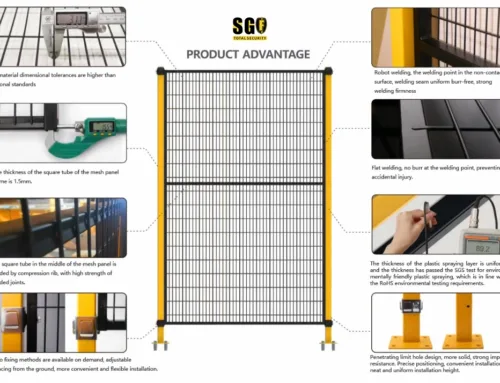
The core reason this machine safety fence works on a cutting line is simple: the steel wires and the frame are fully welded, not loosely assembled. That matters when the cell is throwing chips, dust, and vibration into the perimeter every shift. The product evidence board shows the weld seam, coating finish, and base plate details together, which is the right proof set for a fence that must stay rigid in use.
Clear sightlines across the automation aisle
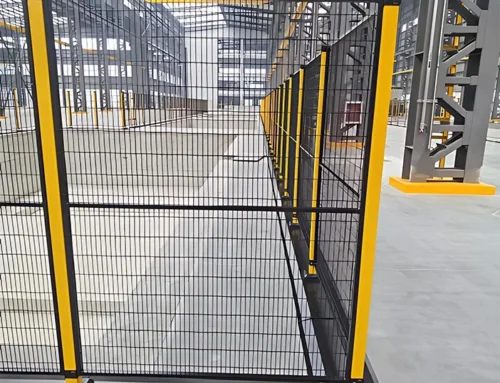
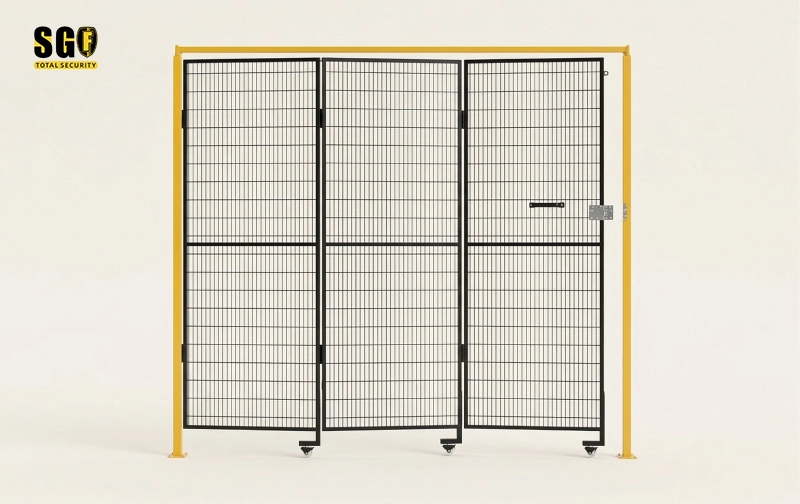
Production supervisors do not want to walk into a maze of opaque barriers. The black mesh and yellow post color split gives the line a visible edge while still leaving the robot work zone easy to inspect from the aisle. That is exactly why a machine safety fence can protect the work cell without hiding the status of the 8 coordinated robots.
Base plate and installation detail for controlled deployment
The installation guide image shows base plate drilling, expansion bolts, and retaining rings. That is important because the line is not a showroom. It is a working production aisle where the fence has to be fixed, aligned, and kept in place around active cutting equipment. The structure is built for mechanical installation discipline, not temporary visual separation.
Where it makes the biggest difference
- Light-steel panel lines with repeated opening cuts and chip scatter.
- Robot cells that need perimeter containment without blocking the operator’s view.
- Production aisles where supervisors must verify multiple machines at a glance.
- Automated stations that need a rigid, welded machine safety fence instead of a soft visual divider.
The best result is not just safer access control. It is a line that stays visible, contains the mess from cutting work, and lets management keep control of the process from the outside walkway.
Specification snapshot
For this application, Mdfence is selected as a machine safety fence because the panel construction, weld integrity, and color contrast all serve the same operational target: keep debris inside the cell and keep the process visible outside it.
Plan the fence around your cutting line
If your production cell has flying chips, dust, and a supervisor who must see every robot, the fence has to do more than mark a boundary. Mdfence is made to guard the cell and keep the line readable.