EN
EN  DE
DE  RU
RU  PT
PT  JA
JA  ES
ES  IT
IT 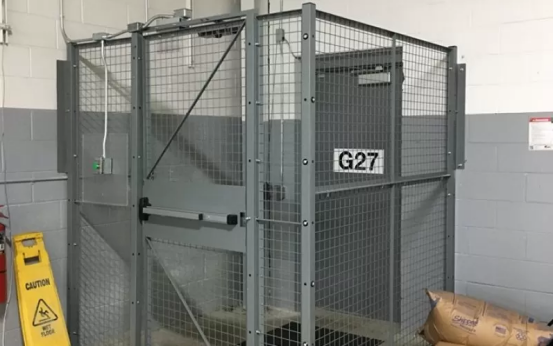
The vision of the “smart warehouse” is no longer science fiction. We imagine a seamless ballet of Automated Guided Vehicles (AGVs), robotic arms picking orders, and AI-driven analytics optimizing every cubic inch of space. But in this hyper-optimized ecosystem, the greatest point of friction and risk becomes the unpredictable human element—specifically, the constant flow of external visitors like truck drivers.
As we automate tasks inside the warehouse, the chaos tolerated at the entry point becomes a threat to the entire operation. Investing in robotics without first solving the human access problem is like building a supercomputer in a dusty barn. The environment itself will compromise the system.
The New Conflict: Unstructured Humans in a Highly Structured World
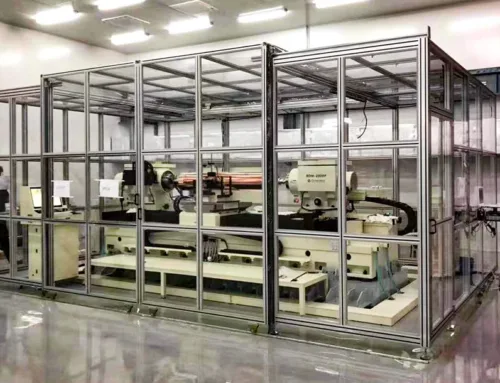
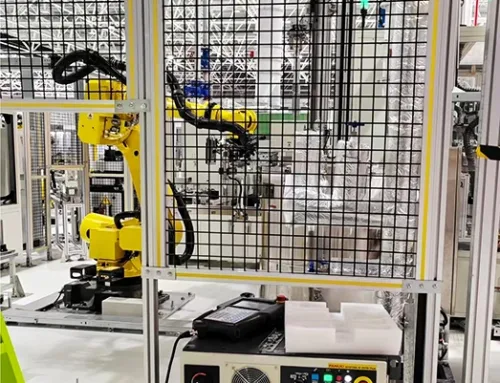
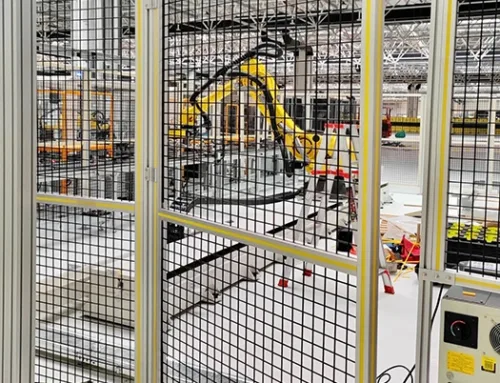
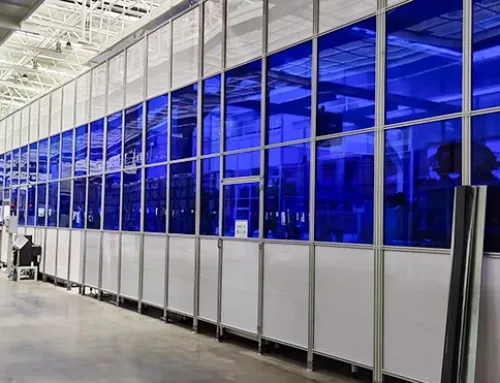
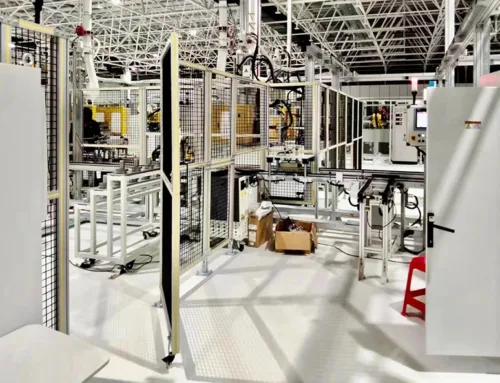
The methods of managing visitors in a manual warehouse are untenable in an automated one. The stakes are exponentially higher. Robots demand absolute predictability, and an unexpected human in their path is a system failure. Your Warehouse Management System (WMS) runs on clean data; human interference introduces noise and inaccuracies, corrupting the data you rely on to optimize your multi-million-dollar investment. The “human-robot interface” becomes the most critical and dangerous point in your facility, making a physical barrier like a wire partition panel an absolute necessity.
The Gateway as a Strategic “Human-to-System Interface”
An access control point is no longer just a “driver cage.” It becomes a strategic “Human-to-System Interface Protocol.” It functions as an “operational airlock,” ensuring only essential data and goods enter the automated ecosystem while the human operator remains safely contained. With an integrated electronic lock or scanner, each wire partition panel becomes a critical data capture point, allowing your WMS to know the moment a truck has arrived. This guarantees the sanctity of the automated zone.
Building the Foundation for Tomorrow, Today
The wisest leaders understand that you must first secure the perimeter before deploying exciting new technologies. Investing in a robust, tech-enabled, physical access control system today is a foundational investment in your automation readiness. It solves immediate safety and efficiency problems, de-risks your future automation rollout, and evolves with you as technology advances. Before you invest millions in the robots that will run your floor, make the foundational investment in the system that will manage your door.