RU
RU  EN
EN  DE
DE  PT
PT  JA
JA  ES
ES  IT
IT 

Integrating physical barriers with your machine’s control logic is a critical step in building a compliant and reliable safety system. The process, however, is often fraught with hidden costs, on-site fabrication challenges, and long-term reliability risks. This guide explores a streamlined, engineering-first approach that transforms your safety fence from a passive barrier into an active, intelligent component of your automation ecosystem.
The Critical Challenge: Bridging the Gap Between Mechanical Guarding and Electrical Safety
For any Системный интегратор delivering a turnkey automated production line, the final stage of commissioning is where project timelines are won or lost. A common bottleneck is the integration of access gates within the Системы защитных ограждений для роботов with the machine’s safety circuit, typically managed by a PLC. The goal is simple: when a gate is opened, the machine must enter a safe state. However, achieving this reliably is a complex task that exposes the flaws in traditional approaches.
The conventional method involves mounting safety interlock switches or emergency stop buttons onto standard fence posts after the mechanical installation is complete. This seemingly straightforward task quickly devolves into a series of costly and risky on-site modifications, creating significant pain points for engineering and installation teams.
Why On-Site Fabrication is a Flawed Integration Strategy
The Hidden Costs of Field Modifications
When a standard fence post has no dedicated mounting provisions, electrical engineers are forced to become fabricators. This involves drilling, tapping, and sometimes even welding custom brackets directly onto the posts. This process introduces several immediate problems:
- Compromised Corrosion Resistance: Drilling through the durable powder coating exposes the raw Q235 carbon steel underneath. This instantly creates a weak point for rust and corrosion, degrading the structural integrity and aesthetic of the system over time, especially in environments with moisture or cutting fluids.
- Risk of Contamination: Metal shavings produced during drilling are a major contamination risk, particularly in sensitive environments like precision machining centers or clean rooms for electronics assembly. These particles can damage delicate components and lead to product quality issues.
- Increased Labor and Time: The task requires skilled labor, precise measurements, and specialized tools. What should be a quick connection becomes a time-consuming fabrication job, delaying project commissioning and inflating labor costs.
The Long-Term Reliability Gamble
Even when a custom bracket is successfully installed, it often creates a long-term reliability issue. DIY mounting solutions lack the structural rigidity and precision of a factory-engineered component. Over time, factors like machine vibration, frequent door usage, or minor impacts can cause the bracket to shift or loosen. This minute misalignment between the switch and its actuator is a leading cause of nuisance trips, leading to unnecessary and expensive production downtime while technicians hunt for the “ghost” fault in the system.

The Engineered Solution: Fencing Designed for Seamless Integration
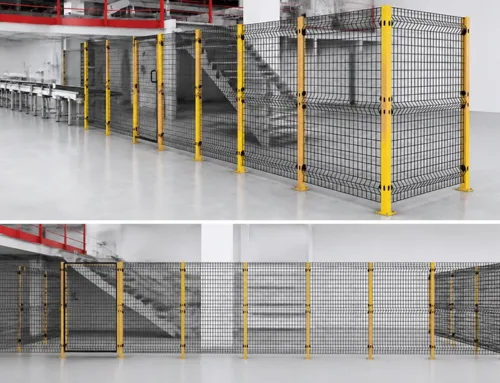
The modern solution to this challenge is to abandon the idea of post-installation modification and instead utilize a Панели ограждений для защиты машин system designed from the ground up for electrical integration. This approach shifts the work from the chaotic project site to a controlled factory environment, ensuring precision, reliability, and speed.
The Core Component: The Safety Interlock Carrier
The key innovation is the Safety Interlock Carrier. This is not a generic bracket, but a purpose-built, pre-engineered mounting plate designed to perfectly accommodate specific, industry-standard safety switches. For example, dedicated carriers are available for popular models like the Omron D4NL or Pizzato FS series.
This component transforms the integration process:
- Plug-and-Play Installation: The carrier bolts directly onto the fence post and door frame using pre-drilled holes. The safety switch is then screwed onto the carrier. There is no drilling, no tapping, and no welding required. The entire process takes minutes, not hours.
- Guaranteed Precision: Factory-level manufacturing ensures the carrier holds the switch and its actuator in perfect alignment. This eliminates the primary cause of nuisance trips and guarantees the safety function will work reliably for the life of the machine.
- Maintained Integrity: Because there are no on-site modifications, the powder-coated finish remains intact, preserving the system’s corrosion resistance and long-term durability.
A Foundation of Structural Stability
A reliable integration is only possible on a stable foundation. A flimsy fence system where posts can deflect or doors can sag will inevitably cause interlock misalignment. A robust system built with 60x60mm steel posts and fully framed mesh panels provides the necessary rigidity. Furthermore, components like a top-mounted Балка дверной рамы connect the posts on either side of a door, creating a rigid portal. This ensures the posts remain parallel and the door never sags, keeping the interlock perfectly aligned through thousands of cycles.

Conclusion: From Afterthought to Integrated Asset
Effectively integrating your industrial safety fencing with interlocks and E-stops is not about finding clever ways to modify a standard fence. It’s about choosing a system that was conceived as part of the complete safety control loop. By leveraging pre-engineered solutions like dedicated Safety Interlock Carriers, system integrators and plant managers can eliminate on-site fabrication, drastically reduce installation time, and build a more reliable, compliant, and robust machine guarding system. This modern approach turns your physical barrier from a simple fence into a smart, active component that enhances safety and maximizes machine uptime.
Часто задаваемые вопросы
What is a Safety Interlock Carrier?
A Safety Interlock Carrier is a pre-engineered mounting bracket designed specifically to attach industry-standard safety switches (like those from Omron, Pizzato, or Schmersal) to a safety fence post and gate. It replaces the need for on-site drilling or custom fabrication, ensuring perfect alignment and rapid, reliable installation.
Why is on-site drilling on safety fence posts not recommended?
Drilling on-site breaks the protective powder-coated layer, exposing the steel to potential corrosion and rust. It also creates metal shavings that can contaminate sensitive machinery or products. Finally, it is a time-consuming process that relies on manual precision, which can lead to misalignment and reliability issues.
Can any brand of safety switch be integrated with a modular fencing system?
High-quality modular fencing systems offer dedicated carriers for the most common safety switch brands and models used in industrial automation. For less common switches, universal mounting plates or custom-engineered solutions are often available, still avoiding the need for direct modification of the primary fence structure.
How does an engineered integration approach improve machine uptime?
By ensuring perfect and lasting alignment between the safety switch and its actuator, an engineered solution like a dedicated carrier eliminates a major source of nuisance faults. These faults can cause random machine stoppages, leading to significant production losses. A reliable interlock system ensures the machine only stops when there is a genuine safety event.
Does this integration method comply with international safety standards like ISO 14120?
Yes. Using a professionally designed and tested fencing system with dedicated integration components is the best way to ensure compliance. These systems are designed and validated to meet the structural and access requirements of standards like ISO 14120 (Safety of machinery – Guards) and help fulfill the risk reduction measures required by standards like ISO 13849 (Safety of machinery – Safety-related parts of control systems).