RU
RU  EN
EN  DE
DE  PT
PT  JA
JA  ES
ES  IT
IT 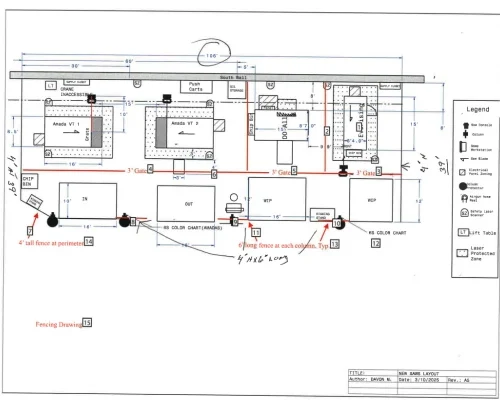

|
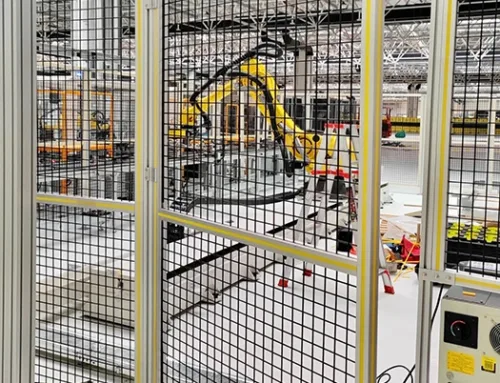
In automotive automation, guessing the correct ISO 14120 height for your robotic work cells isn’t just a compliance issue—it’s the difference between a successful line commissioning and a costly EHS shutdown. When a 6-axis robot drops a workpiece at high velocity, standard commercial fencing buckles. You need a system engineered for the exact reach distances and impact dynamics of high-speed manufacturing, ensuring your PLCs and safety interlocks never experience phantom trips. |
Determining the Correct ISO 14120 Height for Robotic Work Cells
Before: The Shrinking Factory Floor
System integrators often struggle with layout constraints when deploying new automated assembly lines. If you use standard 50x50mm wire mesh, ISO 13857 dictates a safety distance of up to 850mm (33.5 inches) to prevent operators’ arms from reaching the hazard zone. This excessive gap eats up valuable floor space, squeezing your AGV (Automated Guided Vehicle) pathways and making material handling dangerously tight.
Why It Works: The 20x100mm Advantage
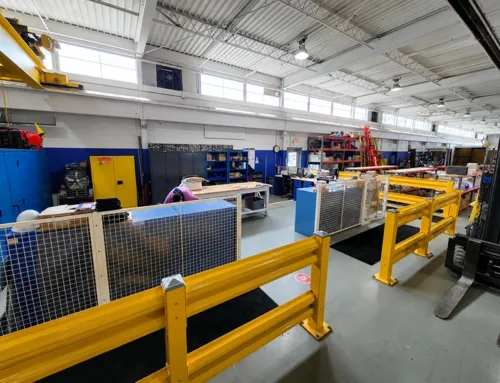
The Mdfence Промышленное ограждение безопасности system utilizes a highly specific 20x100mm “finger-safe” mesh profile on standard 2000mm (78.7 inches) or 2200mm high Q235 carbon steel posts. Because the 20mm slot physically blocks finger penetration according to ISO testing, the required safety distance drops dramatically.
After: Reclaiming High-Value Production Real Estate
By utilizing the correct mesh-to-height ratio, you can legally shrink the barrier distance to just 120mm (4.7 inches) from the hazard. For a 50-meter automotive welding station, this reclaims nearly 35 square meters of premium factory real estate—allowing you to install an additional CNC machining center or widen your forklift aisles without violating EHS compliance.
Absorbing Kinetic Energy in High-Speed Assembly

Before: Elastic Deformation and Phantom Stops
Cheap, frameless wire mesh lacks out-of-plane stiffness. When a line worker leans against it, or when it absorbs minor vibrations from adjacent heavy machinery, the mesh warps. This micro-movement misaligns the safety interlock switches mounted on the gates. The moment an Omron or Pizzato switch loses alignment by even a millimeter, the PLC triggers a “phantom stop,” bringing your turnkey robotics solution to a grinding halt and destroying your shift’s OEE (Overall Equipment Effectiveness).
Why It Works: 1600J Impact Resistance
Наш сайт Панели ограждений для защиты машин are built with a full 20x30x1.5mm tubular steel frame. The steel wires are flat-welded directly to the inner edge of this frame. This architecture is TUV certified to absorb 1600 Joules of kinetic energy. If a spindle fails and ejects a 220 lbs (100kg) mechanical assembly at 12.4 mph (20 km/h), the frame transfers the load to the 60x60mm posts and down to the M10 expansion bolts, plastically deforming rather than shattering.
After: Unbroken Production Cycles
The structural rigidity ensures that your safety interlock carriers remain perfectly static. Doors don’t sag, switches stay aligned, and the robotic integration operates continuously without false trips, ensuring maximum throughput for your automotive assembly systems.
Engineering Access for Automotive Tooling and AGVs

Before: Swing Doors Blocking Logistics
Moving heavy stamping dies or large automotive chassis components in and out of a work cell requires wide clearance. Standard hinged doors need a massive swing radius. When opened, they block adjacent conveyor belts, obstruct AMR (Autonomous Mobile Robot) paths, and create major bottlenecks during routine maintenance or tooling changeovers.
Why It Works: Top-Hung Sliding Architecture
We integrate double sliding doors capable of spanning up to 4300mm (169 inches) wide. Utilizing heavy-duty bearing rails mounted on the top door frame beam, these panels glide effortlessly. Crucially, there is no bottom track required.
After: Seamless Turnkey Integration
Forklifts and AGVs can drive straight into the robotic cell without bumping over floor tracks or damaging their tires. Tooling changes happen faster, and the surrounding logistics pathways remain completely unobstructed, maintaining the integrity of your Промышленная охрана периметра.
Eliminating Hot Work During Line Reconfiguration

Before: The Welding Nightmare
Automotive manufacturing lines evolve rapidly. When you need to expand a cell to add a new vision system or servo drive, modifying traditional welded fencing is a nightmare. It requires shutting down the line, applying for hot work permits, and grinding metal—which sends conductive dust and sparks flying dangerously close to sensitive pneumatic valves, electro-optical elements, and bare product assemblies.
Why It Works: Modular “Design for Automation”
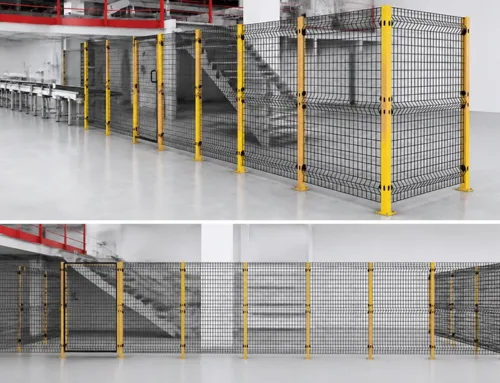
Mdfence is a 100% cold-assembly system. Using pre-engineered CAD layouts (like the one pictured above), every post and panel is mapped out. Connections are made using high-strength fixing rings and M8 flange bolts. There is zero drilling or welding required on the factory floor. The electrostatic powder coating (RAL 1023 Yellow / RAL 9005 Black) remains intact, preventing corrosion from machining coolants.
After: Weekend Deployments
A two-person maintenance crew can unbolt and reconfigure a 50-meter Robot Safety Fencing System over a standard weekend shift using only basic hand tools. Your asset reusability hits 95%, and production resumes on Monday morning without a single spark being generated.
Frequently Asked Questions (FAQs)
1. What is the standard ISO 14120 height for a machine safety fence in an automotive plant?
While ISO 14120 sets the general requirements for the design of guards, the specific height is calculated using ISO 13857 based on the hazard’s risk assessment. For most industrial robotics and CNC applications, a standard height of 2000mm or 2200mm is required to prevent overreach.
2. How does the 20x100mm mesh size affect the installation distance from a 6-axis robot?
According to ISO 13857, a 20mm slot restricts access strictly to the fingertips. This allows the physical barrier to be installed as close as 120mm from the hazard zone, saving significant floor space compared to 50x50mm mesh, which requires up to 850mm of clearance.
3. Can we integrate our existing PLC safety interlocks with these panels?
Yes. The system supports pre-engineered lock carriers designed specifically for industry-standard electronic safety switches (such as Omron D4NL and Pizzato). This ensures seamless integration into your machine’s emergency stop circuitry without custom drilling.
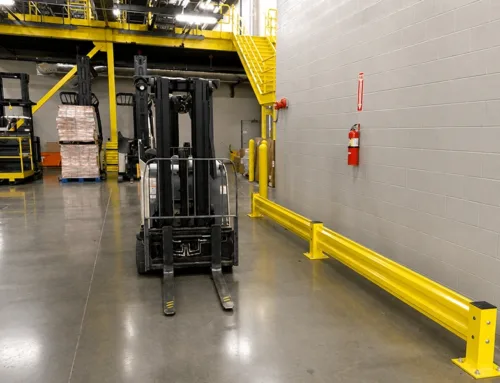
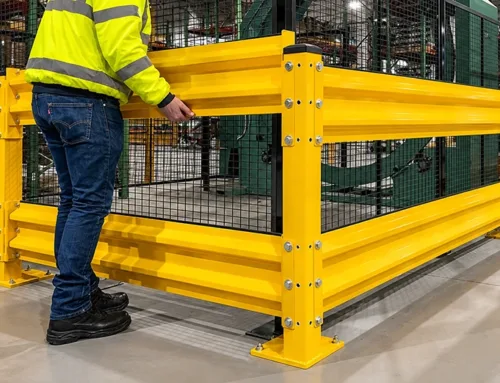
4. What happens if a material handling forklift impacts the Q235 steel posts?