RU
RU  EN
EN  DE
DE  PT
PT  JA
JA  ES
ES  IT
IT 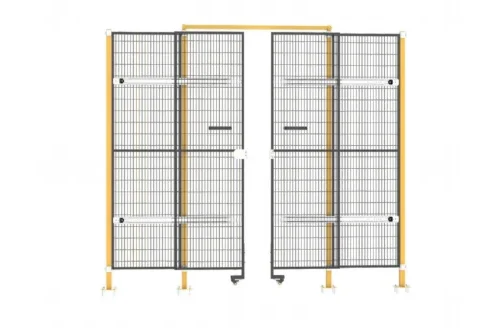

|
Is your robot cell integration project being held hostage by on-site welding and last-minute safety compliance issues? The endless cycle of hot work permits, messy fabrication, and failed EHS audits costs more than just money—it costs you time and your reputation with the end-client. Stop improvising and start engineering your safety perimeter. |
Robot Safety Fencing Systems: Setup Guide
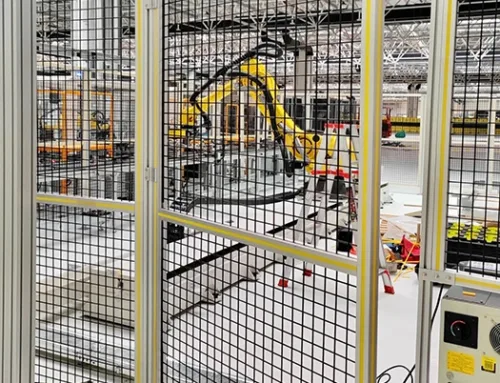
For an automation system integrator, the Защитные ограждения для роботов is more than just a barrier; it’s a critical component of the machine’s safety-rated control system. Yet, too often, it’s treated as an afterthought, leading to project delays, cost overruns, and painful failures during the Site Acceptance Test (SAT). Traditional methods involving local welders or generic “安平” style mesh simply can’t meet the precision, speed, and compliance demands of modern automation projects. This guide outlines a systematic approach to setting up a robust, compliant, and professional guarding system that accelerates, rather than hinders, your integration timeline.
Step 1: Establish a Rock-Solid Foundation (Without the Sag)
The Problem: Flimsy, frameless mesh panels sag under their own weight, or even when an operator leans against them. This slight deformation is enough to cause persistent misalignment of your safety interlock switches, leading to nuisance trips in the PLC and frustrating downtime. Locally welded solutions might be rigid initially, but poor surface preparation leads to rust at the joints within months, especially in environments with cutting fluids or wash-downs.
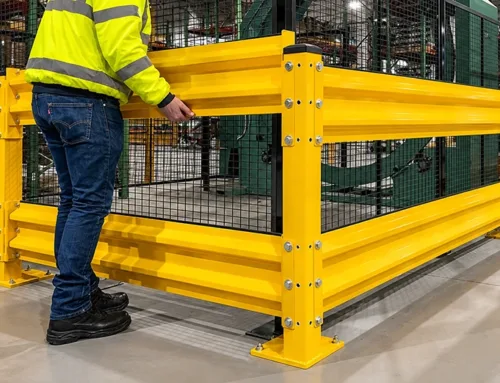
The Engineered Solution: A truly industrial system starts with superior materials and design. The Mdfence system is built on a foundation of high-tensile Q235 carbon steel. The critical difference lies in the 20x30mm full steel tube frame welded around every mesh panel. This frame acts as a rigid skeleton, eliminating sag and ensuring the panel remains perfectly planar. This structural integrity is essential for the long-term reliability of your integrated safety components. The entire structure is anchored by robust 60x60mm posts, secured to the concrete with M10 expansion bolts.

Step 2: Embrace “Cold Assembly” to Slash Installation Time
The Problem: On-site welding is the number one enemy of an efficient project schedule. It requires hot work permits, designated fire watchers, and extensive cleanup. The smoke and grinding dust can contaminate sensitive equipment like robot controllers or vision systems. This process is slow, messy, and forces other trades to clear the area, creating a significant project bottleneck.
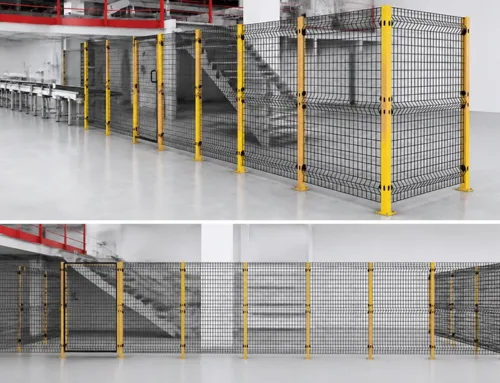
The Engineered Solution: A fully modular Системы защиты машин eliminates all on-site hot work. The Mdfence system is a 100% “cold assembly” solution. Posts, panels, and doors are connected using high-strength steel brackets and M8 bolts. A two-person team equipped with only basic hand tools can assemble over 150 feet of fencing in a single day. This rapid, clean installation can be done during off-hours or even alongside other trades without disruption, dramatically compressing your GANTT chart and accelerating your path to commissioning.

Step 3: Ensure Seamless Safety Integration, Not On-Site Improvisation
The Problem: You’ve specified a PLe/SIL3-rated safety circuit using a high-quality Omron D4NL or Pizzato interlock switch. But the fencing supplier provides a blank post. Now your technician is forced to drill and tap holes on a powder-coated surface. This crude adaptation compromises the anti-corrosion layer, looks unprofessional, and risks imprecise alignment that could lead to a safety bypass or failure during the EHS audit.
The Engineered Solution: Правда Промышленное ограждение безопасности systems are designed with integration in mind. We provide pre-engineered, laser-cut mounting plates, or “Safety Interlock Carriers,” specifically designed for industry-standard switches. These plates bolt directly onto our posts and door frames in pre-determined positions. This ensures perfect, repeatable alignment every time. The result is a clean, professional installation that guarantees the mechanical integrity of your safety function and will impress even the most stringent end-client safety manager.

Step 4: Specify Access Points That Actually Work
The Problem: A poorly designed gate is a constant source of frustration. Wide single-hinged doors sag over time, making them difficult to close and causing interlock faults. Sliding doors without proper support bind and jam. These issues not only hinder maintenance access but can bring the entire production line to a halt.
The Engineered Solution: A comprehensive system provides a range of pre-engineered door solutions for every application.
- Hinged Doors: For standard personnel access, with options for caster wheels to support extra-wide single or double doors (up to 3000mm).
- Sliding Doors: Ideal for wide openings where swing space is limited, perfect for forklift or material cart access.
- Folding Doors: Provide maximum opening width in the most constrained footprints.
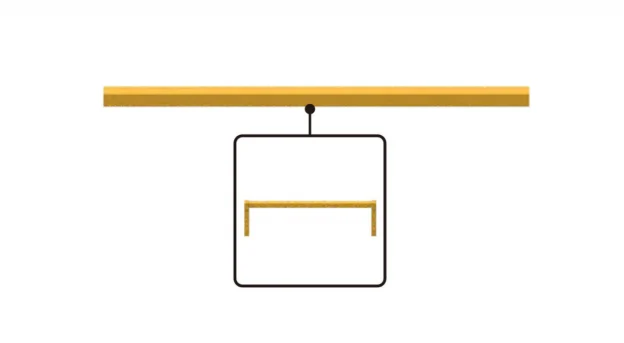
Crucially, all door kits can include a top door frame beam. This horizontal member connects the two posts of the door frame, preventing them from spreading apart and ensuring the door remains perfectly aligned and easy to operate for years, preserving the integrity of your access control system.
By moving from improvised barriers to an engineered Промышленные защитные ограждения solution, system integrators can de-risk projects, shorten timelines, and deliver a more professional and reliable final product. It’s time to make the physical guarding a seamless part of your high-quality automation solution.
Часто задаваемые вопросы
1. Can your system be modified if the end-client changes the robot cell layout mid-project?
Absolutely. Our system is 100% modular. Because there is no welding, all components can be unbolted and reconfigured without damage. This allows you to adapt to layout changes quickly, protecting your investment and preventing costly scrap.
2. Do you provide CAD/STP files for us to use in our master layout designs?
Yes. We provide complete 3D model libraries of our components. This allows your design engineers to import the entire fencing system into your master CAD assembly (e.g., in SolidWorks or AutoCAD) to verify clearances, check for interference with robots or conveyors, and generate an exact Bill of Materials from the start.
3. How does the 20x100mm mesh size benefit my project and my client?
The narrow 20mm vertical opening is a critical feature. According to the ISO 13857 safety standard, this small aperture prevents fingers from reaching the hazard. This allows the fencing to be placed as close as 120mm (approx. 4.7 inches) from the danger zone. Fencing with larger 50x50mm mesh may require a safety distance of 850mm or more. This space-saving design is a powerful selling point for your clients who want to maximize their valuable production floor space.
4. What is the typical lead time? We have an urgent project that needs to be installed next week.
We maintain a significant inventory of all standard components (posts, panels in common sizes, and door kits) specifically to support the tight timelines of system integrators. For standard layouts, we can often ship within days to meet urgent project deadlines.
5. How do you handle pass-throughs for conveyors or cable trays?
We do not require you to cut panels on-site. We factory-fabricate custom-sized panels with cutouts that precisely match your conveyor or cable tray dimensions. These cutouts are designed to comply with ISO 13857 standards, creating “tunnel guards” that allow materials to pass through while preventing personnel access. This maintains the structural and visual integrity of the system and ensures compliance.