RU
RU  EN
EN  DE
DE  PT
PT  JA
JA  ES
ES  IT
IT Промышленные защитные ограждения
Industrial Safety Fence for WES-Connected Warehouse Interlocks
Industrial Safety Fence is built for automated warehouses where the safety gate must talk to WES software and electronic interlocks must stay aligned. Mdfence turns a slow retrofit job into a bolt-on integration with standardized lock carrier modules, reserved mounting points, and no hot-work modification.
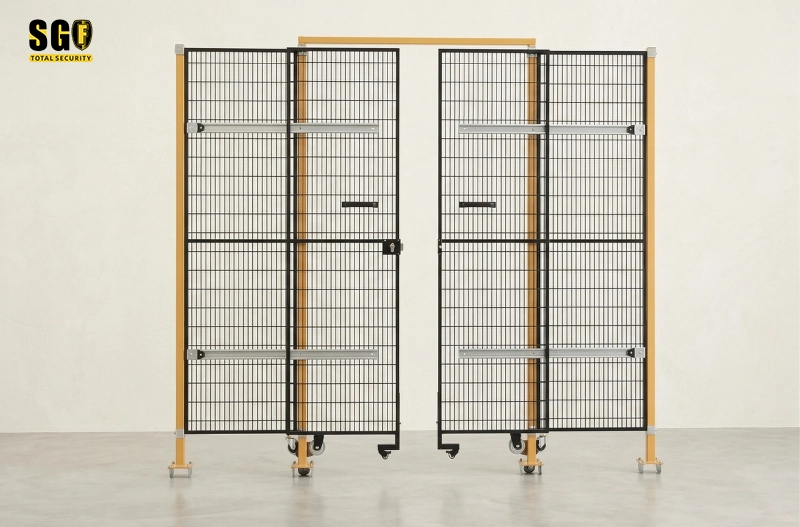
Why WES-connected interlocks become a field bottleneck
When an automated warehouse gate has to be connected to WES, the old way is almost always the same: cut the guardrail, drill new holes, weld on brackets, then spend the rest of commissioning chasing switch offset errors after vibration. Industrial Safety Fence solves that by making the guard itself ready for the interlock, so electrical integration starts from a fixed interface instead of a custom fabrication job.
| Integration pain | Ответ Mdfence |
|---|---|
| No standardized interface on traditional guardrails | Reserved lock carrier module and repeatable mounting positions for the gate hardware |
| Need to connect the gate to WES software and electronic interlocks | Structure prepared for electronic safety switches, so the site team can wire the signal without fabricating the frame |
| Manual drilling, cutting, and welding waste time | Bolt-on assembly that keeps the installation in the screwdriver stage instead of the hot-work stage |
| Vibration can move the switch and trigger false alarms | Rigid carrier positioning helps keep the interlock aligned after commissioning |
| Projects often mix Omron, Pizzato, and other interlock brands | Standardized carrier layout supports common international electronic interlock families |
| Retrofit work must finish fast in active warehouse zones | Faster field fit-up means less downtime around conveyor aisles, access gates, and robot cells |
What makes the Mdfence structure fit this job
Standardized lock carrier, not site-made brackets
The KKCK-LCK style lock carrier module gives the installer a fixed interface for the interlock hardware. That matters because the electrical team no longer has to improvise the gate end, and the final layout stays repeatable from one warehouse aisle to the next.
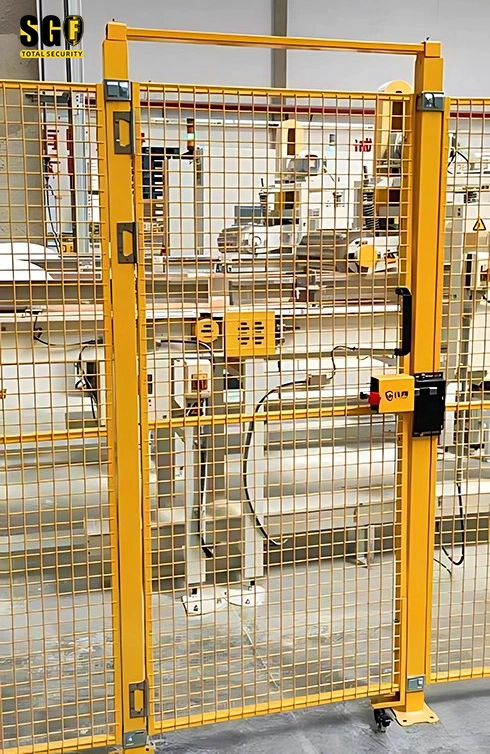
Reserved structure for stable machine-cell guarding
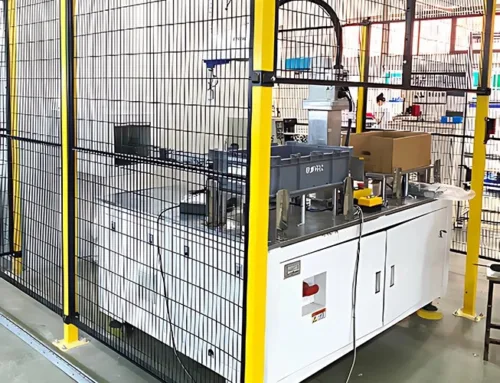
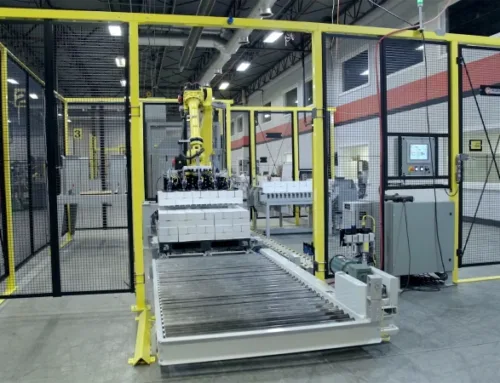
For robot cells and automated storage zones, the frame needs to stay square while the safety device is wired into WES. The framed cell layout keeps the gate and panel relationship predictable, which helps prevent alignment drift caused by vibration or repeated opening cycles.
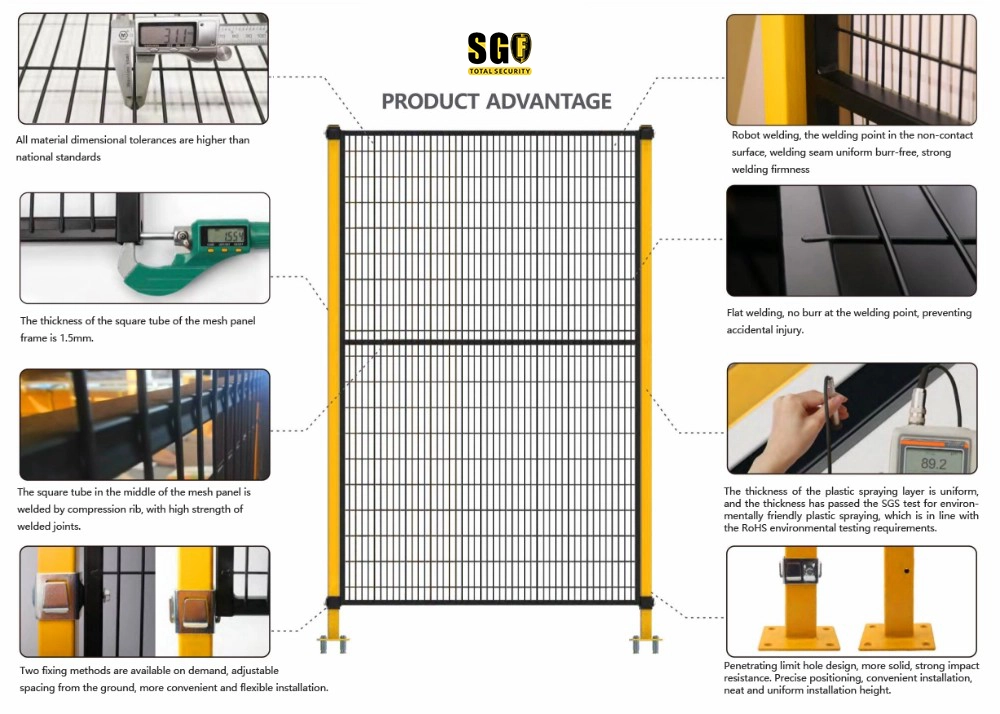
Modular closure for retrofit and expansion
Many warehouse projects start as a retrofit and later expand. The corner and perimeter modules let the integrator close the protected zone cleanly without reworking the whole fence line, which is exactly why the same platform can move from a single gate to a full automation cell.
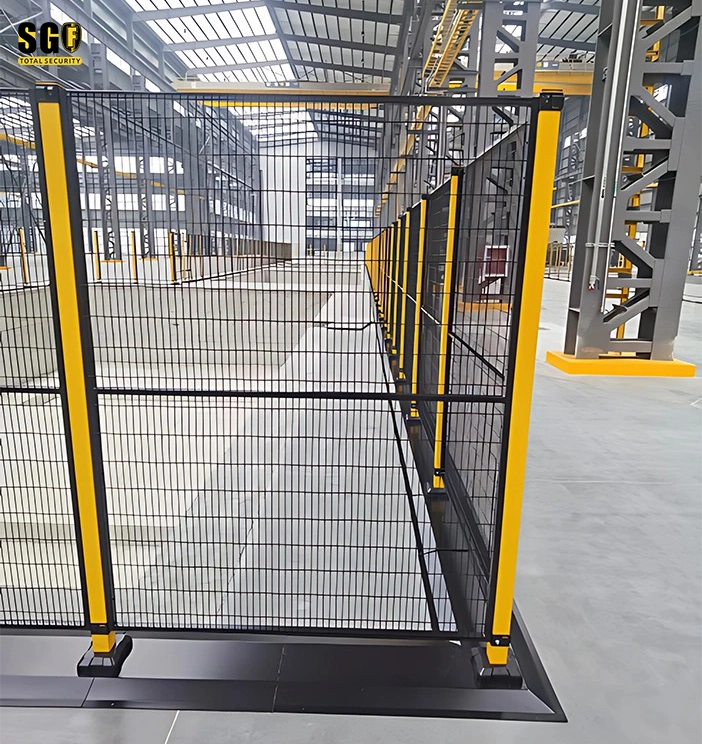
Where this configuration is used
- Automated warehouse access gates that must report to WES
- Robot cells with electronic safety interlocks and controlled entry
- Retrofit projects replacing drilled and welded legacy barriers
- Mixed-brand interlock upgrades using Omron, Pizzato, and similar devices
- Conveyor aisles and ASRS zones that need a repeatable gate interface
In each of these applications, the main benefit is not just guarding the machine. It is making the gate and the interlock behave like one designed system, so the electrical engineer, site installer, and commissioning team do not waste time correcting a custom-made frame.
What to confirm before ordering
Check the gate opening, interlock model, cable entry direction, and the signal path to WES before fabrication starts. With Mdfence, those points can be handled through the reserved interface and standardized carrier module, so the job stays focused on layout, wiring, and final commissioning instead of field rework.
Need a cleaner way to integrate the safety gate?
If your project is stuck because the guardrail does not have a proper electronic interlock interface, Mdfence gives you the structure, the carrier, and the repeatable mounting pattern to finish the job faster.