RU
RU  EN
EN  DE
DE  PT
PT  JA
JA  ES
ES  IT
IT 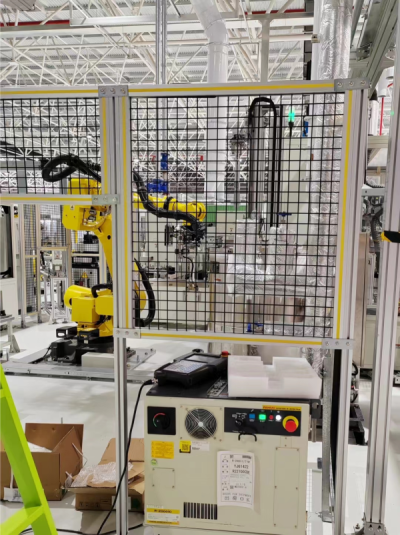
An Objective Comparison for Engineers and Project Managers
Selecting materials for Промышленные защитные ограждения traditionally centered on one question: which is stronger? Welded steel has long been the default choice. But modern manufacturing demands more than brute strength – it requires agility, lifecycle value, and intelligent safety. This evolution has positioned modular Забор из алюминиевого профиля systems as a compelling alternative, creating a fundamental choice between materials and manufacturing philosophies.
This objective comparison moves beyond surface assumptions to analyze which solution best addresses contemporary factory challenges.
Comparative Analysis Matrix
| Feature / Criterion | Традиционная сварная сталь | Модульный T-образный паз из алюминия | Agile Advantage |
|---|---|---|---|
| Вес и скорость установки | Очень тяжелый (~3x плотнее) | Легкий | Алюминий |
| Первоначальная стоимость покупки | Нижний | Выше | Сталь |
| Общая стоимость владения | Высокий и непредсказуемый | Более низкий и предсказуемый | Алюминий |
| Модификация и возможность повторного использования | Практически нет (лом) | 100% Многоразовый | Алюминий |
| Коррозионная стойкость | Requires Coating | Естественная устойчивость | Алюминий |
| Прочность и жесткость | Повышенная прочность на разрыв | Высокая прочность по отношению к весу | Contextual |
| Безопасность (динамика удара) | High Force Transfer | Energy Absorbing | Алюминий |
| Точность и отделка | Industrial, Variable | High-Tech, Consistent | Алюминий |
| Системная интеграция | Difficult (Drill/Weld) | Simple (T-Slots) | Алюминий |
Detailed Criterion Analysis
1. Weight & Installation Speed
Steel’s density creates logistical challenges: panels require multiple personnel or lifting equipment. Installation becomes slow and labor-intensive. Забор из алюминиевого профиля systems enable one or two technicians to handle components with basic tools, dramatically reducing installation time and labor costs.
Winner: Aluminum
2. Initial Purchase Cost
Raw steel costs less per pound than extruded aluminum. For permanent installations with zero anticipated changes, steel presents lower upfront material costs.
Winner: Steel
3. Общая стоимость владения (TCO)
Steel’s initial savings erode quickly. Modifications incur substantial expenses (downtime, specialized labor, material waste). Забор из алюминиевого профиля systems offset higher initial costs through near-zero modification expenses over their lifecycle, delivering superior TCO in dynamic environments.
Winner: Aluminum
4. Modification & Reusability
Welded steel becomes scrap during layout changes. Modular Промышленные защитные ограждения using aluminum profiles is fully redeployable – every component can be reconfigured into new layouts, preserving 100% material value.
Winner: Aluminum
5. Устойчивость к коррозии
Steel requires protective coatings vulnerable to scratches and maintenance. Aluminum naturally forms protective oxide layers, maintaining structural integrity and appearance in humid environments without maintenance.
Winner: Aluminum
6. Strength & Rigidity
While steel offers higher tensile strength, engineered aluminum profiles provide sufficient strength for safety applications with superior strength-to-weight ratios. For most Промышленные защитные ограждения applications, steel’s rigidity advantage becomes functionally irrelevant.
Winner: Steel (theoretically), but practically irrelevant
7. Safety (Impact Dynamics)
Steel’s rigidity transfers high-impact forces to protected equipment during collisions. Забор из алюминиевого профиля systems absorb energy through controlled deformation, protecting valuable machinery through intelligent sacrificial design.
Winner: Aluminum
8. Precision & Finish
Extruded aluminum profiles deliver tight tolerances and consistent anodized finishes suitable for automated facilities. Welded steel often shows visible welds, grinding marks, and vulnerable painted surfaces.
Winner: Aluminum
9. System Integration
Adding sensors, light curtains, or cable management requires drilling or welding on steel systems. Забор из алюминиевого профиля T-slots provide universal mounting platforms for accessories anywhere along the structure.
Winner: Aluminum
Selecting an Operational Philosophy
The aluminum versus steel decision represents a strategic choice about operational philosophy:
- Steel: Viable for truly permanent layouts where minimizing initial material cost is paramount
- Aluminum: The strategic choice for facilities embracing Lean, Agile manufacturing, and continuous improvement
Современный Промышленные защитные ограждения using Забор из алюминиевого профиля technology delivers lower TCO, operational flexibility, and intelligent safety – establishing the foundational hardware for tomorrow’s factories.