RU
RU  EN
EN  DE
DE  PT
PT  JA
JA  ES
ES  IT
IT 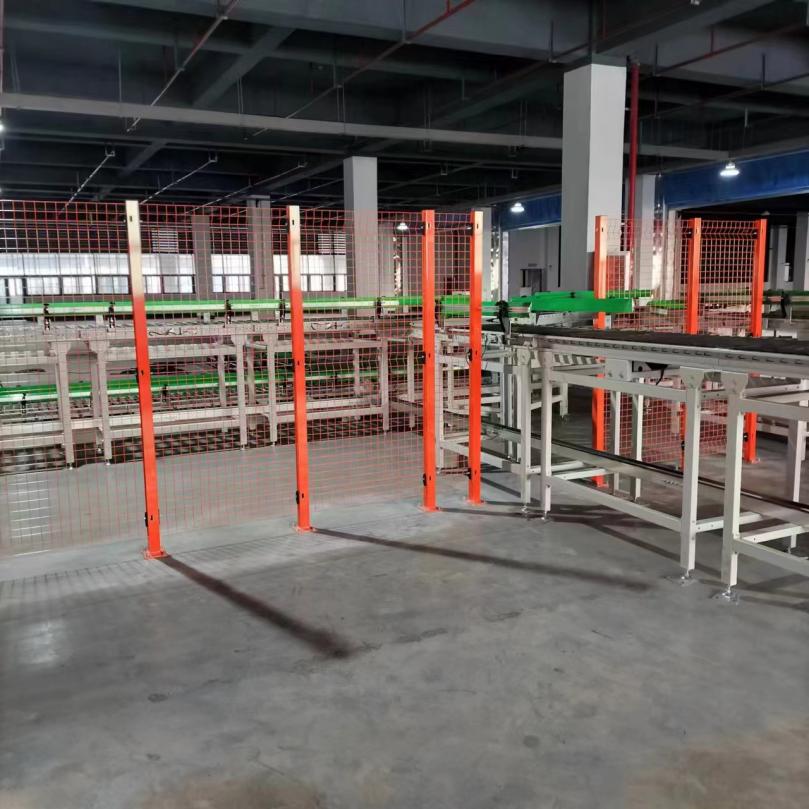
When you review the budget for a new facility layout or production line, the line item for industrial fencing often seems deceptively simple. A project manager calculates the required length, multiplies by a per-foot cost, and arrives at a number that feels solid and predictable. But for experienced managers, that number is merely the tip of a financial iceberg. The true cost of a partitioning system isn’t found in the purchase order; it’s hidden in the operational friction and costly delays that arise when the chosen solution fails to align with the dynamic reality of an industrial environment.
This guide will help you uncover those hidden costs. By understanding where the real financial drains are, you can make a strategic choice that protects your budget, your timeline, and your sanity.
The Cost Iceberg: Deconstructing Hidden Project Expenses
The majority of unforeseen costs in a fencing project stem from a single source: rigidity. When a rigid, pre-fabricated system meets a fluid, unpredictable job site, the resulting friction creates costs that fall into three main categories.
| Hidden Cost Category | How It Drains Your Budget |
|---|---|
| 1. Rework Costs (The Price of Inflexibility) | When a standard panel doesn’t fit due to an unforeseen pipe or column, the panel becomes scrap. You face the sunk cost of the useless panel, premium charges for a rush-ordered replacement, and immense labor waste as your installation team sits idle, costing over $1,000 per day. |
| 2. Installation Costs (The Price of Inefficiency) | Complex systems require larger teams and specialized skills like certified welders, inflating labor costs. A modern, modular Промышленное ограждение безопасности system is often designed for simple, one-person installation, potentially saving up to 50% on labor time and eliminating the need for hot work permits and specialized tools. |
| 3. Downtime & Future Costs (The Price of Rigidity) | If installation requires shutting down adjacent lines for safety (e.g., for welding), every hour represents a direct loss of revenue. Furthermore, a welded-in-place fence is a one-time investment. When your layout needs to change, it must be demolished and scrapped. A truly modular system is a long-term asset that can be reconfigured and redeployed, preserving your initial investment. |
The Antidote: A Lean Approach to Area Partitioning
The solution to avoiding these hidden costs is to adopt a lean mindset. This means selecting a system that is not just fit-for-purpose in its application, but also in its execution. For the vast majority of industrial applications—such as delineating work areas or creating barriers around automated equipment—a heavy-duty, over-engineered system is a form of waste. A lean approach favors a system that is:
- Inherently Adaptable: The system must be designed to be modified in the field. A frameless design that can be easily cut to size on-site is the ultimate defense against rework costs.
- Designed for Assembly: The installation should be a simple, repeatable process using standardized components. This drastically reduces the time and specialized skill required, minimizing installation costs.
- Right-Sized for the Need: For non-high-impact zones, choosing a lighter-duty system represents smart resource allocation. It delivers the required functionality without the unnecessary expense of a heavy-duty solution.
Invest in Predictability, Not Just Partitions
The true cost-effectiveness of a Промышленное ограждение безопасности system is not reflected on the initial price tag. It is measured in the predictability and efficiency it brings to your project. By choosing a solution designed to absorb the inherent uncertainties of the job site, you are doing more than just buying steel panels; you are investing in smoother execution, lower labor costs, and the long-term flexibility of your operational space. You are, in essence, eliminating the hidden costs before they ever have a chance to appear on your budget.