EN
EN  DE
DE  RU
RU  PT
PT  JA
JA  ES
ES  IT
IT 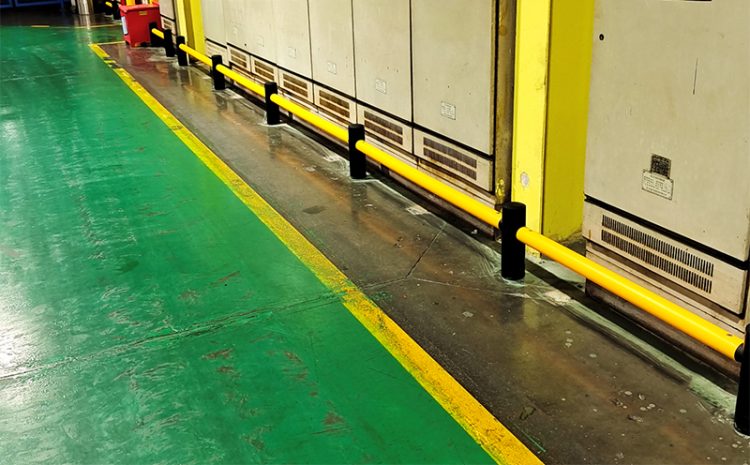
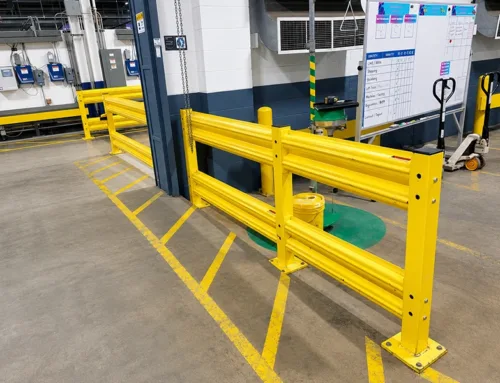
As a facility manager, you know your budget like the back of your hand. You see the same line items appear with predictable regularity. And one of the most frustrating is likely “Guardrail Repair, Bay 7” or “Column Protection, Dock 3.”
You see the invoice from the welders, the cost of the steel, the line item for the hot work permit. It’s an annoyance. A recurring operational tax you feel you just have to pay. You might blame it on a new forklift driver or a congested layout, but ultimately, you sign the check, the repair gets done, and you move on. Until next quarter.
But what if I told you that the invoice for that repair is the smallest, most insignificant part of the real cost? What if that bent piece of steel is actually a symptom of a much deeper, more expensive problem growing right under your feet?
The Physics of a Flawed Defense: Where Does the Energy Go?
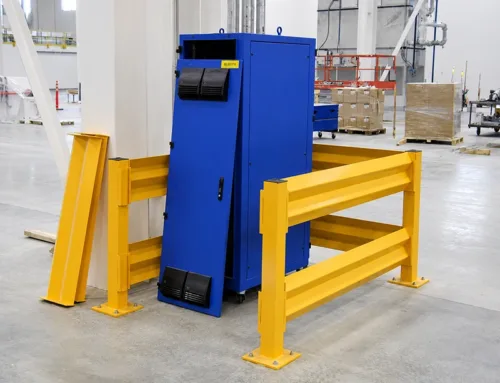
We install steel guardrails for one reason: to provide a rigid, unyielding defense. It’s an intuitive solution—strength against strength. The problem is, this intuition ignores a fundamental law of physics: energy is never destroyed; it is only transferred.
When a 9,000-pound forklift impacts a steel guardrail anchored to a concrete floor, the immense kinetic energy has to go somewhere. The rigid steel post acts less like a shock absorber and more like a conductor, channeling that raw, violent force directly into its weakest point: the anchor bolts embedded in your concrete slab.
The result is a brutal transfer of force into the floor. You see the bent steel. What you don’t see are the spiderweb cracks forming under the surface or the immense stress put on the rebar inside the slab. Each impact is another blow against your building’s structural integrity. That recurring repair is not just a maintenance task; it’s the repeated infliction of trauma on your most valuable asset: your facility itself.
Calculating the Full Cost of a “Simple” Collision
Let’s perform a true cost analysis of that one “simple” collision. First, there are the soft costs: your time spent assessing damage, getting quotes, and overseeing the work. Then there’s the operational disruption from cordoning off the area and rerouting traffic. But the most significant line item is the one that never shows up until it’s too late: Accumulated Structural Liability.
Think of your concrete floor as a long-term asset. Each rigid impact is a withdrawal from that asset’s “health account.” Eventually, the bill comes due. It shows up as a failed floor inspection or a compromised column foundation that becomes a five- or six-figure engineering nightmare. Suddenly, the cost of that “simple” guardrail collision isn’t a few thousand dollars. It’s tens, or even hundreds, of thousands in capital expenditure that could have been avoided. The steel guardrail didn’t prevent a cost; it deferred and multiplied it.
From Rigid Defense to Flexible Absorption
This is why modern asset protection has moved away from rigid defense. The intelligent way to handle destructive energy is not to resist it, but to absorb and dissipate it. This is the principle behind flexible safety barriers.
When a forklift impacts a flexible barrier, it is designed to do what steel cannot: it yields. It momentarily deforms, soaking up and dissipating up to 80% of the impact forces within its own structure. The energy is neutralized before it can ever reach the floor anchors. The barrier then uses its material memory to return to its original shape, ready to perform again. The floor, the anchors, and the foundation behind it feel almost nothing.
I once worked with a manager, Michael, who was perpetually battling floor repairs in his high-traffic distribution center. After a particularly damaging incident required re-pouring a massive section of floor, we ran the numbers on the Total Cost of Ownership for his “cheaper” steel barriers. The math was undeniable. He piloted one of our flexible safety barriers in his most problematic corner. Six months later, a driver hit it hard. Michael went to inspect and found the barrier perfectly upright and the concrete at its base completely unscathed. The feeling he described wasn’t just relief about the budget; it was the peace of mind of knowing his building was no longer taking a beating.
So, the next time you have to approve a repair for that bent guardrail, ask yourself: Am I maintaining a barrier, or am I slowly damaging an asset? A traditional steel guardrail is a maintenance liability. A modern flexible barrier is a true asset protection system.