EN
EN  DE
DE  RU
RU  PT
PT  JA
JA  ES
ES  IT
IT 
 | Your production line isn’t static. A custom-welded machine guarding solution is a sunk cost that gets demolished during the next re-tooling. A truly modular design, however, is a long-term asset that can be unbolted, reconfigured, and redeployed, protecting your initial investment. |
In modern manufacturing, especially in automotive manufacturing and robotics and automation, the only constant is change. Production lines are reconfigured, robot work cells are moved, and new automation systems are added. The biggest hidden cost in industrial safety fencing is not its initial purchase price, but the cost of replacing it when your layout changes.
A traditional, custom-welded guarding solution is rigid in every sense. It is built for one layout, and one layout only. When it’s time to expand, you bring out the angle grinders and cut it apart, scrapping the entire investment. This is a massive, unnecessary expense.
The Value of True Modularity
A genuinely modular design flips this problem on its head. It treats your safety fencing as a flexible asset, not a fixed expense. This value is built on a few key engineering principles:
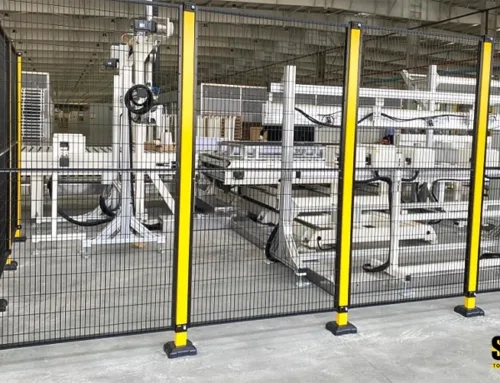
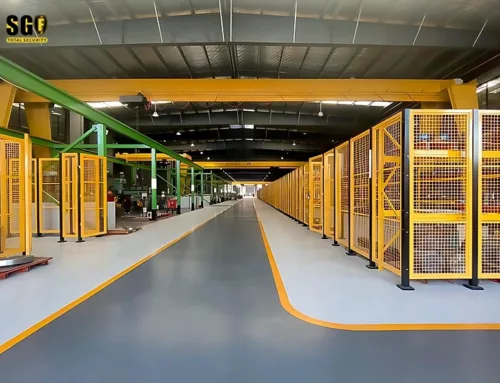
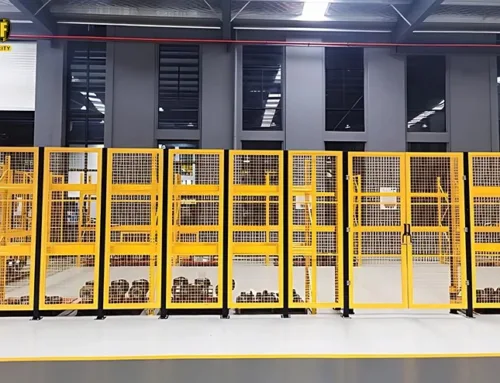
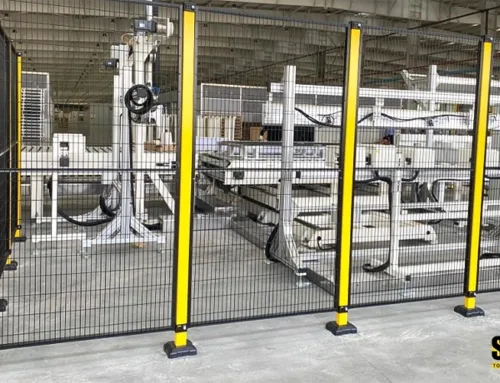
1. Standardized Components: The system is built from a “kit of parts.” Posts (e.g., 60x60mm), panels (in various standard widths), and fasteners are all designed to be interchangeable. There are no custom-cut lengths or on-site welded joints.
2. Bolt-Together Assembly: The entire system is assembled using fixing rings and metric fasteners. This means it can be *disassembled* just as easily. No welding, no cutting, no “hot work” permits are needed on your factory floor.
3. Reconfigurability: When your production layout designs change, your team can simply unbolt the sections, move them, and re-bolt them into a new configuration. If you need a longer line, you just order more standard posts and panels that integrate seamlessly with your existing components.

This approach changes the financial calculation. You are no longer “scrapping” a fence; you are “relocating” it. The Q235 carbon steel posts and durable powder coating are built to last for decades, so the components are ready to be reused multiple times. This dramatically lowers your long-term total cost of ownership (TCO) and makes your facility more agile and responsive to new opportunities.
Frequently Asked Questions
What does “modular design” mean for a safety fence?
It means the system is built from standardized, interchangeable components (posts, panels, gates, fasteners) that are designed to be bolted together, rather than custom-welded. This allows for easy assembly, disassembly, and reconfiguration.
Can I add a new gate to my modular fence later?
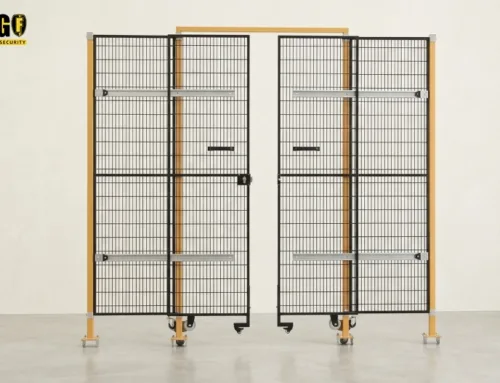
Yes. Because the system is standardized, you can unbolt a standard framed panel section and replace it with a pre-configured hinged door or sliding door kit, often using the same post mounting points.
What is the main benefit of a modular system over a welded one?
The main benefit is reusability. A welded fence must be demolished and scrapped when your layout changes. A modular fence is an asset that can be unbolted and reconfigured to fit the new layout, saving you from having to buy a new fence.
Is a modular, bolt-together fence as strong as a welded one?
Yes. A high-quality modular system, which uses heavy-gauge Q235 carbon steel posts (60x60mm) and engineered framed panels, is designed and tested (e.g., TUV certified) to meet or exceed impact resistance standards like ISO 14120.
Does “modular” mean I have to build it myself?
Modular systems are designed for fast installation by either an in-house maintenance team or a professional installer. The components are pre-fabricated, so no on-site welding or cutting is required, making the installation process much faster and cleaner than a custom-welded job.