EN
EN  DE
DE  RU
RU  PT
PT  JA
JA  ES
ES  IT
IT Guarding fence for precision manufacturing
Guarding fence for precision bearing and guideway cells that need dust-free cold-work installation
This guarding fence is built for precision bearing and guideway cells where dust, sparks, and long shutdowns are not acceptable. Mdfence uses modular cold-work assembly so the perimeter upgrade stays clean while the line keeps running.
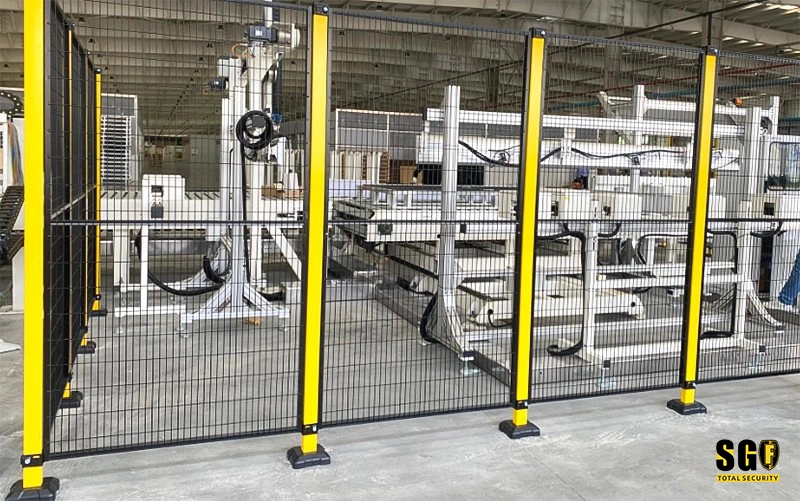
What clean precision lines need from a guarding fence
A rolling bearing or guideway workshop does not tolerate the mess of hot work. Traditional welded barriers throw sparks, spatter, and metal dust into a controlled area, then force the team to stop production for cleanup. Mdfence is designed for the opposite workflow: fast perimeter changes with no on-site welding and no factory drilling.
| Spec item | Mdfence fact |
|---|---|
| Main material | Q235 / Q195 carbon steel, with project-facing Q235 use |
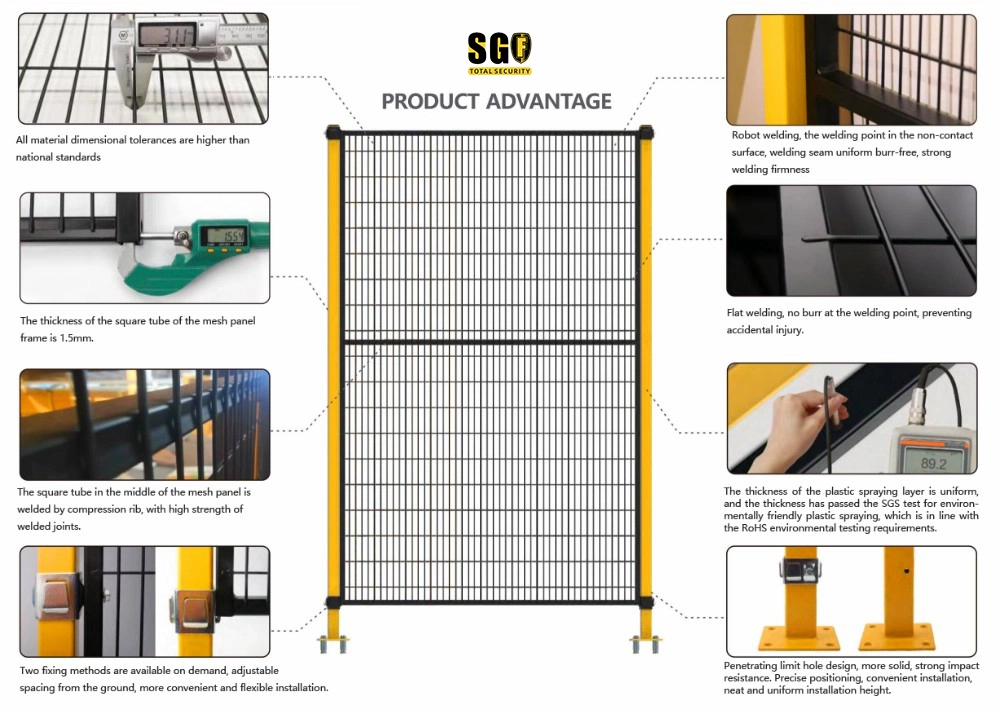
| Typical post size | 60×60 mm, 1.5 mm thickness |
| Reinforced frame | 20x30x1.5 mm galvanized steel tube frame |
| Mesh pattern | 20×100 mm machine-guard mesh, 3.0 mm or 4.0 mm wire |
| Standard height | 2000 mm |
| Module logic | 3940 mm panel length, built into 4000 mm modular combinations |
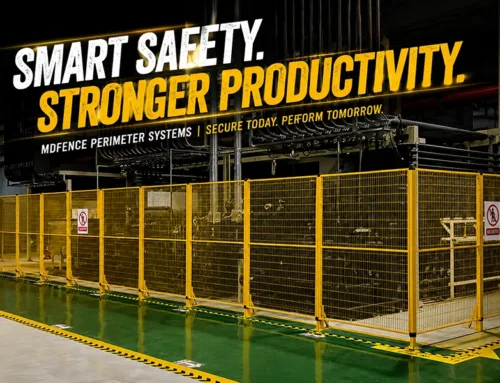
| Surface finish | Powder-coated, usually safety yellow posts with black mesh |
| On-site method | Clamp rings and hex screws; no welding, no hot work, no factory dust |
Why Mdfence fits dust-free cold-work retrofits
1) Cold-work assembly keeps the cell clean
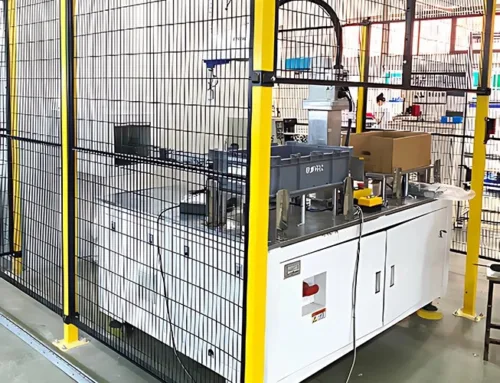
For a precision shop, the biggest risk is not just time lost during installation. It is contamination. Mdfence uses modular steel parts that are assembled with retaining rings and hex screws, so the team does not need to weld brackets or open the area to grinding dust. That makes the guarding fence suitable for retrofits beside running metrology stations, bearing grinding lines, and guideway finishing cells.
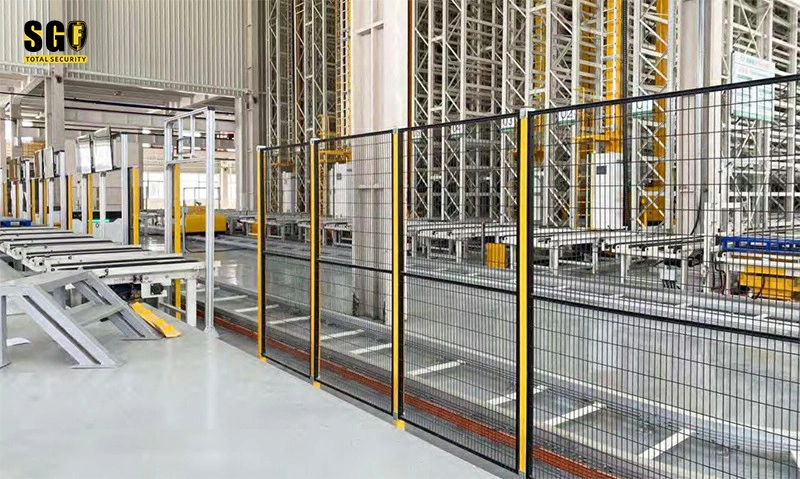
2) The structure is rigid enough for a controlled perimeter
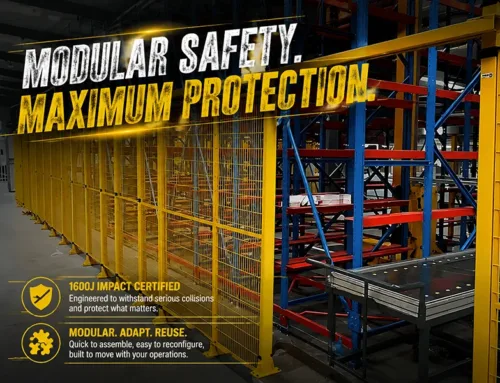
The system is not a loose screen. The frame uses reinforced steel tube structure, the mesh panel is tied into the post system, and the project files show a common 2000 mm height with 3940 mm panel length built into 4000 mm modules. In practice, that gives the engineering team a repeatable perimeter that is easier to plan, ship, and reconfigure when the production layout changes.
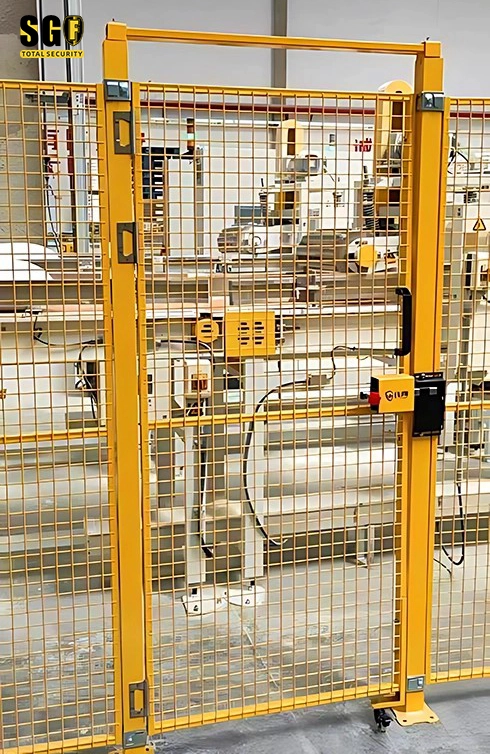
3) Gate hardware and access control stay organized
Precision manufacturing cells often need a door that does more than open and close. They need a controlled access point that can work with locks, interlocks, and maintenance routines. The Mdfence system supports hinged, sliding, folding, and track-style gate formats, and the gate hardware is designed to sit inside the same modular perimeter instead of being improvised on site.
Where this guarding fence is a strong fit
- Precision bearing machining cells that cannot accept weld dust or spatter
- Guideway grinding or assembly zones that need a clean perimeter retrofit
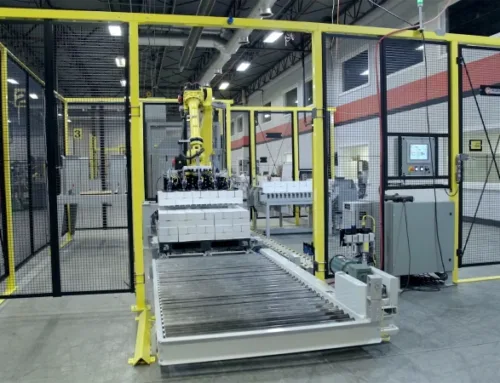
- Robot or conveyor units beside sensitive finishing equipment
- Maintenance corridors that need controlled access without full shutdown
- Factories that want a modular guarding fence layout they can later rework
For these sites, the real value is not a bigger fence. It is a cleaner upgrade path. By removing hot work from the installation process, Mdfence helps the project team avoid contamination risk, reduce cleanup, and get the cell back to normal operation faster.
What the buyer should ask for before ordering
Ask for the panel height, post size, mesh opening, gate type, coating finish, and installation method. On Mdfence projects, these details are already tied to a modular steel package: Q235-based structure, 20×100 mm guarding mesh, 2000 mm height, and cold-work assembly with clamp rings and hex screws. That is why the answer to the question “what do we specify before buying” is not vague. It is already built into the system.
Final result: clean upgrade, stable perimeter, less downtime
When a precision workshop needs a guarding fence, the goal is simple: protect people and equipment without creating a second problem on the floor. Mdfence delivers a modular cold-work installation path that stays clean, fits changing layouts, and supports controlled access without dragging the project into hot-work cleanup.
For dust-sensitive lines, that means a safer cell, a faster retrofit, and a more predictable handover.