EN
EN  DE
DE  RU
RU  PT
PT  JA
JA  ES
ES  IT
IT 

|
Stop improvising brackets on the assembly floor. For automotive system integrators, the bottleneck isn’t the robot programming—it’s the mechanical integration of safety hardware. Discover how pre-engineered lock carriers and rigid framing eliminate “nuisance tripping” and slash installation hours in your next robotic cell deployment. |
In the high-stakes world of automotive manufacturing and system integration, a [Machine Safety Fencing](https://safetyfencesystems.com/industrial-safety-fence-systems/) system is only as good as its weakest link: the interlock integration. You are building high-speed automated welding cells or material handling zones where a Fanuc or Kuka robot moves with lethal force. The physical barrier must do more than just stand up; it must communicate seamlessly with the safety PLC.
The challenge for most controls engineers and mechanical installers is the “last mile” of installation—mounting the safety switches. Standard fencing often requires on-site drilling, tapping, and fabricating makeshift brackets to hold sophisticated switches like Omron D4NL or Pizzato sensors. This manual modification leads to misalignment, vibration issues, and ultimately, line downtime.
The “Lock Carrier” Concept: Engineering Out the Nuisance Trips
For a safety circuit to achieve PL d or PL e (Performance Level) reliability, the mechanical alignment of the tongue key and the switch body is critical. If the fence door sags or the mounting bracket flexes, the interlock fails to engage, or worse, suffers from “nuisance tripping”—stopping the entire production line because a sensor thought a door was open.
Mdfence solves this by treating the fence not as a commodity, but as a [Safety Interlock Carrier](https://safetyfencesystems.com/industrial-safety-fence-systems/). We provide pre-engineered installation kits designed specifically for major automation brands. Instead of your technicians spending hours fabricating mounts, our system includes dedicated mounting plates that integrate directly with the door and post profile.

Figure 1: Specialized mounting brackets and mechanical lock options designed for seamless integration with safety circuits.
Why Structural Rigidity Matters for Sensors
In an automotive body shop or stamping plant, vibration is constant. A flimsy fence post will oscillate when a nearby press cycles or a forklift drives by. This vibration can wreak havoc on non-contact RFID safety switches or sensitive mechanical interlocks.
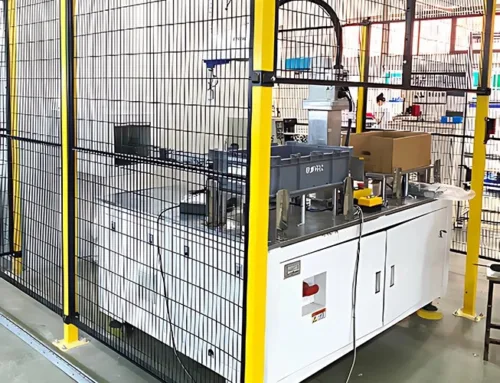
Our system utilizes [Q235 Carbon Steel](https://safetyfencesystems.com/industrial-safety-fence-systems/) with a standard 60x60mm post profile. Unlike lighter 40mm systems, this heavy-duty specification ensures that the “datum point” for your safety switch remains static. Furthermore, our [Framed Panel](https://safetyfencesystems.com/industrial-safety-fence-systems/) design (20x30mm tube frame) ensures that the door itself is a rigid body. This prevents the “whipping” effect when a door is slammed shut, protecting the delicate internal components of the locking mechanism.

Figure 2: The framed panel construction provides the torsional rigidity necessary to maintain precise switch alignment over millions of cycles.
Door Configurations for Restricted Footprints
Space on the factory floor is premium real estate. In many robotic cells, there is simply no room for a large swing radius of a traditional hinged door. Yet, operators need access for maintenance or part loading.
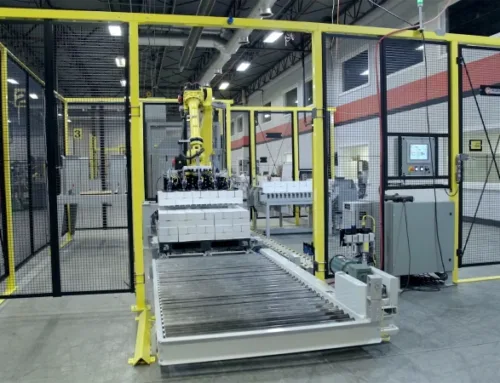
Integrating safety locks into sliding systems is historically difficult due to the lateral movement and potential for “bounce back.” Our [Robot Safety Fencing](https://safetyfencesystems.com/industrial-safety-fence-systems/) system addresses this with precision-bearing top tracks and floor guides that eliminate play in the door leaf. Whether you are using a solenoid-locking switch or a trapped key system (like Fortress), our sliding door kits provide a stable platform that ensures the actuator key enters the switch head perfectly straight every time.

Figure 3: Double sliding door configuration ideal for large robot cells where swing space is limited, ready for interlock integration.
Streamlining the “Build to Print” Process
For integrators, time on site eats into margins. If your team is spending days adjusting doors and filing down brackets, the project is bleeding money. By specifying a system with integrated [Impact Resistance](https://safetyfencesystems.com/industrial-safety-fence-systems/) and pre-planned lock carriers, you move from “fabrication” to “assembly.”
The Mdfence modular design allows for rapid deployment. The connection points are standardized, and the lock mounting locations can be defined in the design phase. This means when the pallet arrives at the customer’s facility, your mechanical team can bolt it together, and the controls team can wire it up immediately—no drills, no taps, no surprises.
Frequently Asked Questions (FAQ) for Automation Integrators
Q1: Can Mdfence accommodate specific safety switches like Omron D4NL or Sick TR10 without field modification?
Yes. We offer specialized “Lock Carrier” kits (e.g., KKCK-LCK-B-D4NL-SET) designed specifically for the bolt patterns of major safety switch brands. This eliminates the need for drilling or tapping on site.
Q2: How does the fence system handle cable routing for the safety switches?
The 60x60mm tubular posts can be utilized to run cabling internally or support external conduit. The rigid frame also provides ample surface area for mounting wireways or cable trays directly to the fence structure.
Q3: We have a robotic cell with high vibration. Will the door alignment shift over time?
Our system uses a 20x30mm steel tube frame for the door panels and heavy-duty hinges/rollers. This creates a rigid door structure that resists sagging and vibration, maintaining the precise alignment required for sensitive safety interlocks.
Q4: Can you provide custom cutouts in the mesh for control panels or HMI mounting?
Yes. As part of our “Design for Automation” approach, we can customize panels to include cutouts or mounting plates for HMIs, E-Stops, and push-button boxes, integrating them directly into the safety perimeter.
Q5: Does the system meet ISO 14120 standards for distance and impact?
Absolutely. Mdfence is designed to meet or exceed ISO 14120:2015 requirements. Our grid spacing ensures compliance with ISO 13857 (safety distances), and the system is TUV certified for impact resistance.