EN
EN  DE
DE  RU
RU  PT
PT  JA
JA  ES
ES  IT
IT 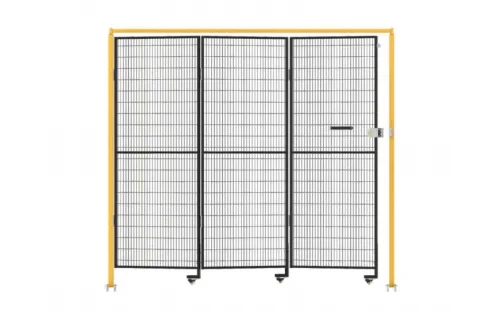

In electronics manufacturing, static buildup on your automated SMT lines isn’t just a mild shock hazard—it is silently killing your PCB yield rates. When high-speed conveyors and robotic arms operate within inches of ungrounded metal barriers, electrostatic discharge (ESD) can arc, causing latent defects or catastrophic failures in sensitive microchips. If you are failing your ESD audits because your powder-coated perimeter guards are acting as giant capacitors, it is time to engineer a proper grounding loop.
The Hidden ESD Threat in Automated Electronics Assembly
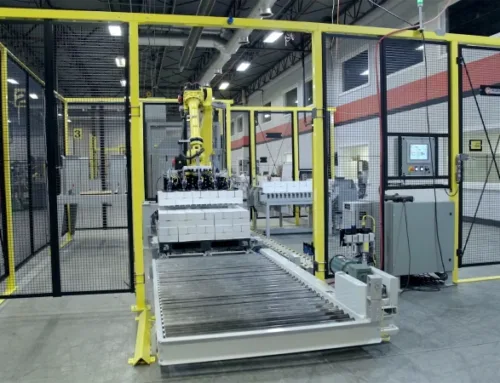
Picture your high-speed mechanical assembly machines: PCBs are moving rapidly down the line, AGVs are rolling across the epoxy floors transferring components, and robotic arms are performing precision pick-and-place operations. All this friction generates static electricity. To protect workers from these moving hazards, you install Industrial Safety Fencing.
Here lies the critical industry pain point: standard industrial guards are coated in heavy epoxy-polyester powder coating for durability. This coating is an excellent electrical insulator. Without a deliberate grounding strategy, the Q235 carbon steel core of the fence absorbs stray static charges from the surrounding environment but cannot dissipate them. When a worker wearing an ESD wrist strap touches the fence, or when a sensitive tray of semiconductors passes too close, a micro-spark jumps. That single discharge can fry thousands of dollars worth of electro-optical elements or microprocessors instantly.

How to Properly Ground Powder-Coated Q235 Steel Fencing
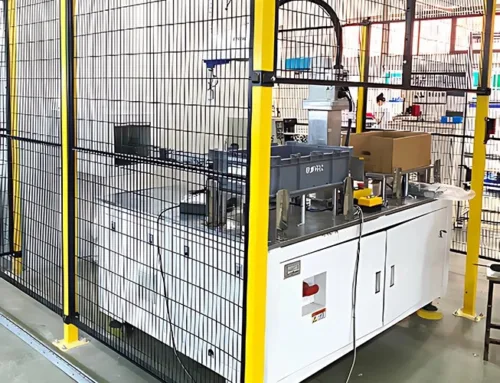
To prevent your Robot Safety Fencing from becoming an ESD hazard, you must establish a continuous electrical path from the top of the wire mesh down to the facility’s copper ground grid. Because the Mdfence system utilizes a fully welded 0.78 x 1.18 inch (20x30mm) framed panel architecture, achieving continuity is highly systematic.
Step 1: Piercing the Insulative Coating
The RAL 9005 black powder coating on the mesh panels and the RAL 1023 yellow on the posts will block standard grounding wires. At the connection nodes—where the metal fixing rings secure the framed panels to the 2.36 x 2.36 inch (60x60mm) posts—you must use grounding lugs equipped with star washers (serrated lock washers). When the M8x10 flange bolts are torqued down, the sharp teeth of the star washers bite through the powder coating and dig directly into the bare Q235 steel, establishing point-to-point electrical continuity.
Step 2: Post-to-Ground Facility Integration
Once the panels and posts are electrically bonded, the static charge must be routed to the earth. The base plates of the Mdfence posts are anchored using four M10 x 2.75 inch (70mm) expansion bolts. By attaching a braided copper grounding strap from a pre-drilled tap on the base plate directly to your cleanroom’s ESD grounding busbar or conductive floor grid, you create a zero-resistance path. This ensures that any static generated by the robotics layouts is instantly bled away safely.
Yield Protection Meets ISO 14120 Compliance
By implementing this grounding protocol, your facility achieves a dual-layered defense: physical safety and electronic yield protection. The 0.78 x 3.93 inch (20x100mm) narrow mesh design of the Machine Guarding Fence Panels easily passes the ISO 13857 finger-safe standard, allowing you to install the barrier just 4.7 inches (120mm) away from the moving SMT machines.
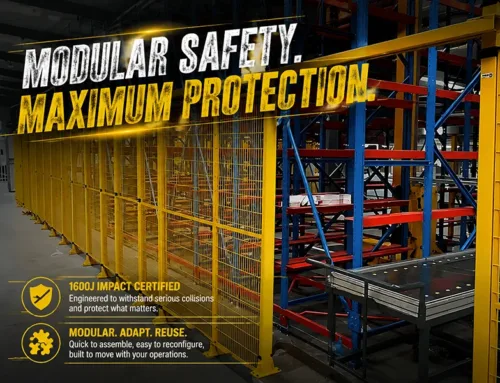
Furthermore, unlike solid polycarbonate panels that block airflow, the black wire mesh allows the ionized air blown from your overhead cleanroom ionizers to pass freely into the robotic cell, neutralizing static on the actual PCBs while maintaining a physical impact resistance of over 1180 ft-lbs (1600 Joules).

For cleanroom environments, the installation method is just as critical as the grounding. As shown in the assembly steps above, the Mdfence system is a 100% “cold assembly” solution. There is no on-site welding, no grinding, and no hot work required. This means zero metallic dust, zero smoke, and zero contamination to your precision machining or testing areas during layout modifications.
| Scenario in Electronics Manufacturing | Ungrounded Generic Mesh Fencing | Properly Grounded Mdfence System |
|---|---|---|
| AGV Traffic Friction | Static pools on the painted surface; high risk of arc to nearby components. | Charge dissipates instantly through star-washer bonded joints to the facility grid. |
| Cleanroom Airflow | Often uses solid acrylic/aluminum, blocking ESD ionizers from reaching the line. | 20x100mm mesh allows 100% penetration of ionized air to neutralize PCBs. |
| Installation Process | Requires drilling/welding, releasing metallic particulate into the cleanroom. | Wrench-only cold assembly; zero particulate contamination, maintaining ISO class. |
5 ESD & Safety Guarding FAQs for Electronics Manufacturing
1. Does the black powder coating on the Mdfence mesh generate static?
The epoxy-polyester coating itself is an insulator, not a primary static generator. However, it can hold a triboelectric charge from moving air or brushing objects. This is why piercing the coating at the connection nodes to ground the underlying Q235 steel framework is mandatory for ESD-sensitive zones.
2. How do we test the point-to-ground (Rtg) resistance of the installed system?
After installing the star washers and grounding straps, use an ESD megohmmeter. Place one probe on a scratched/exposed piece of the upper wire mesh and the other on your facility’s grounding bus. The resistance should measure less than 1×10^9 ohms to pass standard electronics manufacturing audits.
3. Can we run grounding wires internally through the 60x60mm posts?
Yes. The 2.36 x 2.36 inch (60x60mm) standard posts are hollow Q235 cold-rolled steel tubes. You can route copper grounding wires or safety interlock cables internally by removing the top plastic end cap, keeping the cleanroom environment free of snag hazards and exposed wiring.
4. Will the 20x100mm mesh block the effectiveness of our overhead ESD ionizers?
No. The 0.78 x 3.93 inch rectangular mesh provides excellent optical transparency and allows maximum airflow. Unlike solid polycarbonate safety screens, the wire mesh permits ionized air to flow continuously over the automated assembly lines, ensuring static neutralization on the actual product.
5. How do we ensure sliding doors for AGV access remain grounded while moving?
For sliding doors used in AGV pathways, standard bearing rollers can break electrical continuity. You must install an ESD drag chain or a flexible coiled grounding cable that connects the moving door frame directly to the anchored, grounded post, ensuring continuous Rtg compliance even when the door is open.