EN
EN  DE
DE  RU
RU  PT
PT  JA
JA  ES
ES  IT
IT 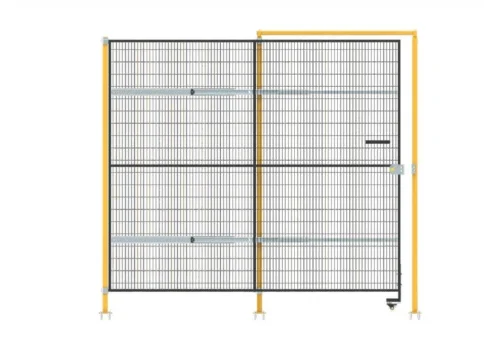

|
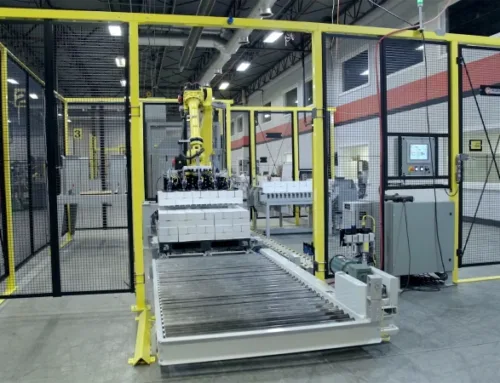
Your end-client loves the new robot cell’s cycle time, but their EHS manager is worried. The operators are complaining they can’t see the part alignment through the glare of the old-school galvanized guarding. You’re caught between needing a fortress and needing a window. What if the safest guard was also the most transparent? |
See-through machine guarding for easy inspection?
As a system integrator, you live and die by the final acceptance test. You’ve perfectly programmed the robot, optimized the conveyor speed, and flawlessly integrated the PLC. But then the punch list comes back, and the top complaint is about the machine guarding. It’s either too restrictive for operators to inspect the process, or it’s so flimsy the client’s safety manager won’t sign off. This common dilemma forces a compromise that satisfies no one.
The conventional wisdom—that bigger mesh openings equal better visibility—is a dangerous trap. It ignores both the laws of physics and the stringent requirements of ISO safety standards, leading to wasted floor space and compromised safety.
The Floor Space Trap: Why “Open” Mesh Pushes You Back
Your first instinct for better visibility might be a wide, 2×2 inch (50x50mm) wire mesh. It seems logical: bigger holes mean a clearer view. But here’s the problem that shows up on the EHS audit:
- The ISO 13857 Mandate: This international standard dictates the safety distance based on the opening size of the guard. A 50x50mm mesh allows fingers and even hands to pass through, forcing you to place the barrier as far as 850mm (nearly 34 inches) away from the hazard zone.
- The “Before” Scenario: For a typical 20 x 30 ft robot work cell, this large safety distance can consume an extra 50-60 square feet of the client’s valuable production floor. That’s space that could have been a wider maintenance aisle or a staging area for parts. You’ve inadvertently made the cell less efficient.
The Solution: Smarter, Not Wider, Mesh
Our Mdfence systems utilize a 20x100mm (approx. 0.8 x 4 inch) mesh aperture. This narrow “finger-safe” design is the key. It physically prevents any part of the hand past the fingertip from reaching the hazard.
- The “After” Scenario: According to ISO 13857, this small opening allows the robot safety fencing to be installed just 120mm (about 4.7 inches) from the machine. You deliver a safer, more compact, and more efficient work cell, reclaiming that lost floor space and demonstrating a deep understanding of safety compliance to your client.
Optical Physics for the Factory Floor: Why Black is the New Transparent
Even with the right mesh size, visibility can be ruined by glare. Standard silver or galvanized fencing acts like a grid of tiny mirrors, reflecting overhead lighting and creating visual noise that strains the eyes. This makes it difficult for operators to perform quality checks or for maintenance to diagnose a jam without opening a door and tripping the interlock.
The Mdfence system uses a RAL 9005 (deep black) electrostatic powder coating. This isn’t just an aesthetic choice; it’s an optical tool.
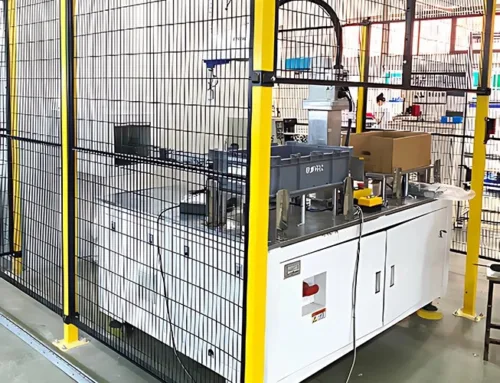
- The Science: Black surfaces absorb light rather than reflecting it. This simple principle eliminates glare and the “strobing” effect seen with shiny mesh. The human eye naturally tunes out the non-reflective black grid and focuses directly on the brighter, moving components inside the cell. The fence effectively becomes invisible.
- The Result: You provide a crystal-clear, unobstructed view into the work cell. Operators can easily monitor the end-of-arm-tooling, part fixtures, and material flow. This not only improves quality control but also boosts operator confidence and acceptance of the new automated system.
Great Visibility Requires Great Access
A clear view is only half the battle. When maintenance needs to get inside, the access must be as robust and reliable as the fence itself. A common failure point in lesser systems is door sag, which leads to misaligned safety interlocks and frustrating, intermittent line stoppages that are a nightmare to troubleshoot.
Our modular door systems are engineered to prevent this. Whether it’s a standard hinged door for personnel or a wide-span sliding door for material loading, the rigid, framed construction ensures it will never sag or warp.

Furthermore, we provide pre-engineered mounting plates and kits for the industry’s most common safety interlock switches (Omron, Pizzato, Schmersal, etc.). This eliminates the need for on-site drilling and fabrication, ensuring a clean, professional installation that integrates seamlessly with your safety PLC. It’s a plug-and-play approach that saves you hours of installation time and passes the end-client’s EHS audit the first time.
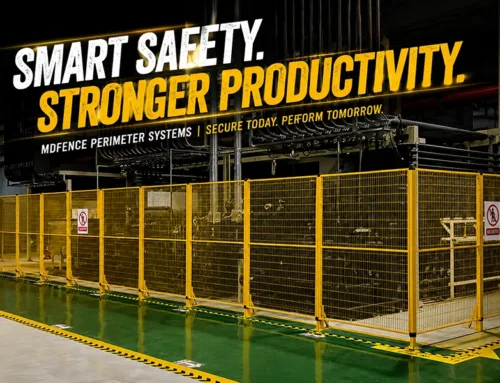
Ultimately, providing “see-through” guarding is not about cutting bigger holes. It’s about a smarter, systems-based approach. By combining a compliant narrow mesh, non-reflective black coating, and robust, reliable access doors, you can deliver a machine guarding system that offers unparalleled safety and perfect visibility—no compromises needed.
Frequently Asked Questions
1. Can I use clear polycarbonate panels instead of mesh for total visibility?
Yes, we offer polycarbonate panels. They are excellent for applications like welding cells where sparks must be contained. However, for general inspection, they are susceptible to scratching and can be damaged by industrial coolants and solvents, which can degrade clarity over time. Our black powder-coated mesh often provides better long-term, glare-free visibility in typical machining or assembly environments.
2. How does the powder coating hold up against cutting fluid and other chemicals?
Our multi-stage cleaning and electrostatic powder coating process (tested to ISO 9227 salt spray standards) creates a durable, chemically resistant finish. It’s specifically designed to withstand the harsh conditions of a modern factory, resisting corrosion and chipping from contact with common industrial oils and solvents.
3. We have a complex cell layout from our CAD drawings. Can your system be customized to fit?
Absolutely. Our system is fully modular. We work directly from your CAD files (like the one shown in our case study) to create a tailored solution with panels of varying widths, custom cutouts for conveyors, and integrated doors. This ensures a perfect fit without any on-site welding or cutting.

4. How much faster is installation compared to a welded guard?
Our bolt-together assembly is up to 70% faster. A two-person team can install over 150 feet of Mdfence guarding in a single shift using only basic hand tools. This eliminates the need for hot work permits, fire watches, and production shutdowns associated with welding, dramatically compressing your project timeline.
5. Is the mesh strong enough to contain a thrown part from a robot?
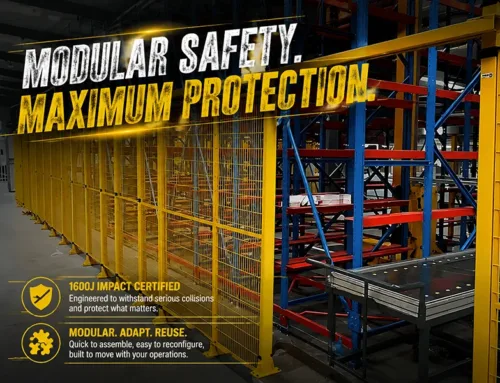
Yes. Our standard framed mesh panel system is engineered and certified to withstand an impact force of 1600 Joules. This is equivalent to stopping a 220 lb (100 kg) object traveling at 14 mph (20 km/h), providing compliant protection against catastrophic equipment failure and part ejection hazards.