EN
EN  DE
DE  RU
RU  PT
PT  JA
JA  ES
ES  IT
IT 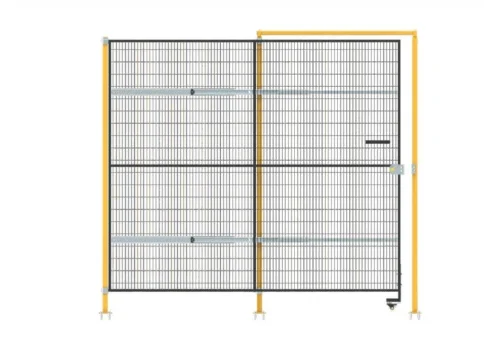

|
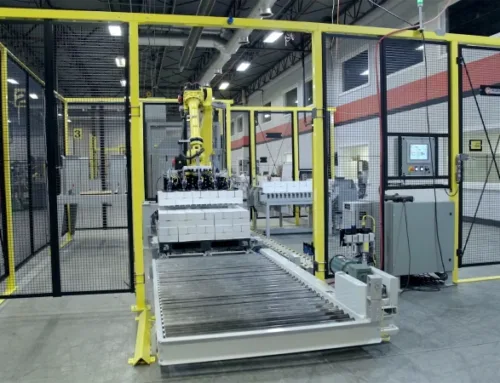
In high-speed automotive welding cells, cycle time is everything. But when a KUKA or FANUC robot is slinging heavy chassis parts and throwing welding spatter, generic wire mesh won’t cut it. You don’t just need a physical barrier; you need an ISO 14120 compliant, plug-and-play guarding system that integrates flawlessly with your PLC safety interlocks—without drilling, without hot work, and without phantom machine stops. |
Engineering Safety for High-Speed Welding & Assembly
For system integrators building turnkey automated production lines, the perimeter is often the last thing installed but the first thing to cause a failed EHS audit. High-speed mechanical assembly machines and robotic welding stations operate under brutal conditions. A 220 lb (100 kg) payload moving at 12 mph (20 km/h) generates massive kinetic energy. If a gripper fails, your Robot Safety Fencing must absorb that impact. Furthermore, integrating safety light curtains and Omron/Pizzato interlocks onto flimsy frames leads to misalignments and catastrophic downtime.
Scenario 1: The “Spatter & Sag” Problem in Welding Cells
The Before (Pain Point): Integrators often use frameless, cheap wire mesh to cut costs. In an automotive welding station, operators lean against the panels, causing the mesh to sag like a hammock. Worse, high-temperature welding spatter easily melts through thin, poorly coated wires, and arc flash exposes nearby workers to hazard.
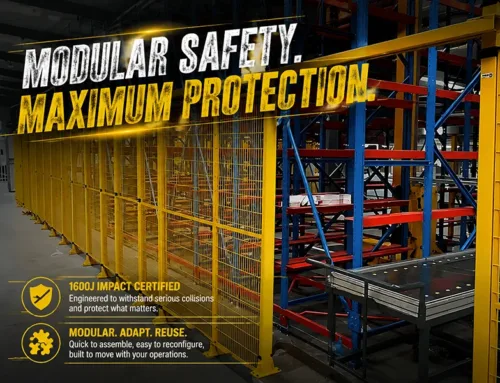
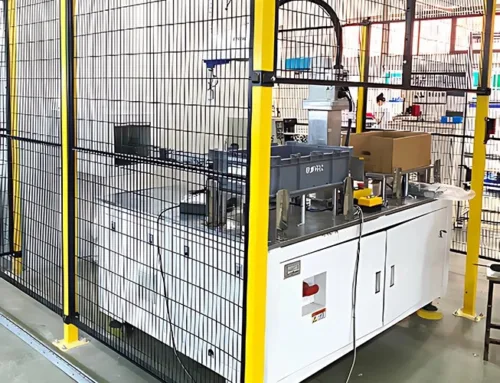
Why It Works (Our Logic): Mdfence utilizes a Q235 carbon steel framed architecture. Every panel features a 0.8″ x 1.2″ (20x30mm) seamless tubular frame with a 0.06″ (1.5mm) wall thickness. The 0.12″ (3mm) steel wires are flat-welded directly to the inside of the frame, eliminating sharp burrs. For extreme welding environments, these framed panels can be easily swapped with solid steel sheets or tinted polycarbonate to block arc flash and spatter. The system is TUV-certified to withstand 1180 ft-lbs (1600 Joules) of impact.
The After (Actual Benefit): You get an indestructible perimeter. If a part is ejected from the high-speed assembly line, the frame distributes the load, bending plastically instead of shattering. No sagging, no spatter penetration, and a 100% pass rate on your OSHA machine guarding inspections.

Scenario 2: The Interlock Misalignment Nightmare
The Before (Pain Point): You specify high-end PLe/SIL3 safety switches (like Omron D4NL) for your cell doors. During installation, your techs have to manually drill into the painted steel posts to mount them. This creates metal shavings, destroys the powder coating, and guarantees rust within weeks. Over time, heavy access doors sag on cheap hinges, causing the interlock tongue to miss the switch. The PLC registers a fault, triggering a Safe Torque Off (STO), and your entire line halts unexpectedly.
Why It Works (Our Logic): Our Machine Guarding Systems are designed as active safety components. We provide pre-engineered, L-shaped safety switch mounting accessories and lock carriers that perfectly match the hole patterns of major switch brands. Furthermore, our hinged doors utilize heavy-duty 40×60 hinges, and wide doors are supported by caster wheel kits to completely eliminate gravity sag.
The After (Actual Benefit): Zero hot work or drilling on the factory floor. Your techs simply bolt the interlocks onto the pre-fabricated plates. The doors remain perfectly aligned for tens of thousands of cycles, eliminating phantom machine stops and keeping your OEE (Overall Equipment Effectiveness) at peak levels.

Scenario 3: Wasted Floor Space & AGV Path Interference
The Before (Pain Point): Automotive plant real estate is incredibly expensive. If you use a standard 2″ x 2″ (50x50mm) mesh around a robotic welding station, ISO 13857 dictates a safety reach distance of up to 33.5 inches (850mm). This forces you to push the fence far away from the robot, eating into the aisles required for your material handling AGVs.
Why It Works (Our Logic): The Mdfence system utilizes a tight 0.8″ x 4″ (20x100mm) finger-safe mesh profile. This specific dimension restricts penetration to just the fingertips. According to ISO standards, this allows the physical barrier to be installed incredibly close to the hazard zone. We also provide sleek post base protective covers that hide the M10x70mm expansion bolts, preventing forklift or AGV tires from snagging on exposed hardware.
The After (Actual Benefit): You can legally shrink your perimeter, installing the Industrial Safety Fencing just 4.7 inches (120mm) away from the danger zone. This saves roughly 7.5 square feet (0.7 sq meters) per linear meter of fencing, allowing you to widen your AGV paths or fit an additional CNC machining center into the same facility footprint.

System Performance Matrix: High-Speed Assembly Environments
| Feature | Traditional Fabricated Guards | Mdfence Modular System |
|---|---|---|
| Impact Resistance | Unknown; welds often crack under robot payload ejection. | TUV Certified 1600 Joules (Q235 Carbon Steel). |
| Safety Interlock Integration | Requires on-site drilling, hot work, and custom fabrication. | Pre-engineered mounting plates for Omron, Pizzato, etc. |
| Welding Spatter Defense | Thin wire melts; paint burns off causing rapid rust. | ISO 9227 tested powder coating; swappable solid/PC panels. |
| ISO 13857 Compliance | Large mesh requires 33.5″ (850mm) clearance distance. | 20x100mm mesh allows installation 4.7″ (120mm) from hazard. |
Frequently Asked Questions (Automotive & Robotics Integration)
1. Can your fencing system contain heavy parts ejected from a CNC lathe or robotic cell?
Yes. Our framed panels and 60x60mm Q235 steel posts are TUV certified to withstand impacts of up to 1600 Joules. This is equivalent to stopping a 220 lb (100 kg) object traveling at 12 mph (20 km/h), ensuring the kinetic energy is absorbed through plastic deformation rather than shattering.
2. How do you handle arc flash and spatter in automated welding stations?
Because our system is modular, the standard wire mesh panels surrounding the immediate welding zone can be replaced with solid steel sheets or tinted polycarbonate (PC) panels (UL94V0 and EN1598 compliant). This completely blocks UV arc flash and prevents hot spatter from reaching adjacent aisles.
3. Will we need to do hot work (welding/cutting) to install safety interlocks?
No. Hot work is entirely eliminated. We provide standardized, pre-drilled lock carriers (e.g., KKCK-LCK-B-D4NL-SET) that perfectly fit industry-standard safety switches from brands like Omron, Pizzato, and Schmersal. They bolt directly onto the frame, preserving the powder coat and preventing rust.
4. Our robot cell layout is extremely tight. How close can we place the fence?
By utilizing our 20x100mm (0.8″ x 4″) finger-safe mesh, you comply with ISO 13857 reach-through standards, allowing the barrier to be installed just 4.7 inches (120mm) away from the hazard. This significantly reduces the overall footprint of your dedicated manufacturing lines.
5. Can the doors accommodate large tooling changes or forklift access?
Absolutely. For wide access points, we offer double sliding doors (up to 4300mm wide) with heavy-duty bearing rails, or folding doors (up to 4800mm wide). We also utilize top-open layouts to allow overhead cranes to drop heavy stamping dies or chassis parts directly into the cell without obstruction.