EN
EN  DE
DE  RU
RU  PT
PT  JA
JA  ES
ES  IT
IT 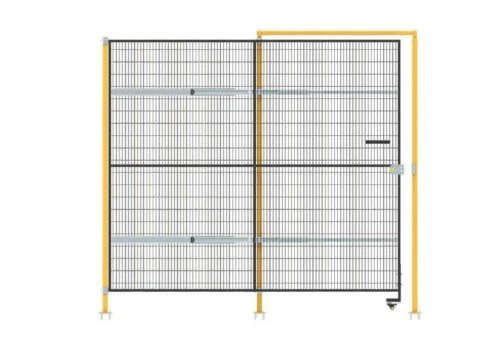
 |
Your robot cell layout is finalized, but will it pass the EHS audit? The wrong Machine Guarding Fence Panels can force you to waste valuable floor space or fail compliance checks. It’s a costly oversight that can derail your project timeline and budget. |
Why Machine Guarding Fence Mesh Size is a Critical Decision, Not a Detail
As an automation system integrator or plant engineer, your primary focus is on the performance and logic of the machinery inside the safety perimeter. The fence is often seen as a commodity—a simple barrier. However, this perspective overlooks a critical specification that directly impacts your project’s success: the mesh opening size. This single parameter dictates the legally required safety distance, influencing everything from your factory floor layout to your operational efficiency.
The choice is not just about containment; it’s a calculated engineering decision based on international standards like ISO 13857, which defines the relationship between the size of an opening and how far a physical barrier must be placed from a hazard. Getting this wrong can lead to failed safety audits, expensive rework, and inefficient use of plant real estate.
The Common (and Costly) Mistake: The “Hand-Safe” 50x50mm Mesh
Many standard industrial fences use a 50mm x 50mm (approx. 2″ x 2″) mesh. While it effectively prevents a person from walking into a machine, it’s considered “hand-safe,” not “finger-safe.” According to ISO 13857, an opening of this size allows a significant portion of a person’s arm to reach through. To compensate for this risk, the standard mandates a prohibitive safety distance—often as much as 850mm (nearly 33.5 inches) from the hazard point.
For a compact and efficient automated cell, this is a layout-killer. It creates dead space around every machine, consuming square footage that could be used for material staging, maintenance access, or even another piece of equipment. In a modern factory where every square foot is a calculated asset, this wasted space translates directly to lost productivity and higher overhead costs.

The Strategic Advantage: The 20x100mm “Finger-Safe” Standard
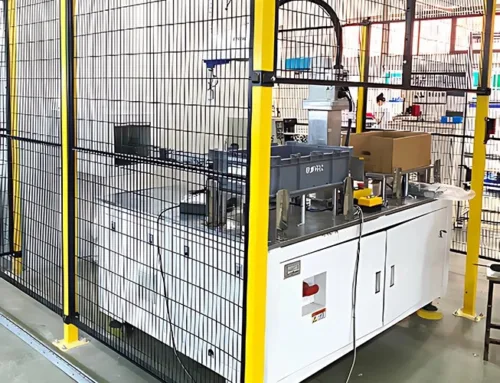
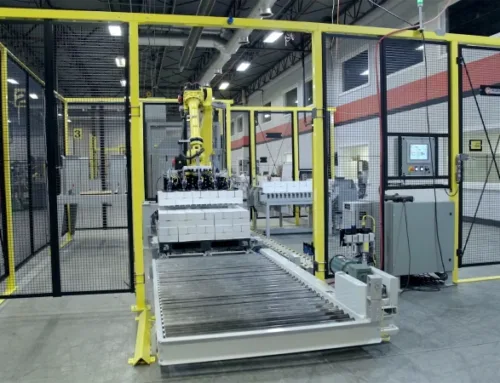
This is where a purpose-built Robot Safety Fencing system provides a decisive advantage. Mdfence panels are engineered with a standard 20mm x 100mm (approx. 0.78″ x 4″) mesh opening. The critical dimension here is the 20mm narrow gap. This design physically prevents fingers from passing through beyond the fingertip, classifying it as “finger-safe.”
The commercial impact of this engineering choice is profound. Per ISO 13857, this small opening allows the safety distance to be legally reduced to just 120mm (approx. 4.7 inches).
Let’s quantify that value:
For a 164-foot (50-meter) long automated assembly line, reducing the safety distance on both sides from 33.5 inches to 4.7 inches reclaims over 750 square feet (70 square meters) of high-value production floor space. This isn’t just a marginal gain; it’s the difference between fitting an extra robot cell or having to expand your facility.
Beyond Spacing: How Mesh Size Impacts Operational Visibility
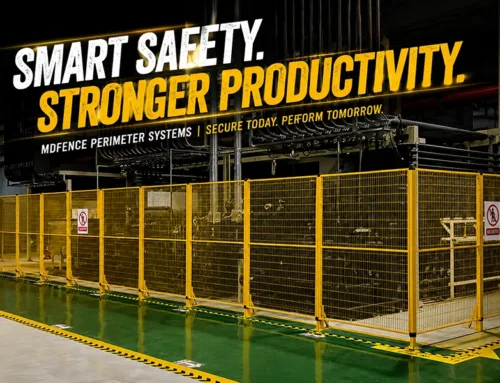
The benefits of optimized mesh design extend beyond compliance and floor space. The visual properties of the mesh are crucial for day-to-day operations. Mdfence panels use a black powder coating, which leverages a simple optical principle: black absorbs light and minimizes glare.
From an operator’s or maintenance technician’s perspective, the black mesh becomes virtually transparent. This allows for clear, unobstructed monitoring of the processes inside the cell. It makes troubleshooting faster, reduces the need to stop the line for simple visual checks, and improves overall situational awareness. In contrast, shiny galvanized or brightly colored mesh can create reflections and visual “noise,” leading to operator fatigue and obscuring a clear view of the machinery.

The Complete System: Why Panel Structure is as Important as Mesh
A “finger-safe” mesh is only effective if it’s part of a robust structural system. Simply specifying a wire pattern isn’t enough. Mdfence panels feature a full 20x30mm tubular steel frame with the mesh fully welded to it. This design provides critical面外刚度 (out-of-plane stiffness) that prevents the panel from buckling or deforming under impact.
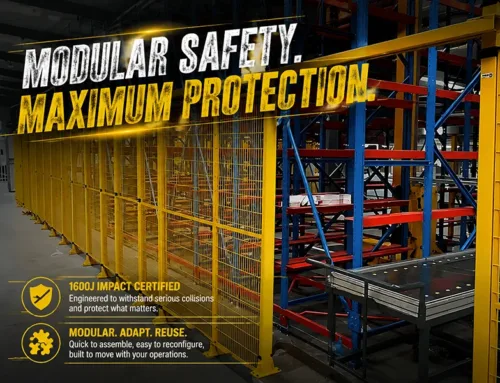
This structural integrity, certified to withstand 1600 Joules of impact, ensures two things:
- Durability: It can withstand the inevitable bumps and knocks from forklifts, carts, and maintenance activities in a busy industrial environment.
- Precision: The rigid frame ensures that doors hang true and align perfectly with their safety interlocks (like Omron D4NL or Pizzato switches) over years of use. This eliminates nuisance trips and machine stoppages caused by sagging doors, directly contributing to higher OEE (Overall Equipment Effectiveness).
Ultimately, the mesh size on your Industrial Safety Fencing is not a footnote in your specifications. It is a foundational decision that proves you are designing for safety, efficiency, and long-term value. Choosing an engineered system with an optimized mesh size is a direct investment in your facility’s productivity and compliance.
Frequently Asked Questions
1. What is the exact safety distance required for your 20x100mm mesh panels according to ISO 13857?
According to the standard, for openings less than 40mm, if the hazard is at a height above the standing surface, the safety distance (Sr) can be as low as 120mm (~4.7 inches). We always recommend conducting a formal risk assessment for your specific application to confirm the exact distance required.
2. Do you offer mesh sizes other than 20x100mm?
Yes. While 20x100mm is our recommended standard for optimizing space and compliance, we also offer 50x50mm mesh for applications where a larger safety distance is acceptable or required for other reasons, such as general perimeter guarding rather than close-proximity machine guarding.
3. How does the mesh size affect the overall impact resistance of the panel?
The impact resistance is primarily a function of the wire diameter, the quality of the welds, and the strength of the surrounding 20x30mm steel frame. While a denser mesh can help distribute impact forces more widely, our 1600 Joule impact rating is certified for our standard panel configurations, ensuring robust protection regardless of the mesh size chosen.
4. Can I get CAD/STP files for panels with specific mesh sizes to use in my layout design?
Absolutely. We provide a complete library of 3D models for our entire system, including all panel sizes, posts, doors, and accessories. This allows system integrators to incorporate our guarding directly into their master layout, verify clearances, and ensure a seamless fit during the design phase.
5. Your black mesh improves visibility, but can I order custom colors for the panels to match my client’s corporate branding?
Yes, custom colors are available upon request. While we standardize on Safety Yellow (RAL 1023) for posts and Jet Black (RAL 9005) for panels to align with best practices for visual safety, we can accommodate custom RAL color requests to meet specific corporate or facility aesthetic requirements.