EN
EN  DE
DE  RU
RU  PT
PT  JA
JA  ES
ES  IT
IT Machine guarding for pallet nailing and cutting lines
Industrial safety fence panels for pallet nailing and cutting lines
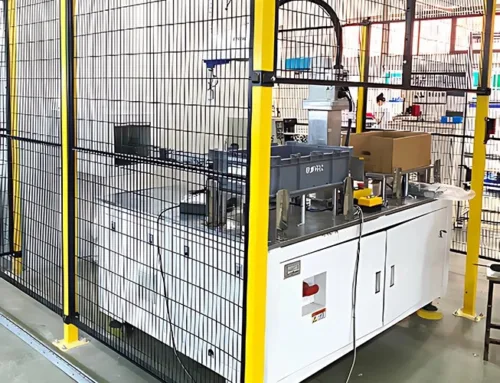
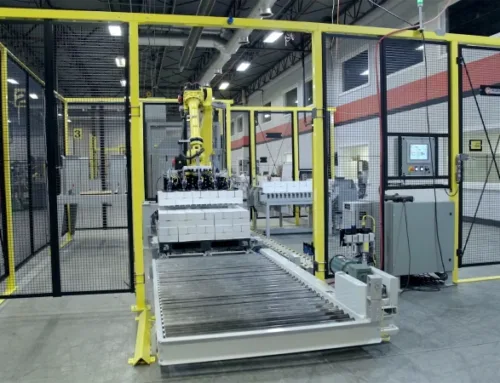
Pallet nailing machines and cutting equipment throw wood chips, dust, and broken nails at speed. Mdfence gives North American factories a tighter machine perimeter with 20x100mm narrow-slot mesh, so the fence sits closer to the hazard without wasting valuable floor area.

Why this fence fits high-debris wood processing cells
When the line throws sharp chips and metal fasteners, a standard large-aperture guard forces the fence farther away from the machine. That creates a bigger safety zone, a bigger footprint, and a more expensive factory layout. Mdfence is built for exactly this problem: narrow-slot containment for flying debris and a geometry that supports a reduced legal separation distance of 120mm, helping the floor plan stay compact while still matching compliance expectations.
| Requirement | Mdfence response |
|---|---|
| Wood chips and broken nails flying from pallet nailing stations | 20x100mm narrow-slot mesh helps block fast-moving fragments before they leave the cell. |
| Need to shorten the safety perimeter without losing compliance logic | Precision mesh construction supports a 120mm legal safety distance, so the guard can sit much closer to the machine. |
| Factory space is too valuable to dedicate to oversized buffer zones | Compact guarding reduces wasted floor area and protects production and storage capacity at the same time. |
| Retrofit work must fit around existing pallet lines | The panel format is practical for perimeter updates on saws, nailing stations, and mixed wood-processing cells. |
| Operators need a clear industrial barrier, not a visual placeholder | The fence creates a visible, durable boundary that supports organized machine guarding in busy North American plants. |
Three reasons Mdfence works better than a generic large-mesh guard
Narrow-slot mesh for chip and nail containment
Wood processing lines do not fail gracefully. They throw irregular chips, saw dust, and metal fasteners at high speed. The 20x100mm mesh spacing is the key structural difference: it is tight enough to catch the kind of debris that escapes through ordinary wide-aperture fencing, yet open enough to keep the guard practical for industrial visibility and airflow.

Closer placement around the hazard zone
The real cost of an oversized guard is not the fence itself. It is the unusable buffer zone left behind it. By supporting a 120mm legal safety distance, Mdfence helps engineers place the enclosure closer to the source of risk. That keeps aisles, staging space, and storage lanes available for work instead of turning them into dead air.

Built for dense layouts in wood-processing factories
Factories that run pallet nailing and cutting equipment often need to retrofit around existing machines, conveyors, and material flow. Mdfence fits that reality. It gives safety engineers a way to protect operators, contain debris, and keep the machine zone compact enough to preserve production capacity in a crowded plant.

Where this machine fencing is a strong fit
- Pallet nailing stations with high-speed fastener ejection
- Cutting and trimming cells that produce sharp wood fragments
- Retrofits where the plant cannot afford a wide safety setback
- Compact North American production lines that need compliance-focused perimeter control
- Mixed wood-processing areas with tight aisle and storage constraints
Mdfence is a practical option when the goal is not only to separate people from danger, but also to protect the usable footprint of the plant. The tighter fence geometry lets safety and operations work together instead of competing for square footage.
What to confirm before you specify the fence
Before you lock the layout, confirm the debris type, machine throw distance, maintenance access, and the exact floor space you need to preserve. Then compare those constraints against the narrow-slot mesh and reduced-distance guarding concept. If the line throws wood chips and broken nails, a generic large-pitch fence is usually the wrong answer; you need a panel system designed for containment and compact placement.
Need a compact guard layout for a pallet line?
If your factory is losing space to oversized safety zones, Mdfence can help you redesign the perimeter around the hazard instead of around wasted clearance. Send the machine size, debris profile, and target floor plan, and we will help map the fence layout.